
Ayida-Weddo: Ayida-Weddo is a powerful Vodou loa spirit revered as the Rainbow Serpent, governing fertility and elemental forces.
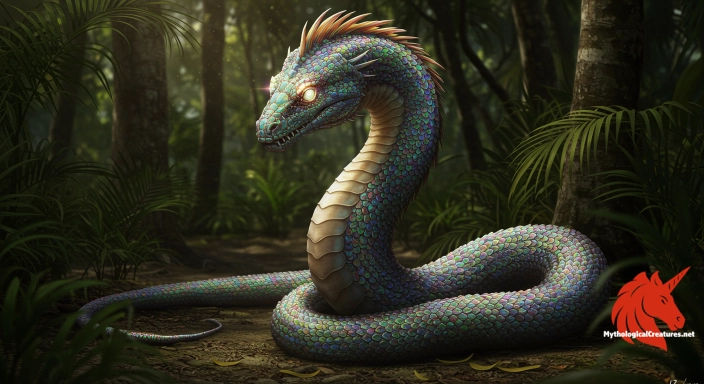
Ayida-Weddo
Ayida-Weddo - One of the most ancient and significant loa; essential in creation myths and the balance of natural and spiritual worlds
the legend in five swipes.
the legend in five swipes.
Ayida-Weddo Origins: The Earliest Accounts
Ayida-Weddo shines as a radiant emblem within the Vodou spiritual framework, her mythic presence spanning continents from West Africa to the Caribbean. Her origins reach deep into ancient narratives that celebrate the mysterious interplay of creation and life, setting the stage for a deity whose influence stretches back to pre-historical times. Regarded as the Rainbow Serpent, she embodies the beauty of natural phenomena through the prism of vibrant, multicoloured arcs and the powerful symbolism of serpentine energy. Her role in the creation stories is profound, as she is depicted helping the primordial goddess to form a balanced cosmos where the earth and heavens remain connected. The cultural context of her worship reveals a rich tapestry of ritual and narrative, intertwining fertility, wealth, and the elements of wind, water, fire, and thunder. In many traditions, she is seen as both a nurturing force and a formidable guardian of cosmic order. This enduring spirit has been celebrated by communities in Benin, Haiti, and Suriname, whose ceremonies and iconography pay homage to her ancient and vivid symbolism. Through the passage of time, Ayida-Weddo continues to inspire a dynamic blend of reverence, artistry, and spiritual reflection.
What sources tell us about Ayida-Weddo?
The legends of Ayida-Weddo are preserved in a diverse array of oral traditions and ritual practices rather than a single definitive text. Her narrative is recounted through generations of Vodou adherents who have woven her story into the fabric of their communal identity. Various accounts speak to her emergence as a primordial entity, with early storytellers emphasising her essential role in the creation of the universe alongside other significant loa. In some versions of the myth, she is portrayed as the female counterpart to Damballa, forming a divine duet that symbolises the dual forces of creation. These story variants reflect a flexible tradition, where local adaptations and artistic interpretations breathe new life into her multifaceted character. The spiritual texts and ceremonial practices that mention her often celebrate her as a bridge between natural phenomena and supernatural power. Over time, her narrative has absorbed influences from both West African and Caribbean cultural contexts, ensuring that her legend remains vibrant and adaptable. As a living myth, the tales of Ayida-Weddo encourage continual reinterpretation while steadfastly preserving the core themes of beauty, balance, and infinite creative energy.
Ayida-Weddo: What the Legends Describe
Visually, Ayida-Weddo is most famously depicted as a grand, sinuous serpent, her form accentuated by the dazzling hues of a rainbow. Her body exudes both grace and strength, with every undulation designed to evoke the fluidity of water and the dynamism of wind. Crafted with exquisite detail, traditional portrayals often highlight scales that catch the light, each one reflecting a fragment of nature’s palette from soft pastels to vibrant, saturated tones. Observers have noted the elegant curve of her form, reminiscent of a celestial arc that gracefully connects the heavens and the earth. In many artistic renditions, her eyes are portrayed as reflective pools of ancient wisdom, imbuing her countenance with an enigmatic allure. Sculptures and ritual masks may incorporate intricate motifs that symbolise fertility and rebirth, further anchoring her image in the cycles of nature. The visual representations of Ayida-Weddo are as captivating as they are symbolic, capturing the essence of transformation and resilience. This magnificent blend of artistic flourish and sacred iconography has rendered her an enduring figure whose physical depiction continues to evolve with cultural expression.
How does Ayida-Weddo differ by region?
The depiction and role of Ayida-Weddo vary significantly across the regions that honour her, each infusing her myth with local cultural nuance. In West African contexts, particularly in Benin, she is often revered as a goddess of fertility and growth, her presence closely linked to pastoral and agricultural lifecycles. In Haiti, her imagery is intricately woven into the vibrant tapestry of Vodou, where she is seen as a cosmic mediator who holds the earth and sky in balanced harmony. Surinamese traditions bring additional layers to her character, merging indigenous spiritual elements with African influences to create a unique interpretation of the Rainbow Serpent. The local adaptations manifest not only in her ritual significance but also in the aesthetic details of her iconography, where regional art styles breathe new life into her legendary form. Despite these variations, her core attributes—symbolising regeneration, balance, and the inexorable connection between the physical and spiritual realms—remain recognisable. Each locale adapts her myth in a manner that reflects its own environmental and cultural landscape, thereby enriching the overall narrative. This regional multiplicity underscores the fluidity of her identity, affirming that ancient deities can adapt seamlessly across both time and space.
Is Ayida-Weddo unique, or found elsewhere?
The myth of Ayida-Weddo invites intriguing parallels with other serpentine deities found in diverse cultures around the world. Much like the Feathered Serpent of Mesoamerican lore, her image intertwines both celestial power and earthy fertility, bridging divine realms and human experience. Similar themes can be observed in the Nāga of South Asian traditions, where serpents serve as guardians of both water and wisdom, further echoing her role as a custodian of nature’s secret cycles. Aboriginal Australian myths also feature a Rainbow Serpent, a creator being that sculpts the landscape and imprints spiritual law upon the earth, demonstrating a profound cross-cultural resonance with Ayida-Weddo’s attributes. Her duality as both a nurturing and a formidable force can be compared with the dynamic interplay seen between complementary deities in various mythologies. The comparison with Damballa, her often-counterpart in Vodou, heightens the dialogue about balance, dualism, and the pairing of transformative energies. Such cross-cultural comparisons reveal that the symbolism of the serpent, in its myriad forms, is a universal language that speaks to humanity’s primal understanding of life’s cyclicity. In this way, Ayida-Weddo occupies a unique yet interconnected position within the broader realm of mythological and cultural narratives.
Ayida-Weddo: How the Legend Lives On
The historical evolution of Ayida-Weddo’s image mirrors the broader transformations within Vodou and the cultures that celebrate her. In ancient traditions, her presence was firmly anchored in sacred rituals that underscored her role in maintaining the natural order and fortifying the balance between humans and nature. Over centuries, as cultural narratives shifted and expanded, her symbolism was reinterpreted by artists and spiritual practitioners to address contemporary themes of resilience and transformation. Modern adaptations have seen her emerge not only as a deity of fertility and natural phenomena but also as an icon of environmental consciousness and cultural pride. Her legacy now permeates diverse forms of artistic expression, from vibrant street art to evocative literature and dynamic performance art. The evolution of her depiction reflects a blend of ancient reverence and modern aesthetic innovation, consistently inspiring new generations to explore the mysteries of existence. As digital media and global cultural exchanges continue to reshape collective identities, Ayida-Weddo remains a steadfast symbol of continuity and creative vibrancy. Today, her timeless narrative continues to capture the imagination of those seeking to bridge the gap between ancestral wisdom and modern experience, ensuring that her myth remains as alive as the forces it represents.
Interesting Fact
Ayida-Weddo’s role as the Rainbow Serpent not only symbolizes her mastery over multiple elemental forces but also unites diverse cultural mythologies, highlighting a universal theme of balance and renewal.
Mythological Treasures
Norse Sagas: A field guide to the beasts of the Viking world
Drawn from the saga accounts themselves, with the powers, weaknesses and doom of each being set out.
Egyptian Legends: A field guide to the gods and monsters of ancient Egypt
Guardians of the living and devourers of the dead, with the role each played in judgement.
Chinese Beasts: A field guide to the dragons and demon kings of Chinese myth
From river dragons to demon kings, with the legends that shaped five thousand years of storytelling.
the legend in five swipes.
Partner with Mythological Creatures
Bring your myth-based world into ours
From game settings to narrative worlds, we work with partners who treat myths with care. Share your project for a potential sponsor slot.
Partner with usQuick Creature Info
Origin:
Features:
Associations:
Our Mythic Legendary Rating:

Also Sometimes Known As:
Habitat:
Supernatural Powers:
Physical Attributes:
Abilities:
Behavior:
Lore:
Related Creatures, Tales or Lore
- JJörmungandr (Norse Mythology)
- QQuetzalcoatl (Mesoamerican Mythology)
- RRainbow Serpent (Australian Aboriginal Mythology)
References
Discover Another Mythical Legend You May Not Have Heard Of?
Uncover the mysteries of ancient folklore and expand your knowledge of legendary beings from cultures around the world.
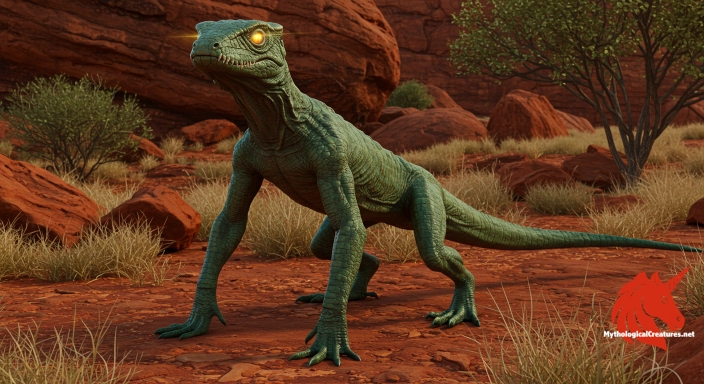
Dare to Meet the Mangar-kunjer-kunja....
The Mythological Creatures Book Series
Yokai, Greek, Norse, Egyptian & Chinese. Five illustrated field guides to the creatures the old stories either warned or told you about.
Curated by the Mythological Creatures Team
Series editor: Mythological Creatures Directory
Primary desk: African & Diaspora Traditions Desk
(rev. November 2025)