
Caoineag: The Caoineag is a mysterious female spirit from Scottish folklore, known as a weeper.
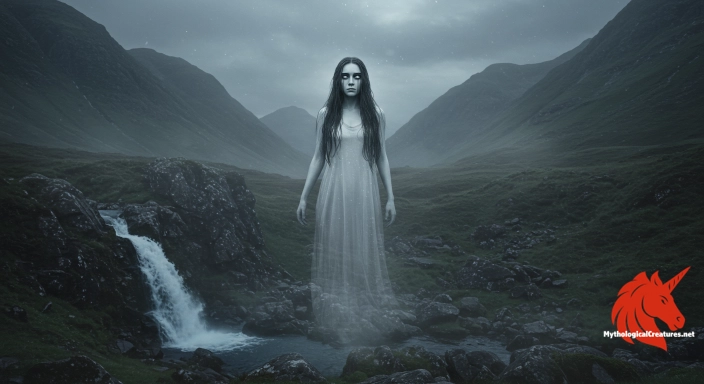
Caoineag
Caoineag - The Caoineag’s mournful keening is believed to foretell impending death, particularly among warriors, and serves as a portent within Scottish highland mythology.
the legend in five swipes.
the legend in five swipes.
What are the origins of the Caoineag?
The caoineag emerges from the mists of Scottish folklore as a spectral figure imbued with an aura of sorrow and inevitability. Born from ancient Gaelic traditions, she is revered and feared as a female spirit whose mournful keening presages the death of clan members. Her evocative name, meaning "weeper," channels centuries of collective grief and serves as a somber reminder of fate’s inexorable progression. The spirit is most notably linked with the Highland banshee tradition, embodying the poignant intersection of beauty and tragedy in Scottish myth. Her presence, though unseen by mortal eyes, is unmistakably felt where nature’s raw elements combine with the supernatural, such as at waterfalls, streams, and glens. Early attestations suggest that she was woven into the fabric of clan lore, her lament marking the passage of time and the inevitability of loss. The caoineag has been celebrated in oral tradition long before her documented appearances in folkloric compilations. Today, she continues to symbolise the deep, intertwined connections between nature, death, and emotional catharsis in Scottish cultural identity.
What are the earliest texts about the Caoineag?
Eyewitness accounts and folklore texts provide a rich tapestry of narrative strands that give life to the legend of the caoineag. Early scholars and collectors, including the noted folklorist Alexander Carmichael, have preserved fragments of her mournful dirges in works like Carmina Gadelica. These primary sources capture the raw emotional power of her keening, particularly in times of conflict and tragedy such as the infamous Massacre of Glencoe. Oral histories from diverse Highland communities recount her relentless vocal warnings that struck terror into the hearts of those who lingered in doomed glens. Multiple versions of her tale reveal a spirit both immutable in purpose and enigmatic in nature, with narratives often diverging on details regarding her influence and actions. Some traditions insist that she only appears as an inaudible, yet palpable presence, while others describe a sorrowful song that resonates with the natural surroundings. Variants of the story sometimes meld the caoineag with other spectral figures, emphasising the pervasive theme of death heralds in Celtic lore. Despite the inevitable gaps in early records, the surviving lyrical fragments and oral recitations continue to underscore her ominous role in heralding tragedy.
What abilities did the Caoineag have?
Though the caoineag is typically invisible, the folklore that surrounds her alludes to a spectral anatomy that is both ethereal and ghostly. Some narrations hint at a vague feminine outline, as if a misty shape draped in flowing garments momentarily materialises alongside the sound of her lament. The delicate imagery often includes suggestions of long, dishevelled hair and a form that blends seamlessly with the natural mists near bodies of water. Observers who claim to sense her presence describe an ambience charged with an otherworldly chill, as if the air itself carries the weight of unutterable sorrow. Her physicality is seldom detailed with precision, which only heightens the mystery surrounding her elusive form. In some traditions, even a brief glimpse of her is accompanied by an overwhelming sense of melancholy, hinting at her tragic past. This fleeting visual impression is sometimes accompanied by a subtle shimmer, where the boundaries between life and death appear blurred. Thus, the absence of a consistent physical description serves to reinforce the transcendent and timeless character of the caoineag.
Caoineag: Regional Versions and Local Names
The legend of the caoineag possesses a distinctly regional flavour, with her story evolving differently across various parts of the Scottish Highlands. In some areas, she is regarded strictly as a harbinger of death for warriors, while other communities perceive her as an omen for any untimely loss within the clan. The intimate connection between the spirit and natural landmarks such as waterfalls, streams, and glens is a recurring theme that varies in emphasis depending upon local geography and narrative style. Certain regions imbue her song with a particular resonance, associating it with the mournful echoes of ancient battles, while others portray her as a solitary figure wandering the remote highlands. Local dialects contribute alternative variations of her name—including caointeag, caoineachag, caointeachag, and caoidheag—that reflect the linguistic diversity of the Highlands. In some traditions, the caoineag is conflated with similar death omens, yet her distinctive inability to be approached or questioned sets her apart. These regional adaptations underscore the interplay between the local landscape and the collective memory of loss and sacrifice. The result is a rich, multifaceted mythos that adapts to the cultural and environmental nuances of each Highland community.
Caoineag: Similar Beings in World Folklore
In the broader spectrum of Celtic mythology, the caoineag shares striking similarities with other spectral figures who forewarn of impending death. Her role as a lamenting spirit draws a natural parallel to the more widely known Irish banshee, both of whom are emblematic of the inexorable approach of fate. Unlike some of her counterparts, however, the caoineag is invariably portrayed as aloof and unresponsive, unable to be bargained with or questioned by mortals. This stands in contrast to figures like the bean nighe, who, despite sharing thematic elements of mourning and premonition, often interact differently with the living. Comparative analysis reveals that across cultures, the motif of a female spirit whose expressions of grief are inextricably linked to death remains a common thread. Similar mythological constructs appear, in varied forms, in Northern European and even some Slavic traditions, reflecting a universal cultural response to untimely loss and the passage from life to death. The interplay of water, wind, and spectral sound in these myths further reinforces the idea of nature as a canvas for spiritual expression. In this way, the legacy of the caoineag transcends regional boundaries, echoing enduring themes that resonate across diverse cultures and eras.
What does the Caoineag mean to people today?
Over the centuries, the spectral figure of the caoineag has undergone a fascinating evolution, moving from the oral traditions of remote Highland communities to a broader emblem of tragic beauty in modern interpretations. Her depiction has expanded well beyond simple death warnings to become a complex symbol of enduring grief and the inescapable nature of destiny. While early accounts cast her primarily as an omen tied to the circumstances of battle and loss, contemporary retellings often imbue her with layers of psychological and cultural significance. Modern literature, film, and art have reimagined her as an allegory for the passage of time and the haunting persistence of the past. The spirit’s inability to engage with the living has been interpreted as a metaphor for the incommunicable essence of sorrow itself. As part of the broader canon of Scottish mythology, she resonates with themes of isolation and the bittersweet interplay between beauty and despair. Festivals, cultural celebrations, and even paranormal explorations in the Scottish landscape have embraced her mystique, transforming her into an enduring icon of ancient lore. The evolving narrative of the caoineag stands as a testament to the power of myth to adapt, survive, and speak profoundly to successive generations.
Interesting Fact
An intriguing aspect of the Caoineag is that, unlike many supernatural beings which can be interacted with or even appeased, she remains utterly unapproachable, reinforcing the notion that some omens of fate are immutable and must be observed from afar.
Mythological Treasures
Egyptian Legends: A field guide to the gods and monsters of ancient Egypt
Guardians of the living and devourers of the dead, with the role each played in judgement.
Chinese Beasts: A field guide to the dragons and demon kings of Chinese myth
From river dragons to demon kings, with the legends that shaped five thousand years of storytelling.
Japanese Yokai: A field guide to the spirits and demons of Japanese folklore
Fifteen spirits, with the signs to watch for and what the old tales say to do if you meet one.
the legend in five swipes.
For myth educators and toolmakers
Built a resource for mythology learners?
If you offer courses, teaching tools, or research platforms focused on myth and folklore, consider a discrete placement on our reference pages.
Introduce your resourceQuick Creature Info
Features:
Associations:
Our Mythic Legendary Rating:

Also Sometimes Known As:
Habitat:
Supernatural Powers:
Physical Attributes:
Abilities:
Behavior:
Lore:
Related Creatures, Tales or Lore
References
Discover Another Mythical Legend You May Not Have Heard Of?
Uncover the mysteries of ancient folklore and expand your knowledge of legendary beings from cultures around the world.
Dare to Meet the Amaymon....
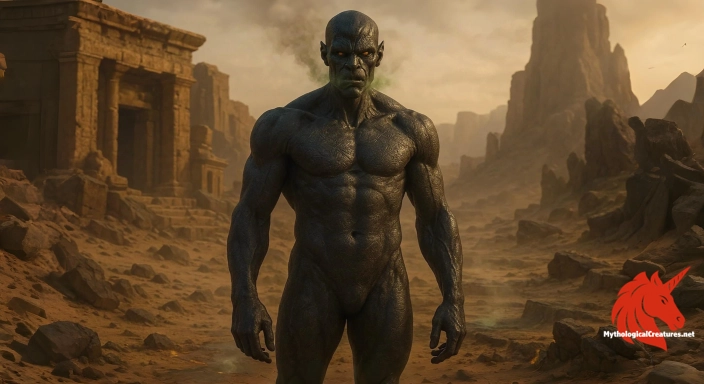
The Mythological Creatures Book Series
Yokai, Greek, Norse, Egyptian & Chinese. Five illustrated field guides to the creatures the old stories either warned or told you about.
Curated by the Mythological Creatures Team
Series editor: Mythological Creatures Directory
Primary desk: Northern & European Folklore Desk
(rev. November 2025)