
Çor: Çor are invisible, jinn-like spirits from Turkic and Mongolian mythologies known for their free will and dual nature.
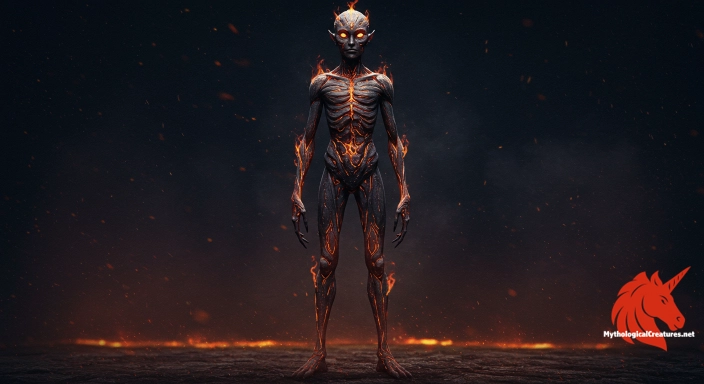
Çor
Çor - Embodies the transition from pre-Islamic spiritual beliefs to Islamic influences, reflecting a dual nature that is both feared and respected in folklore.
the legend in five swipes.
the legend in five swipes.
Where does the Çor come from?
Çor is a mysterious and enigmatic spirit deeply rooted in the ancient mythologies of Turkic and Mongolian cultures. Its origins are shrouded in the mists of time, emerging from a tradition where nature and the supernatural intertwined without clear boundaries. Early narratives placed the Çor in remote, secluded places such as ancient trees, hidden ruins, and even beneath timeworn bridges, emphasising its connection to the natural world. The being is endowed with free will, mirroring human qualities, and is capable of benevolent as well as malevolent actions, as seen in the contrasting figures of Aq-Çor (white Çor) and Qara-Çor (black Çor). It was traditionally considered an invisible entity that only reveals its true form after death, adding to its air of mystery. Local communities spoke of the spirit with both reverence and caution, as it was believed to be linked with unexplained mental disturbances among other phenomena. The Çor occupies a liminal space between the seen and unseen, making it a symbol of the unpredictable forces that govern the natural and the spiritual. Over centuries, its myth has been woven into the cultural fabric of these regions, reflecting layers of folklore, ritual, and ancient belief. Its dynamic nature continues to inspire both fear and fascination, ensuring that the legend endures in the collective memory of the people.
Çor in the Historical Record
Ancient oral traditions and folklore have been the primary vessels for the stories of the Çor, ensuring that its legend has been transmitted from one generation to the next. The earliest attestations of this enigmatic spirit can be discerned in the epic narratives and mythic recitals of Turkic societies as well as in the rich, nomadic lore of Mongolian peoples. Local storytellers and elders played a significant role in spreading tales that described the Çor as an invisible yet potent force, closely tied to sacred natural sites and ancient landmarks. Historical manuscripts and episodic folklore, although fragmentary, offer glimpses into a world where the boundary between the natural and supernatural was porous. As the influence of Islam grew in these regions, narrative elements of the Çor began to converge with the concept of jinn, leading to multiple story variants that reflect both pre-Islamic and Islamic traditions. Ritual recitations and local customs, passed down orally, have also contributed to the composite image of the spirit, often highlighting its unpredictable character. The variations in these sources underscore the adaptability of the myth as it travelled across diverse cultures and epochs. This rich tapestry of narratives has cemented the Çor not only as a relic of the past but also as a continuing symbol within modern cultural expressions. The heterogeneity of the primary sources demonstrates the enduring human fascination with the unseen world.
How powerful did people believe the Çor to be?
The Çor is primarily known for its elusive, intangible presence, remaining invisible during life and only manifesting a visible form upon death. Its physicality is best described as ethereal, suggesting a composition of transient, almost elemental material that defies definitive description. When assessments of its form are made, descriptions vary, with some accounts hinting at a subtle radiance or shimmering outline, while others speak of a shadowy silhouette that seems to merge with the surroundings. This flux in appearance is thought to reflect its dual nature, oscillating between the forces of light and darkness. The being is also said to be created from fire, an element that reinforces its volatile and fleeting existence. Occasionally, artistic depictions and literary illustrations capture the Çor as a being with amorphous contours, a reflection of the mystery that shrouds its essence. The infrequent visual manifestations not only enhance its mythic allure but also provide a symbolic glimpse into the transient nature of life and death. Even with such vivid imaginations of its appearance, the Çor remains an enigma, depicted in art and lore as a delicate interplay of light, shadow, and elemental energy.
Where was the Çor best known?
Across its native regions, the Çor assumes distinct variations that mirror the cultural and environmental specificities of Turkic and Mongolian societies. In Turkic traditions, the spirit is often intimately associated with enduring natural features, such as venerable trees, secluded groves, and ancient ruins, where it is believed to inhabit the unseen corners of the landscape. Mongolian interpretations tend to imbue the Çor with a nomadic quality, reflecting the vast, open steppes and the ever-changing moods of nature. Some local narratives depict it as a benign guardian of sacred places, while others cast it in the role of a mischievous or even harmful presence that disrupts daily life. The dualistic portrayal of white (Çor) and black (Çor) forms is particularly pronounced in regions with a clear sense of moral dichotomy, resonating with local beliefs about the balance between good and evil. Regional storytellers have adapted the myth to align with local customs and environmental concerns, resulting in a patchwork of interpretations that both converge and diverge across communities. In certain areas, the Çor forms an integral part of ritual observances, where its presence is invoked for both protection and caution. These regional adaptations highlight the fluid nature of myth-making, where a single entity can embody a myriad of characteristics depending on local traditions and natural surroundings.
Çor: Counterparts Around the World
The Çor shares intriguing commonalities with other supernatural entities across a spectrum of cultural mythologies, offering a rich field for comparative analysis. It is frequently likened to the jinn of Islamic tradition, not only due to its elusive, fiery nature but also because of its dual capacity for both benevolence and malevolence. Similar to the ambiguous fairies or spirits found in European folklore, the Çor encapsulates the inherent tension between forces of light and darkness. The Russian term 'Chort', which is associated with demon-like powers, further accentuates the cross-cultural resonance of such beings, even as each culture adapts its characteristics to local contexts. Both the Çor and its cultural parallels address humanity’s age-old fascination with unseen forces that lie just beyond the realm of ordinary perception. These parables have been used to explain various misfortunes and disturbances, particularly those affecting mental well-being, mirroring a wider human need to understand inexplicable experiences. The interplay of these mythic symbols across different societies reflects a shared human narrative about the complexity of existence. The continual exchange of cultural ideas, facilitated by trade and migration, has allowed these myths to evolve, reinforcing shared themes while also highlighting distinct local variations. In essence, the Çor stands as a vivid example of how mythological archetypes can transcend geographical and cultural boundaries, resonating with universal themes of mystery and transformation.
How is the Çor remembered today?
Throughout its long history, the legend of the Çor has transformed in tandem with shifting cultural and religious paradigms. In the pre-Islamic era, the spirit occupied a prominent place in local rituals and mythic narratives, where it symbolised the capricious forces of nature and the threshold between the visible and the unseen. With the advent of Islam, its mythological attributes gradually merged with those of the jinn, leading to a reinterpretation that both preserved and altered its quintessential traits. Despite this syncretism, many of the original legends about the Çor persisted in rural folklore, continuing to influence local customs and superstitions. Over time, its portrayal evolved from that of a primarily fearsome spirit to a more complex figure, encompassing aspects of redemption, mystery, and the inherent duality of existence. Modern literature, cinema, and art have revived interest in the Çor, transforming it into a metaphor for the unseen struggles and hidden forces that shape human life. Contemporary reinterpretations often highlight its symbolic links to the elemental world of fire and the transient nature of life. In many communities, traditional festivals and oral storytelling sessions keep the legend vibrant, ensuring that the Çor remains woven into the fabric of cultural identity. The evolution of the myth reflects a broader dialogue between ancient superstitions and modern existential insights, affirming that the allure of the mysterious is timeless.
Interesting Fact
An intriguing aspect of Çor is their inherent duality, as they may exhibit both benevolent and malevolent traits, with their visibility upon death providing a rare insight into the spirit realm.
Mythological Treasures
Egyptian Legends: A field guide to the gods and monsters of ancient Egypt
Guardians of the living and devourers of the dead, with the role each played in judgement.
Chinese Beasts: A field guide to the dragons and demon kings of Chinese myth
From river dragons to demon kings, with the legends that shaped five thousand years of storytelling.
Japanese Yokai: A field guide to the spirits and demons of Japanese folklore
Fifteen spirits, with the signs to watch for and what the old tales say to do if you meet one.
the legend in five swipes.
Mythology-aligned partners
Showcase your myth-friendly brand here
Run a store, studio, or platform that lives in the world of myth and folklore? A curated sponsor panel on these pages may fit.
Explore partnership optionsQuick Creature Info
Origin:
Associations:
Our Mythic Legendary Rating:

Also Sometimes Known As:
Habitat:
Supernatural Powers:
Physical Attributes:
Abilities:
Behavior:
Weaknesses:
Lore:
References
Discover Another Mythical Legend You May Not Have Heard Of?
Uncover the mysteries of ancient folklore and expand your knowledge of legendary beings from cultures around the world.
Dare to Meet the Leraie....
The Mythological Creatures Book Series
Yokai, Greek, Norse, Egyptian & Chinese. Five illustrated field guides to the creatures the old stories either warned or told you about.
Curated by the Mythological Creatures Team
Series editor: Mythological Creatures Directory
Primary desk: Asian & Pacific Myth Cycles Desk
(rev. November 2025)