
Devil: The Devil is the mythological embodiment of evil across a variety of cultural and religious traditions.
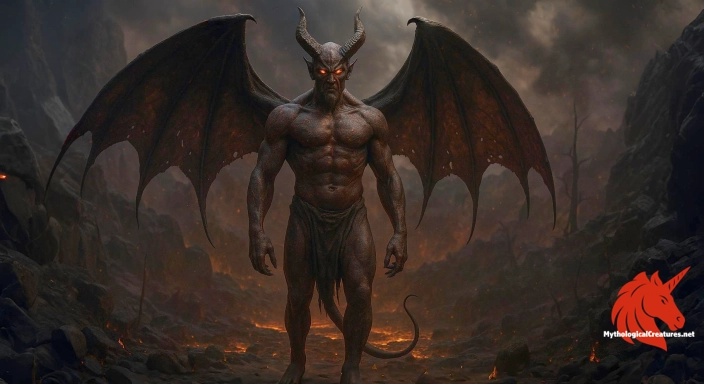
Devil
Devil - Represents the embodiment of evil, serving as a symbol and warning against moral corruption.
the legend in five swipes.
the legend in five swipes.
Devil Origins: The Earliest Accounts
The Devil emerges as a multifaceted emblem of malevolence, drawing on a tapestry of traditions and ancient lore that spans cultures and epochs. Its origins are interwoven with early theological narratives where a cosmic adversary challenged benevolent forces, thereby establishing an enduring symbol of opposition. This enigmatic figure has been seen both as a principled force independent of divinity and as a being whose fall from grace mirrors humanity’s own inner conflicts. Throughout history, depictions of the Devil have oscillated between an external, almost mythic antagonist and an internal representation of human depravity. Artistic and literary traditions have often portrayed the Devil as a transformative symbol, one that encapsulates the nuanced balance between morality and sin. His presence in religious and cultural debates has provoked both fear and fascination, lending him a versatility that adapts to the prevailing ethos of each era. Historic texts and doctrinal evolution have contributed to a layered understanding of his essence, whether as an instrument of divine punishment or as a metaphor for existential rebellion. This dynamic portrayal continues to spark dialogue on the nature of evil, reflecting society’s perennial struggle with the darker facets of humanity.
Devil: The Written Sources
Ancient texts and varied folkloric traditions provide the foundational sources that have sculpted the Devil’s diverse narrative. Religious documents from the Judeo-Christian corpus, paired with Islamic tales of Iblis, contribute to an intricate mosaic of references that span centuries and continents. Multiple story variants have surfaced, each offering unique perspectives—from the archetype of a fallen angel cast out of heavenly grace to a malevolent force acting independently of divine oversight. Literary dramas and medieval treatises further enriched the myth, embedding the Devil in allegories of temptation and moral decay. The array of narratives is not limited to canonical scriptures; apocryphal stories and regional legends also offer interpretations that challenge conventional portrayals. Oral traditions and art forms have, over time, infused the Devil’s character with additional layers of symbolism, echoing cultural anxieties and societal taboos. As each tradition adapts the narrative to its own cultural lens, the Devil’s story becomes a fluid tapestry embodying the collective understanding of evil. The interplay between these textual sources and historical reinterpretations ensures that his myth endures as a versatile and provocative symbol.
Devil: What the Legends Describe
Visual representations of the Devil are characterized by a striking variability that underscores both literal and allegorical interpretations. Common depictions often feature sharp, angular features accentuated by an array of colours—ranging from deep reds that evoke heat and blood to somber blacks and spectral blues that hint at otherworldly despair. The traditional imagery of horns, whether prominent or subtly integrated, serves as a definitive marker of his infernal nature, while some artistic renditions opt for a more ambiguous, human-like visage. His eyes, often rendered as penetrating or smouldering, contribute to an overall impression of relentless scrutiny and foreboding power. The interplay of light and shadow in sculptures and paintings has allowed artists to explore the duality of his character, seamlessly blending elements of beauty and terror. Variations in size and proportion—at times diminutive and cunning, at others monstrously imposing—illustrate the flexible symbolism associated with his form. Textural details such as flowing contours or jagged, distorted lines further imbue his appearance with an uncanny vitality. Through such elaborate visual nuances, the Devil manifests as a creature both terrifying and irresistibly fascinating, a mirror of the internal conflicts that define the human experience.
How did location shape the story of the Devil?
The interpretation of the Devil varies significantly across cultural landscapes, each contributing distinct nuances to his portrayal. In regions steeped in Judeo-Christian traditions, he is often envisioned as a towering figure of rebuke and seduction, embodying the quintessence of defiant opposition to divine order. Conversely, in Islamic narratives, Iblis stands as a proud, rebellious entity whose defiant stance against divine decree marks him as a symbol of existential struggle rather than mere malevolence. Northern European and Scandinavian legends sometimes dilute his persona into a trickster archetype, imbuing his character with elements of mischief alongside traditional wickedness. In other parts of the world, indigenous mythologies have intermingled native supernatural motifs with the Devil’s iconography, resulting in hybrid forms that reflect local spiritual ecosystems. The regional adaptations often extend beyond mere appearance, affecting behavioural attributes and moral symbolism that resonate with local customs and ethical discourses. Such multiplicity in portrayal highlights how diverse communities reinterpret the archetype to address culturally specific challenges and narratives concerning evil. Art and literature produced in different regions continue to reframe the Devil in ways that mirror each society’s evolving worldview. Through these varied adaptations, the Devil serves as a dynamic and universal touchstone for grappling with the complexities of vice and virtue.
Devil: Shared Themes in World Myth
The figure of the Devil shares intriguing resemblances with numerous mythological entities found across global cultures, underscoring a universal preoccupation with the embodiment of evil. Comparable figures, such as the ancient Persian Ahriman or the trickster elements found in Greek and Nordic traditions, reflect a common narrative motif: the presence of a force that subverts cosmic or social order. While the Devil is often depicted with a distinctly religious overtone within Western traditions, these parallel mythological figures similarly engage with themes of downfall and the perversion of goodness. Their roles, whether seen as tempters or as revelrous antagonists, resonate with deep-seated human anxieties about the nature of sin and corruption. This cross-cultural dialogue illustrates how different societies have crafted their versions of an adversarial force as a means to articulate the intangible qualities of evil. Comparative analysis frequently reveals that such figures transcend specific religious doctrines, tapping into broader existential dilemmas. With shared characteristics like cunning, defiance, and the allure of forbidden power, these mythic personas offer a rich field of study into the collective psyche. In many instances, modern reinterpretations have blended these archetypes in creative ways, expanding the discourse on the interplay between morality and rebellion. The enduring presence of these figures attests to a deep, cross-cultural impulse to personify the shadowy boundaries between light and darkness.
Devil: How the Legend Lives On
The evolution of the Devil’s image from a static, narrowly defined antagonist to a multifaceted symbol of resistance and irony marks an impressive cultural trajectory. Over the centuries, his initial role as a personification of unadulterated evil has expanded into interpretations that explore the complexities of human agency, rebellion, and moral ambiguity. Medieval illustrations, with their lurid intensity and dramatic flair, laid the foundation for the Devil’s ongoing reinvention within art, literature, and popular culture. In contemporary society, he frequently appears not only as a figure of fear but also as an emblem of subversive wit in genres ranging from horror cinema to satirical literature. The shift toward psychological and existential readings of his character reflects broader changes in cultural attitudes, where the lines between antagonist and antihero have become increasingly porous. Creative reinterpretations now explore themes of duality, where the Devil embodies both condemnation and a challenge to simplistic moral binaries. Popular culture continues to mine his narrative for insights into societal discontent and critiques of established authority. As modern artists and storytellers engage with this ancient archetype, they underscore the timeless nature of his symbolism. Ultimately, the Devil remains a provocative mirror, inviting a reexamination of the complexities inherent in the human condition and the ever-changing battle between light and darkness.
Interesting Fact
An interesting observation is that the Devil's imagery has evolved dramatically over the centuries, adapting to cultural, historical, and artistic influences that reflect society’s shifting attitudes towards the nature of evil.
Mythological Treasures
Japanese Yokai: A field guide to the spirits and demons of Japanese folklore
Fifteen spirits, with the signs to watch for and what the old tales say to do if you meet one.
Greek Myths: A field guide to the monsters of ancient Greece
Every monster here earned its place in legend, and each gets a full page of artwork and the story behind it.
Norse Sagas: A field guide to the beasts of the Viking world
Drawn from the saga accounts themselves, with the powers, weaknesses and doom of each being set out.
the legend in five swipes.
For publishers and studios
Your next readers are already here
Many of our visitors are looking for books, campaigns, and resources that deepen their journey into myth. Position your title or setting here.
Discuss a placementQuick Creature Info
Associations:
Our Mythic Legendary Rating:

Also Sometimes Known As:
Habitat:
Supernatural Powers:
Physical Attributes:
Abilities:
Behavior:
Weaknesses:
Lore:
Related Creatures, Tales or Lore
- SSatan
- IIblis
- MMephistopheles
References
Discover Another Mythical Legend You May Not Have Heard Of?
Uncover the mysteries of ancient folklore and expand your knowledge of legendary beings from cultures around the world.
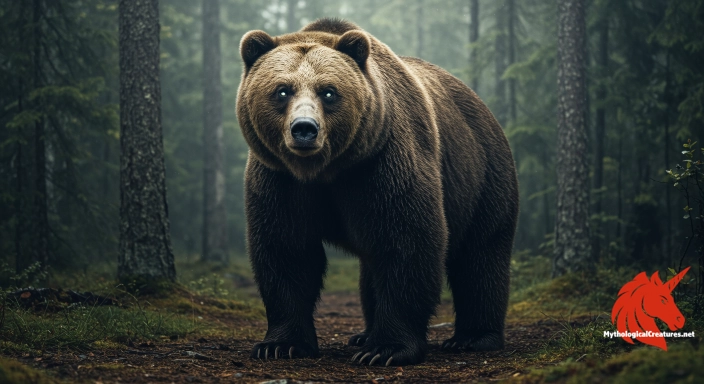
Dare to Meet the Otso....
The Mythological Creatures Book Series
Yokai, Greek, Norse, Egyptian & Chinese. Five illustrated field guides to the creatures the old stories either warned or told you about.


Curated by the Mythological Creatures Team
Series editor: Mythological Creatures Directory
Primary desk: Hellenic & Ancient Mediterranean Desk
(rev. November 2025)