
Djall: Djall, also known as Dreq, is the personification of evil in Albanian mythology and folklore.
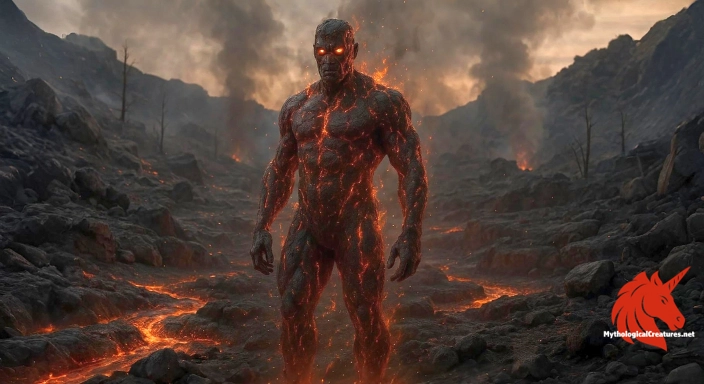
Djall
Djall - Represents the perennial struggle between good and evil, serving as a warning against malevolence.
the legend in five swipes.
the legend in five swipes.
How old is the legend of Djall?
Djall emerges in Albanian folklore as a potent symbol of malevolence, embodying the dark forces that threaten both society and the natural world. Its origins are deeply entwined with ancient oral traditions, where the figure was used to illustrate the ever-present struggle between good and evil. The myth first surfaced in local narratives that recounted heroic feats and moral tests, setting the stage for an enduring legacy of cautionary tale. This figure, also known by the name Dreq, uniquely bridges the gap between abstract evil and a tangible, fearsome entity. Many early accounts depict Djall as not only a personification of wickedness but also as a literal fire demon capable of unleashing chaos. The character’s association with fire imbues it with an elemental quality, reflecting both destructive energy and transformative power. In communities where these stories were told, Djall served as a reminder of the constant need for moral vigilance and the resilience of virtuous souls. Its narrative has permeated various cultural expressions, reaffirming the idea that even in the face of overwhelming darkness, courage and wisdom prevail. This rich tapestry of myth continues to inspire and caution, solidifying Djall’s place at the heart of Albanian cultural heritage.
Which texts first mention Djall?
The multifaceted tale of Djall is passed down primarily through centuries-old oral traditions, where minstrels and community elders wove the narrative into the fabric of everyday life. Despite the scarcity of early written records, the demon’s story has been preserved in a multitude of folktales and local legends that highlight its role as the personification of evil. Various regional compendiums and later anthologies have captured different story variants, each reshaping the character to suit evolving cultural contexts. In some accounts, Djall challenges heroes directly, serving as the ultimate antagonist in trials of moral fortitude. Other versions suggest that the entity appears in moments of natural disaster, symbolising the uncontrollable forces of nature. These diverse portrayals underscore the adaptability of oral storytelling, where the essence of the myth remains constant even as details change. The narrative’s evolution is visible in collections of folklore that, over time, have incorporated elements of neighbouring traditions and interpretations. Ultimately, the survival of Djall’s story across generations highlights its enduring role as a mirror of societal fears and ethical dilemmas.
What was Djall believed to be capable of?
Descriptions of Djall are as striking as they are varied, with the creature often depicted as a being of burning intensity. In many renditions, Djall strides forth as a towering figure cloaked in flickering flames that obscure its true form. Its eyes are frequently portrayed as glowing embers, casting a sinister light over its contorted features. The entity is sometimes imagined with elongated limbs and a vaguely human outline, though these are constantly distorted by the capricious nature of its fiery essence. Horns or spiked protrusions add to its demonic appearance in some narratives, reinforcing its status as an embodiment of chaos. The mutable nature of the creature is highlighted in descriptions where its form shifts like the dance of fire, reflecting the unpredictable and destructive energy it wields. Such physical portrayals serve to symbolise how evil can both allure and alarm, drawing observers into a state of heightened tension. The visceral imagery associated with Djall not only terrifies but also encapsulates the paradox of fire as a source of life and destruction. Ultimately, its physical form is less a fixed image than an ever-changing phenomenon, emblematic of the eternal struggle against the forces of darkness.
The Geography of the Djall Legend
Regional interpretations of Djall’s legend reveal a landscape of vibrant diversity, where the figure is adapted to reflect local customs and natural environments. In the highland villages of Albania, for example, Djall is often invoked as a spectral force that haunts isolated mountain paths and shadowy forests. Along coastal regions, the myth takes on a maritime twist, with the fiery spirit sometimes linked to tempests and sudden bursts of wildfire that threaten agrarian communities. Variations in the name, such as Dreq, further underscore the localized flavour of the myth, suggesting subtle shifts in character and role with each retelling. In some parts, the demon appears more as a transformative natural force rather than a being of pure malevolence, resonating with local understandings of cyclical renewal and decay. Community festivals and traditional rituals have incorporated commemorative references to Djall, serving as both a warning and a symbolic means of asserting communal moral order. These regional adaptations highlight the interplay between universal themes of good versus evil and the specific cultural narratives unique to different locales. The enduring regional variations ensure that Djall’s myth remains a living, adaptable stimulus to both fear and fascination, deeply integrated into the collective psyche of the people.
Which myths echo the story of Djall?
When examined alongside figures from other mythological systems, Djall occupies a distinct niche that captures the universal human preoccupation with the nature of evil. Its fiery, demonic characteristics draw compelling parallels with the Christian devil, yet Djall’s origins are rooted in native narratives that predate external religious influences. Like many embodiments of malevolence, the figure serves as a foil for heroic characters, a theme common in European folklore and other Indo-European cultural traditions. Similar to the trickster or adversarial spirits in Slavic, Mediterranean, and even Middle Eastern legends, Djall personifies the chaotic elements that challenge societal norms and individual virtue. The element of fire, central to its depiction, resonates with other mythic symbols where flames represent both destruction and purification. This cross-cultural similarity reinforces the idea that the struggle against dark forces is a shared motif, transcending geographical boundaries. In contrast to more anthropomorphic devils found in Western lore, Djall’s mutable form is more emblematic of nature’s raw and unpredictable power. Such comparisons not only enhance our understanding of Djall but also underscore the broader human quest to define and confront the concept of evil through imaginative narrative.
Why does Djall still matter?
Over the centuries, the myth of Djall has evolved from an exclusively oral tradition into a symbol rich with modern cultural resonance. Contemporary reinterpretations have reimagined the fiery demon as a multifaceted metaphor for the pervasive forces of corruption and moral decay. Modern artists, writers, and filmmakers in Albania and beyond have drawn on the figure’s potent imagery to critique societal challenges and evoke questions about the nature of evil in a rapidly changing world. This enduring legacy is reflected in literature and visual arts, where Djall serves both as a cautionary emblem and a catalyst for introspection about the darker aspects of human existence. New interpretations often merge classical depictions with modern anxieties, such as environmental degradation and social unrest, thereby expanding the myth’s relevance. The evolution of Djall’s representation illustrates how ancient symbols can adapt to contemporary issues without losing their intrinsic power. As communities continue to reinvent these narratives, Djall remains a compelling figure in discussions of ethics, spirituality, and identity. Its presence in modern cultural discourse affirms the timeless appeal of myth, serving as a reminder that the struggle between light and darkness is as relevant today as it was in antiquity. The legacy of Djall thus endures, inviting successive generations to confront the perennial challenges posed by the forces of evil.
Interesting Fact
Djall’s dual nature as both a symbolic representation and a tangible, fire-wielding demon highlights the complex, multifaceted portrayal of evil in mythology, merging abstract moral lessons with visceral elemental danger.
Mythological Treasures
Greek Myths: A field guide to the monsters of ancient Greece
Every monster here earned its place in legend, and each gets a full page of artwork and the story behind it.
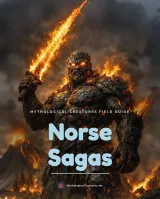
Norse Sagas: A field guide to the beasts of the Viking world
Drawn from the saga accounts themselves, with the powers, weaknesses and doom of each being set out.
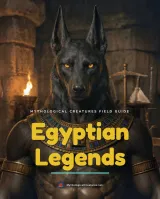
Egyptian Legends: A field guide to the gods and monsters of ancient Egypt
Guardians of the living and devourers of the dead, with the role each played in judgement.
the legend in five swipes.
For myth educators and toolmakers
Built a resource for mythology learners?
If you offer courses, teaching tools, or research platforms focused on myth and folklore, consider a discrete placement on our reference pages.
Introduce your resourceQuick Creature Info
Features:
Associations:
Our Mythic Legendary Rating:

Also Sometimes Known As:
Habitat:
Supernatural Powers:
Physical Attributes:
Abilities:
Behavior:
Weaknesses:
Lore:
Related Creatures, Tales or Lore
References
Discover Another Mythical Legend You May Not Have Heard Of?
Uncover the mysteries of ancient folklore and expand your knowledge of legendary beings from cultures around the world.
Dare to Meet the Ulupoka....
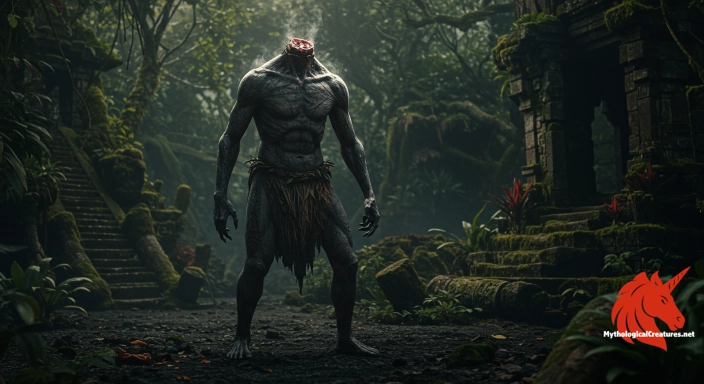
The Mythological Creatures Book Series
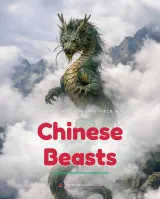
Yokai, Greek, Norse, Egyptian & Chinese. Five illustrated field guides to the creatures the old stories either warned or told you about.
Curated by the Mythological Creatures Team
Series editor: Mythological Creatures Directory
Primary desk: Hellenic & Ancient Mediterranean Desk
(rev. November 2025)