
Enenra: Enenra is a Japanese yōkai composed entirely of smoke and darkness.
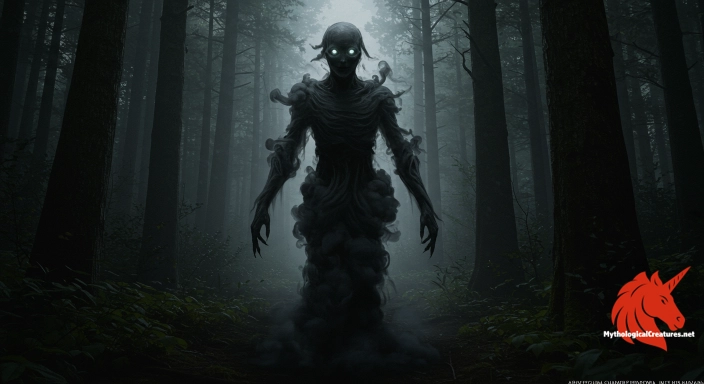
Enenra
Enenra - Enenra embodies the mysterious qualities of smoke and darkness, symbolising impermanence and the elusive nature of existence in Japanese folklore.
Origins & First Encounters
Emerging from the realm of Japanese folklore, the Enenra epitomises the ephemeral grace and inherent mystery of yōkai. This spectral creature, composed entirely of smoke and darkness, captivates the imagination with its insubstantial yet potent presence. Its very name, meaning 'lightweight-fabric smoke', evokes delicate images of wisps floating in the night, suggesting both fragility and enigma. Although it first surfaced in recorded art around 1781 in the Konjaku Hyakki Shūi, its roots tap into a deeper, more ancient heritage of spiritual symbolism. The Enenra has long been associated with the transient boundary between life and death, serving as a reminder of nature's impermanence. In many retellings, it is seen emerging from the interplay of fire and night, a vivid metaphor for change and the fleeting dynamics of existence. Its appearances in dusky settings have cast it as both a gentle guide and a forewarning of mystery in the unseen world. The creature’s allure lies in its ability to straddle the realms of beauty and the macabre while remaining ever elusive to a fixed form. Tales of its wandering through mist and moonlight have become emblematic of the impermanence that defines both nature and human life. Through its enduring myth, the Enenra continues to inspire awe, inviting reflection on the delicate balance between what is seen and what remains hidden.
Source Texts & Tale Variants
The tale of the Enenra was first crystallised in the illustrious Konjaku Hyakki Shūi, where its fleeting, smoke-born form was immortalised around 1781. Early literature provides just a glimpse of the creature’s essence, yet its presence within these classical texts laid the groundwork for centuries of evolving narratives. Oral traditions quickly picked up on this enigmatic yōkai, weaving it into a tapestry of ghostly encounters and symbolic omens. Different versions of its story portray the Enenra in multifarious shades—from a benign spirit silently observing the cycles of life and death to a more foreboding entity whose appearance heralds sudden change. Folktales recount encounters in shadowed alleys, isolated temple grounds, or near the glow of fading embers, each adding to its layered mythology. A range of artistic representations, particularly in ukiyo-e prints and scroll illustrations, display its elusive form and have enriched its lore over time. Diverse local storytellers have integrated the Enenra into their regional mythos, often adapting its characteristics to reflect local superstitions and environmental factors. The mutable depictions highlight the adaptability of myth, allowing the Enenra to serve as a mirror for the transient qualities of nature and human existence. In essence, although its original mention is brief, subsequent literary and artistic interpretations have expanded its narrative, intertwining various strands of folklore into a multifaceted legend.
Form & Powers
Visually, the Enenra is an enigma characterized by a shifting assembly of vapours that merge seamlessly with the night. Its form is without fixed contours, constantly reforming like smoke carried by a gentle breeze and defying any singular description. Often, the creature adopts a vaguely humanoid silhouette that hints at subtle features—ghostly outlines of eyes or faint facial impressions that vanish as quickly as they appear. Artists frequently render it as a swirling mass of dark and light, where edges blur into the ambient shadows of dusk. The size of the Enenra is itself mutable; in some depictions, it appears as nothing more than a delicate wisp, while in others it looms large enough to engulf its surroundings. There is an inherent beauty in its ephemeral structure, as the interplay of condensation and dissipation mirrors the transient nature of life. The diffusion of its form, marked by intermittent glimmers of light in its midst, adds to its spectral allure. Detailed portrayals emphasise the creature’s fluid dynamics, in which every shift in the mist recalibrates its apparent anatomy. The interplay of light and shadow within its nebulous body creates a visual narrative that is as fleeting as it is mysterious. Thus, the Enenra remains a living embodiment of the poetic impermanence inherent in all natural phenomena.
Regional Faces
Across Japan, local interpretations of the Enenra have adapted its core myth to reflect varying cultural and environmental contexts. In some parts of eastern Japan, for example, it is portrayed as a spectral presence haunting the shadowed corridors of ancient temples and graveyards, where its appearance is intertwined with local rites and the reverence for ancestral spirits. In rural regions, villagers sometimes regard the Enenra with a mix of cautious respect and superstition, believing that its transient form is a portent of change in nature or the community. Island and mountainous areas have woven the creature into seasonal lore, often linking it to the mists of early autumn or the lingering smoke of ceremonial fires. Local festivals in certain areas even incorporate artistic representations of the Enenra, celebrating its mystique through dance, theatre, and traditional crafts. Variations in its depiction—ranging from a guardian spirit to an omen of misfortune—reflect the diverse atmospheres and values held across regions. Shinto influences in some areas have tempered its ominous reputation, portraying it instead as a mediator between the human and spiritual realms. Each regional narrative, while preserving the enigmatic core of the Enenra, adds unique layers of symbolism that resonate with local histories and beliefs. Overall, these regional adaptations underscore the fluidity of myth as it is continually reshaped by the landscape and cultural spirit of its people.
Cultural Parallels
The Enenra occupies a distinctive niche among spectral entities, drawing intriguing parallels with smoke-like apparitions found in various global traditions. Its ethereal, ever-changing form is reminiscent of the wraiths in European lore, which similarly embody the transient nature of mortal life. Like the will-o'-the-wisp that perplexes travellers with its elusive glow, the Enenra bridges the gap between physical presence and intangible spirit. These similarities underscore a universal fascination with ephemeral forms and the symbolism of transient beauty. In many cultures, smoke is revered as a carrier of messages from the spirit realm, a theme that resonates deeply in the Enenra's mythos. Across different traditions, such spectral figures serve as metaphors for uncertainty and the involuntary passage of time, linking the ideas of creation, decay, and renewal. Comparatively, while Western ghost stories often focus on the tragic or punitive aspects of apparitions, the Enenra favours a more ambiguous role—both an omen and a quietly persistent presence. This duality invites a richer dialogue between Eastern and Western mythologies, each exploring the delicate interplay between material form and spiritual essence. Ultimately, the Enenra reinforces the notion that across disparate cultures, the ephemeral nature of smoke remains a potent symbol of both mystery and metamorphosis.
Legacy & Modern Evolution
Since its debut in classical literature during the Edo period, the Enenra has experienced an evolution that mirrors shifts in cultural and artistic sensibilities. The initial depiction—as a formless and fearsome spectre of smoke—has gradually expanded into a multi-layered symbol of both mortality and renewal. Contemporary reimaginations in anime, manga, and digital art have breathed new life into its myth, presenting it in varied incarnations from benign guardian to enigmatic force of nature. Modern interpretations often highlight its fluid aesthetic, using advanced visual techniques to capture the dynamic interplay of light and shadow in its smoky form. This re-envisioning aligns with a broader trend of melding traditional folklore with modern artistic experimentation, thereby keeping ancient myths relevant. The Enenra’s presence in current popular culture underscores a renewed interest in exploring themes of impermanence, transition, and the ephemeral beauty of existence. Its visual motif has been adapted in fashion, sculpture, and multimedia installations, resonating with audiences who appreciate its symbolic depth. While the underlying terror of the unknown still lingers in some portrayals, many now celebrate the creature as an emblem of transformation and the ceaseless passage of time. In this way, the Enenra not only honours its historic roots but also continues to inspire new generations, echoing the timeless human quest to understand the delicate balance between the seen and the unseen. Through ongoing reinterpretation, the creature remains a compelling figure in both traditional and contemporary narratives, embodying an enduring legacy of mystique and metamorphosis.
Interesting Fact
Though frightening in appearance, Enenra is a reminder of the beauty of impermanence, as it dissipates and reforms with the shifting winds.
For serious mythcraft
Your project belongs among the legends
If your work deepens how people understand, play with, or teach mythology, a sponsor placement here keeps it in front of the right readers all year.
Submit a sponsorship enquiryQuick Creature Info
Associations:
Our Mythic Legendary Rating:

Also Sometimes Known As:
Habitat:
Supernatural Powers:
Physical Attributes:
Abilities:
Behavior:
Weaknesses:
Lore:
Related Creatures, Tales or Lore
References
Discover Another Mythical Legend You May Not Have Heard Of?
Uncover the mysteries of ancient folklore and expand your knowledge of legendary beings from cultures around the world.
Dare to Meet the Gogmagog....
-a1afb655-648d-49ca-9982-61cb5b996ea0_small.webp "Depiction of Gogmagog")
Curated by the Mythological Creatures Team
Series editor: Mythological Creatures Directory
Primary desk: Asian & Pacific Myth Cycles Desk
(rev. November 2025)