
Hariasa: Hariasa is a little-known Germanic goddess known from a Latin dedicatory stone found in Cologne, Germany.
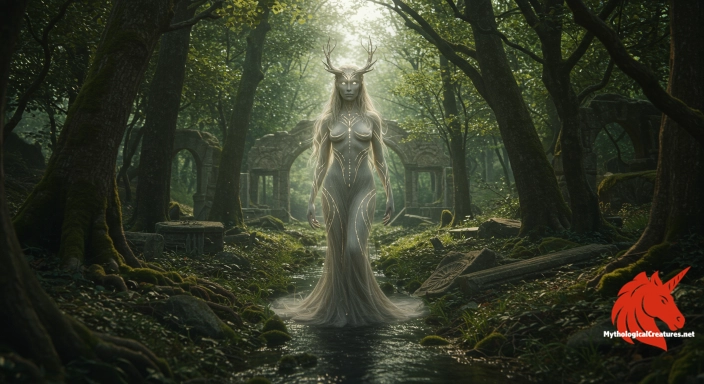
Hariasa
Hariasa - Hariasa is attested on a stone dating to 187 CE, reflecting the syncretism of Roman and Germanic religious practices.
the legend in five swipes.
the legend in five swipes.
Hariasa: Origins and First Sightings
Hariasa emerges as an enigmatic figure in the pantheon of early Germanic deities, known primarily from a single Latin inscription found in Cologne, Germany. Her name exudes an aura of mystery and reverence that hints at a profound indigenous significance amid the Roman cultural sphere. The surviving attestation, dating back to 187 CE, speaks of a period when local and imperial traditions merged seamlessly along the frontier. This goddess appears to have held a pivotal role in the religious lives of communities navigating the complexities of cultural contact and exchange. Her veneration is indicative of a broader pattern in which Germanic peoples embodied both native spiritual values and borrowed Roman religious elements. Early worship of Hariasa might have involved rituals that celebrated natural cycles and local communal identity. The scant evidence leaves much to the imagination, yet modern speculation enriches her image as a guardian of traditions and a mediator between worlds. The inscription, though now lost, serves as a powerful reminder of her once-sacred status. Many scholars believe that her legacy reflects the dynamic interplay of indigenous beliefs and Roman influence. In this way, Hariasa stands as a symbol of a fleeting yet significant period in early European spirituality.
How did the story of Hariasa change over time?
The primary evidence for Hariasa’s existence is the now lost stone discovered at Cologne, bearing a Latin dedication that firmly places her within the historical context of the Roman Empire’s borderlands. This single inscription, catalogued in classical compendia, remains the sole direct attestation of her cult and provides a precious glimpse into the local religious practices of the era. Although no surviving narrative texts elaborate on her mythology, the stone’s Latin dedication has prompted extensive scholarly debate. Variants of her story are extrapolated from the limited inscriptional record and contextualised within broader Germanic and Roman religious frameworks. Oral traditions from the Rhineland, although scarce, are occasionally suggested as echoing themes found in her limited depiction. There is a sense that her significance may have been more widespread, with later local folklore hinting at protective and nurturing aspects. The fragmentary nature of evidence means that her myth, if it ever fully existed, has been lost to time. Comparisons with contemporary deities have led researchers to propose that Hariasa might have played a role in rites of passage or natural cycles. This solitary inscription remains a focal point for discussions about cult practice on the Roman-Germanic frontier. In lieu of extensive written accounts, each interpretive strand adds depth to her elusive narrative.
Hariasa: Physical Form and Supernatural Powers
Although no contemporary images or detailed descriptions of Hariasa have survived, scholars have inferred her possible appearance by comparing her with iconography of similar Germanic goddesses. Artistic reconstructions, drawing on traditional motifs, often portray her as dignified and robust, combining a serene beauty with an understated strength. It is likely that she would have been adorned with attire reflective of both Roman influence and indigenous style, possibly featuring elaborate head-dresses or cloaks. Imagined as having long, flowing hair and a stately bearing, she is commonly depicted in modern works as embodying the harmonious balance between nature and divinity. Some restorations suggest that her visage might have carried both a compassionate and imperious expression, symbolising her dual role of nurturer and protector. Her physical form is often reimagined through the lens of natural symbolism, with elements such as floral or arboreal patterns hinting at fertility and growth. The artistic conventions of the late Roman period in Germanic territories would have encouraged depictions that are both naturalistic and symbolically rich. Varying in scale according to regional artistic preferences, her representations may have ranged from larger-than-life figures used in public cultic settings to more modest forms suitable for private devotion. Modern interpretations continue to develop a visual repertoire that is inherently speculative, yet deeply resonant with established cultural patterns. In this way, even without direct visual records, the imagined form of Hariasa gains substance through comparative and stylistic inferences.
How does the Hariasa legend change from place to place?
Hariasa’s attestation from Cologne hints at a localized worship that likely reflected a broader pattern of regional adaptation among Germanic deities. Early worshippers in the Rhineland may have tailored her cult to address specific communal needs, blending Roman ceremonial elements with indigenous sacrificial practices. Local variations might have seen her associated with both the protection of settlements and the cyclical rejuvenation of the natural landscape. Community rituals, possibly influenced by seasonal festivals, could have celebrated her as a guarantor of fertility and prosperity. Artistic and devotional customs in surrounding areas sometimes incorporated motifs that resonate with her enigmatic character. Regional adaptations often involved integrating local flora, fauna, and natural landmarks into the conceptual framework of her divine persona. The diversity of cultural influences in the area allowed her attributes to evolve, melding martial, agricultural, and chthonic elements. In some local traditions, she appears to have been subsumed by or merged with other protective female figures, highlighting the fluidity of divine identities. The adaptive reimagining of her character across different communities underscores the complex interplay between shared cultural heritage and local innovation. Even now, subtle traces in regional lore hint at the once-potent influence of Hariasa on local religious sensibilities.
What figures resemble Hariasa?
Exploring Hariasa’s character invites one to draw parallels with other revered goddesses across the Germanic and wider European mythological spectrum. Much like figures such as Nerthus or Freyja, her inferred attributes blend aspects of fertility, protection, and the intimate connection with nature. The limited evidence available may align her with divine figures who served as mediators between the human and supernatural realms. Similar themes emerge in the ways that British and Celtic goddesses, including Brigantia and Brigid, are conceptualised—where nature, war, and domesticity intermingle. Despite the scarcity of narrative material, the comparison underscores how female deities in ancient Europe often symbolised both the nurturing aspects of the earth and its latent, formidable power. The interplay of Roman cultic influences with native traditions is evident not only in her worship but echoes in the iconography of comparable deities in neighbouring cultures. This cross-cultural synthesis allows modern interpreters to see Hariasa as part of a broader tradition that transcends local boundaries. The resonance of her potential functions alongside those of other goddesses adds layers to our understanding of how ancient peoples constructed and revered the divine feminine. Although her narrative is fragmentary, the comparative approach enriches the appreciation of her role within a vast network of spiritual archetypes. Such interconnections highlight the enduring nature of themes like protection, rejuvenation, and natural harmony in early European spirituality.
How has the image of Hariasa evolved?
The historical evolution of Hariasa, from her solitary inscription to her modern-day reimagination, showcases the shifting landscape of cultural memory and myth-making. Though her original cult appears to have faded early in the transition from paganism to Christianity, her enigmatic presence has captured the imagination of later scholars and revivalist movements. In the medieval period, as the old pantheon was systematically replaced by new religious narratives, traces of her worship all but vanished, leaving only a tantalising reference in inscriptional records. Modern interest in native Germanic spirituality has rekindled attention to such minor deity figures, prompting artists and writers to reinterpret her through contemporary lenses. Today, neo-pagan and reconstructionist groups sometimes invoke her name as part of a broader attempt to reconnect with ancestral traditions. Her ambiguous identity allows for pluralistic interpretations—from being viewed as a guardian of nature to a symbol of cultural resilience in times of change. Academic inquiries and digital humanities projects have further highlighted her role in the mosaic of early European religious practice. The evolving narrative around Hariasa reflects broader historical processes, including cultural syncretism and the reinterpretation of past symbols. In a modern context, she is celebrated as a reminder of lost voices in the ancient world, embodying the theme of survival through memory and reinterpretation. Continued scholarly debate and creative exploration ensure that her legacy remains dynamic, inviting each generation to rediscover and re-envisage her significance. Through both academic inquiry and cultural revival, Hariasa endures as a silent yet potent symbol of early Germanic identity and spiritual diversity.
Interesting Fact
Hariasa is known solely from a single inscribed stone, making her a rare and intriguing example of early Roman-Germanic religious syncretism.
Mythological Treasures
Norse Sagas: A field guide to the beasts of the Viking world
Drawn from the saga accounts themselves, with the powers, weaknesses and doom of each being set out.
Egyptian Legends: A field guide to the gods and monsters of ancient Egypt
Guardians of the living and devourers of the dead, with the role each played in judgement.
Chinese Beasts: A field guide to the dragons and demon kings of Chinese myth
From river dragons to demon kings, with the legends that shaped five thousand years of storytelling.
the legend in five swipes.
For serious mythcraft
Your project belongs among the legends
If your work deepens how people understand, play with, or teach mythology, a sponsor placement here keeps it in front of the right readers all year.
Submit a sponsorship enquiryQuick Creature Info
Origin:
Our Mythic Legendary Rating:

Habitat:
Supernatural Powers:
Abilities:
Lore:
References
Discover Another Mythical Legend You May Not Have Heard Of?
Uncover the mysteries of ancient folklore and expand your knowledge of legendary beings from cultures around the world.
Dare to Meet the Thalia....

The Mythological Creatures Book Series
Yōkai, Greek, Norse, Egyptian & Chinese. Five illustrated field guides to the creatures the old stories either warned or told you about.


Curated by the Mythological Creatures Team
Series editor: Mythological Creatures Directory
Primary desk: Northern & European Folklore Desk
(rev. November 2025)