
Hyōsube: Hyōsube is a Japanese yōkai depicted as a child-sized river monster from Kyushu.
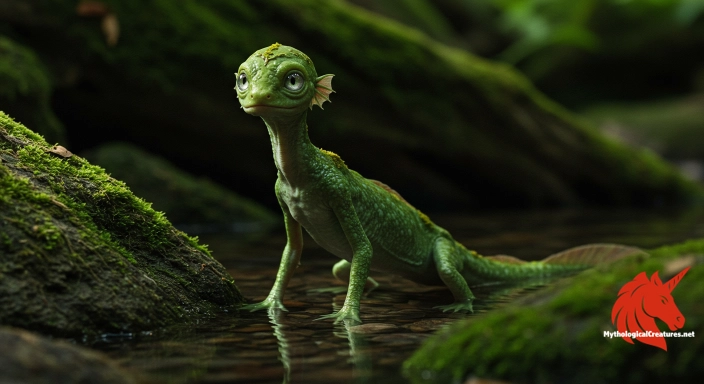
Hyōsube
Hyōsube - Represents a unique facet of local water spirit mythology and contributes to the rich tapestry of Japanese yōkai folklore.
the legend in five swipes.
the legend in five swipes.
Hyōsube: Origins and First Sightings
Hyōsube is a captivating yōkai that has long enchanted the imaginations of those living by Kyushu’s rivers and coastal regions. It is a child‐sized water spirit whose origins are deeply rooted in local oral traditions and ancient legends passed down through generations. Emerging from the mists of folklore, this creature has been regarded both with awe and trepidation in communities near its watery haunts. Over time, Hyōsube has become emblematic of the mysterious forces of nature, symbolising the unpredictable interplay between humanity and the natural world.
Its connection to the water is not merely symbolic, as the creature is believed to dwell in hidden underwater caves, surfacing under the moonlit sky. The lore surrounding Hyōsube has evolved to incorporate elements of both playful cunning and eerie otherness, blurring the lines between benign innocence and supernatural mischief. Local narratives have often highlighted its peculiar predilection for eggplants, lending a whimsical twist to its characterisation. Engraved in the cultural memory of regions like Saga and Miyazaki, Hyōsube continues to inspire both fear and fascination. Its persistent presence in myth and modern reinterpretation underscores a timeless allure that captures the enigmatic spirit of water itself.
How many versions of the Hyōsube story are there?
References to Hyōsube can be found interwoven within the rich tapestry of regional folklore, though the creature does not appear as prominently in ancient texts as some of its more famous yōkai counterparts. Local manuscripts and oral traditions from Kyushu provide the primary glimpses into its elusive nature, often recounting eerie encounters along silent riverbanks. Early records hint at brief sightings and mysterious activities near water bodies, where the creature’s presence was felt more than seen. Compilations of local legends, preserved in both written form and artistic depictions, underscore the role of Hyōsube as a liminal figure between the human and the supernatural.
Later narrative accounts, including illustrated scrolls from the Edo period, gradually integrated Hyōsube into the collective lore of water deities and playful spirits. These secondary sources often link the creature with its more renowned kin, such as the kappa, thereby enriching its mythological context. Variants of its story emerge in regional folklore, where it is attributed different temperaments – from a benign trickster to a slightly ominous spirit. The diversity of these story variants not only highlights the fluidity of its character but also reflects the dynamic relationship between local belief systems and the natural environment. Such a broad spectrum of sources makes Hyōsube a fascinating study of how regional myths evolve and adapt over time.
Hyōsube: What Manner of Being?
Hyōsube is typically detailed as a diminutive, child-like water spirit, whose appearance is both endearing and slightly uncanny. Its small stature belies an agility well suited to darting through the intricate networks of underwater caves. The creature is often depicted with smooth, pale skin that seems to capture the gentle luminescence of moonlit streams. Equally striking are its eyes, which are described as shimmering with an almost iridescent glow that pierces the darkness of its aquatic realm.
Artistic portrayals frequently accentuate its delicate features, merging the innocence of youth with an unmistakably supernatural aura. Tales describe its hair as dark and often tangled, as if perpetually damp from the river’s embrace. The form of Hyōsube is further distinguished by slender limbs that enable graceful movements both in water and on the riverbank. Some depictions include subtle, fin-like extensions along its extremities, suggesting an evolutionary adaptation to its aquatic habitat. The combination of human and otherworldly characteristics in its anatomy not only makes its appearance memorable but also reinforces its role as a bridge between the familiar and the mysterious elements of nature.
Hyōsube: One Legend, Many Local Versions
Across Kyushu, the portrayal of Hyōsube varies markedly from one locale to another, reflecting the diversity of local cultural traditions. In Saga Prefecture, the spirit is often embraced within a context of gentle mischief, where villagers recount its playful nocturnal escapades near hidden river caves. Local customs in this area sometimes include small offerings of eggplants as tokens of respect, a reflection of the creature’s unique culinary predilections. Such regional narratives paint Hyōsube as a benign presence that, while mysterious, helps to maintain the delicate balance between humankind and water.
Conversely, in Miyazaki Prefecture, the legends surrounding Hyōsube take on a slightly darker tone, emphasising its propensity for capricious behaviour. Here, it is often portrayed as an unpredictable guardian of the waterways, one who can be both a friend and a foe depending on the circumstances. Community festivals and seasonal rituals sometimes invoke its name as a metaphor for the volatile moods of nature. The interplay between fear and fascination evident in these local stories illustrates how geographical and cultural factors influence the creature’s characterisation. This regional multiplicity not only enriches the myth of Hyōsube but also highlights the adaptive nature of folklore as it travels across diverse communities.
What parallels exist to Hyōsube in other traditions?
Hyōsube occupies a unique position within the broader spectrum of Japanese water spirits, yet it shares notable similarities with more widely known entities such as the kappa. Both beings are intrinsically linked to the aquatic realm, often blurring the line between mischievous tricksters and guardians of nature. The comparative study of these creatures reveals overlapping traits, including nocturnal habits and a deep connection to local water bodies. Their shared penchant for specific offerings, such as eggplants in the case of Hyōsube, illustrates a ritualistic dimension common to many water deities.
Beyond the borders of Japan, the archetype of a dual-natured water spirit finds echoes in various cultural traditions. European water sprites, for example, are also portrayed as embodying both benevolence and caprice. Meanwhile, classical mythologies that feature naiads or river gods further echo the themes of fluidity and ambivalence found in Hyōsube’s lore. These cross-cultural similarities underscore a universal human fascination with the natural world’s unpredictable and transformative powers. In this light, Hyōsube not only reinforces the significance of regional myth but also connects to a broader global narrative about the mysterious interplay of water, life, and spirituality.
Why does Hyōsube still matter?
The evolution of Hyōsube’s legend is a testament to the enduring power of folklore in shaping cultural identity. Once a whispered secret among fishermen and local villagers, the creature has transcended its origins to become a vibrant symbol in modern Japanese culture. Early tales of midnight river encounters have been reimagined through contemporary art, literature, and media, ensuring that its legacy remains both dynamic and accessible. In many ways, Hyōsube represents the timeless human quest to understand and personify the forces of nature in an ever-changing world.
Modern reinterpretations often blend historical imagery with the visual language of manga and anime, presenting the creature in a way that resonates with today’s audiences. Festival celebrations in Kyushu have also embraced Hyōsube as a cultural ambassador, inviting communities to explore their local heritage through creative expression. This revival in popular culture reflects broader trends of modernising traditional stories for contemporary consumption. Over the centuries, Hyōsube has maintained its mystique by continually adapting its narrative to mirror societal shifts and environmental concerns. Its ongoing presence in both academic discussions and pop culture not only preserves ancient lore but also inspires fresh insights into the complex relationship between humanity and the natural landscape.
Interesting Fact
One intriguing aspect of Hyōsube is its unusual love for eggplants, a detail that makes it distinct among its water-dwelling counterparts in Japanese folklore.
Mythological Treasures
Japanese Yōkai: A field guide to the spirits and demons of Japanese folklore
Fifteen spirits, with the signs to watch for and what the old tales say to do if you meet one.
Egyptian Legends: A field guide to the gods and monsters of ancient Egypt
Guardians of the living and devourers of the dead, with the role each played in judgement.
Chinese Beasts: A field guide to the dragons and demon kings of Chinese myth
From river dragons to demon kings, with the legends that shaped five thousand years of storytelling.
the legend in five swipes.
Reach myth fans
Connect your myth-driven brand with this audience
Our readers are writers, educators, gamers, and collectors who care about mythology. Enquire about a limited sponsor placement on creature pages.
Enquire about sponsorshipQuick Creature Info
Features:
Associations:
Our Mythic Legendary Rating:

Habitat:
Supernatural Powers:
Physical Attributes:
Abilities:
Behavior:
Lore:
Related Creatures, Tales or Lore
References
Discover Another Mythical Legend You May Not Have Heard Of?
Uncover the mysteries of ancient folklore and expand your knowledge of legendary beings from cultures around the world.
Dare to Meet the Akubōzu....

The Mythological Creatures Book Series
Yōkai, Greek, Norse, Egyptian & Chinese. Five illustrated field guides to the creatures the old stories either warned or told you about.



Curated by the Mythological Creatures Team
Series editor: Mythological Creatures Directory
Primary desk: Asian & Pacific Myth Cycles Desk
(rev. November 2025)