
Ihy: Ihy is a youthful Egyptian god depicted as a nude child holding a sistrum and wearing a necklace.

Ihy
Ihy - Ihy symbolizes youthful joy, musical inspiration, and the cyclical nature of life and death in Egyptian belief.
the legend in five swipes.
the legend in five swipes.
Who first told stories about Ihy?
In ancient Egyptian mythology, Ihy emerges as a youthful deity symbolising both joyful music and the promise of renewal. His iconography is dominated by the sistrum, an instrument that echoes the spiritual vibrations of Hathor, his most eminent maternal figure. Often depicted as a naked child with curly hair and an ornate necklace, Ihy embodies the delicate interplay between innocence and divine purpose. His portrayal in temple reliefs and mural paintings emphasises an enigmatic blend of playful exuberance and ritual sanctity. The significance of his symbols reflects a deeper mythological connection to both musical celebration and cosmic fertility. Central to the cult centre at Dendera, Ihy was revered alongside powerful deities like Horus and Hathor, forming a divine triad that resonated with the community’s spiritual life. Early artistic attestations illustrate his integration into a complex religious system where youth becomes a symbol of rebirth and communal joy. His multifaceted character continues to intrigue both scholars and enthusiasts, encapsulating a timeless fusion of art, myth, and spirituality.
What do the old texts say about Ihy?
Ancient depictions of Ihy are preserved in temple reliefs, funerary texts, and detailed murals that adorn sacred sites such as Dendera. These artistic records portray his youthful persona with striking clarity while consistently presenting the sistrum and intricate necklace as key symbols. In hieroglyphic narratives carved into stone, variations emerge in his genealogy with differing accounts attributing his paternity to either Horus or the solar deity Ra. Alternate legends further complicate his lineage by casting goddesses like Hathor, Isis, Sekhmet, and Neith as maternal figures in diverse local traditions. Celebratory mystery plays and ritual enactments vividly detail his miraculous birth and subsequent roles in both fertility and the afterlife. The inscriptions on temple walls and carvings on stelae have captured the distinct phases of his divine evolution over time. Roman-era interventions, notably those initiated by Emperor Augustus, introduced additional narrative layers to his myth through enhanced temple imagery. Collectively, these diverse sources create a rich tapestry of story variants that have ensured Ihy’s enduring legacy in the spiritual landscape of ancient Egypt.
The Appearance and Powers of Ihy
Temple artworks and carved reliefs consistently portray Ihy as an unadorned infant with a slender, delicate form that radiates innocence and divine vigour. His curly hair is rendered with meticulous care, symbolising the life-giving abundance of the Nile and the natural world. The decorative necklace he wears, etched with intricate motifs, adds a layer of sacred elegance to his otherwise simple appearance. In many representations, he clutches a sistrum, displaying the instrument as both a celebratory object and a symbolic link to his mother, Hathor. Some depictions capture him with a finger gently placed in his mouth, a gesture that underlines his infantile charm and the universal language of youthful wonder. The blend of nudity with select ornamental elements underscores a purposeful balance between vulnerability and the assertion of divine might. Variations in scale and stylistic detail across different periods suggest both regional preferences and the evolving artistry of religious iconography. Every nuance—from the spark in his expressive eyes to the fluid curves of his form—has been carefully crafted to portray the dual nature of Ihy as both an emblem of joyful childhood and a bearer of cosmic significance.
The Local Faces of Ihy
While Ihy is fundamentally an Egyptian deity, his iconography has seen subtle adaptations across various regional contexts over the centuries. In the sacred precinct of Dendera, he occupies a central position within the triad of Horus and Hathor, with his youthful image enhanced by established ritualistic practices. Artists in both Upper and Lower Egypt offered distinctive stylistic renditions that, while varying in detail, maintained his core symbolic attributes. In some regions, local traditions emphasised his role in fertility and agricultural rites, linking his divine essence to the rhythms of sowing and harvest. Greco-Roman influences further nuanced his portrayal in the Delta, where hybrid iconographic elements emerged from cultural exchanges. Southern precincts sometimes integrated additional agricultural symbolism into Ihy’s imagery, reflecting the specific needs and beliefs of local communities. Regional festivals often reimagined his playful nature as an emblem of seasonal renewal and communal celebration. These varied interpretations not only highlight the adaptability of Ihy’s myth but also reinforce the unifying themes of youth, vitality, and divine protection within Egyptian culture.
The Global Cousins of Ihy
The motif of a blissful, youthful deity appears across numerous ancient mythologies, and Ihy stands as Egypt’s vibrant embodiment of this timeless archetype. His depiction shares notable similarities with divine child figures in other cultures, such as the playful incarnations found in certain interpretations of Krishna within Indian lore. The innocence and jubilant energy that Ihy conveys resonate with universal themes of rebirth and the celebrated cycle of life. His distinctive attributes, such as the sistrum and ornamental necklace, invite comparisons with symbols of festivity found in Greco-Roman artistic traditions. Such cross-cultural parallels underscore a shared human fascination with the transformative power of youthful exuberance and the promise of regeneration. Across different mythic systems, artists have employed similar iconographic motifs to represent divine children who balance playfulness with sacred authority. The recurring depiction of these youthful deities serves as a testament to the enduring appeal of innocence as a symbol of cosmic renewal. In this way, Ihy’s narrative is part of a broader mythological dialogue that transcends regional boundaries, illustrating a universal celebration of life and artistic expression.
How is Ihy remembered today?
Over the millennia, the portrayal of Ihy has evolved from stark, early depictions to more nuanced interpretations that reflect shifting cultural and religious sensibilities. Early temple reliefs celebrated him solely as a divine infant, emphasising his role as a joyful icon linked to the music of Hathor. During the Roman era, creative reinterpretations emerged as Greco-Roman aesthetic influences blended with traditional Egyptian symbolism, notably in renovations led by figures such as Emperor Augustus. This period of syncretism expanded his associations beyond the realm of youthful innocence to embrace aspects of fertility, nurturance, and the afterlife. Over time, Ihy’s evolving mythos began to incorporate themes of nourishment, as he came to be associated with bread, beer, and funerary rites. Modern scholarly interest and cultural revival projects have reawakened a fascination with his imagery, positioning him as both a subject of academic study and a source of inspiration in contemporary art. Digital media, museum exhibitions, and literary works now frequently celebrate his enduring charm and symbolic versatility. Ihy’s playful yet profound iconography continues to evoke discussions regarding the intersections of myth, ritual, and everyday life. The adaptability of his myth provides a window into the dynamic ways in which ancient beliefs can be reinterpreted to resonate with modern sensibilities. Ultimately, his legacy as a timeless emblem of youthful divinity and cosmic renewal stands as a testament to the enduring power of myth in shaping cultural identity.
Interesting Fact
Ihy's unconventional image as a playful, nude child contrasts with typical depictions of deities, emphasising the unique Egyptian celebration of joy, music, and fertility.
Mythological Treasures
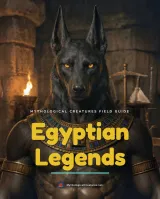
Egyptian Legends: A field guide to the gods and monsters of ancient Egypt
Guardians of the living and devourers of the dead, with the role each played in judgement.
Chinese Beasts: A field guide to the dragons and demon kings of Chinese myth
From river dragons to demon kings, with the legends that shaped five thousand years of storytelling.
Japanese Yōkai: A field guide to the spirits and demons of Japanese folklore
Fifteen spirits, with the signs to watch for and what the old tales say to do if you meet one.
the legend in five swipes.
Limited sponsor opportunity
One slot, carefully chosen partners
We only feature a small number of relevant sponsors at any time. If you create serious myth content, we would like to hear from you.
Partner with usQuick Creature Info
Origin:
Associations:
Our Mythic Legendary Rating:

Habitat:
Supernatural Powers:
Physical Attributes:
Abilities:
Behavior:
Lore:
Related Creatures, Tales or Lore
- HHarpocrates
- NNefertem
- BBes
References
Discover Another Mythical Legend You May Not Have Heard Of?
Uncover the mysteries of ancient folklore and expand your knowledge of legendary beings from cultures around the world.
Dare to Meet the Bunzi....

The Mythological Creatures Book Series
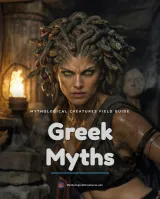
Yōkai, Greek, Norse, Egyptian & Chinese. Five illustrated field guides to the creatures the old stories either warned or told you about.



Curated by the Mythological Creatures Team
Series editor: Mythological Creatures Directory
Primary desk: Hellenic & Ancient Mediterranean Desk
(rev. November 2025)