
Kumarbi: Kumarbi is a senior Hurrian god known as the 'father of gods.
Kumarbi
Kumarbi - Kumarbi is a pivotal figure whose mythological narrative of cosmic succession influenced later traditions, including Greek theogonies.
the legend in five swipes.
the legend in five swipes.
How old is the legend of Kumarbi?
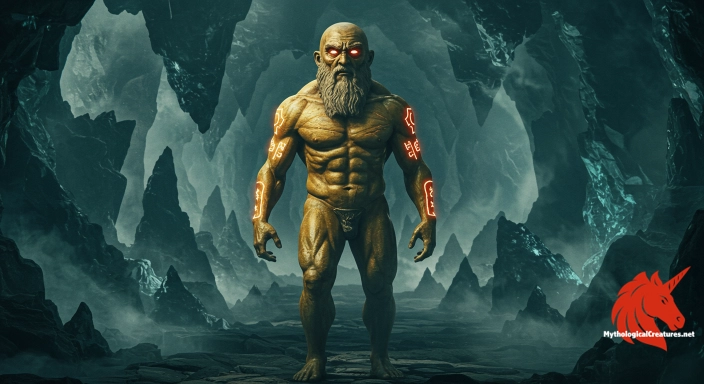
Kumarbi emerges as a potent and enigmatic figure within Hurrian mythology, celebrated as the progenitor of gods and a central architect of divine succession. His origins can be traced to early texts that date back to the eighteenth century BCE, establishing him as one of the most venerable deities in the ancient Near Eastern pantheon. Portrayed as an aged and deposed king of the gods, his image conveys both the wisdom of experience and the bitter taste of lost power. His narrative is woven with themes of cosmic upheaval and cyclical renewal, reflecting the inherent complexities of divine rule. Despite various mythological battles for supremacy, Kumarbi’s enduring identity was never entirely erased from the celestial hierarchy. His association with both agricultural prosperity and the underworld imbued his persona with a duality that resonated deeply with ancient worshippers. The deity’s multifaceted character, blending elements of creation and destruction, underscored the ancient belief in the oscillation between order and chaos. Throughout his myth, Kumarbi remains a symbolic embodiment of the inevitable transitions in power, a motif that has captivated scholars and devotees alike. His legacy is interlaced with a rich cultural context that continues to intrigue modern audiences with its timeless portrayal of divine conflict and renewal.
How many versions of the Kumarbi story are there?
The corpus of texts that recount Kumarbi’s legend is extensive and varied, illustrating a mosaic of mythological narratives woven in different regions. Central to these narratives is the Kumarbi Cycle, a collection of myths that includes the Song of Kumarbi, the Song of LAMMA, the Song of Silver, and the Song of Ullikummi, among other fragmentary accounts. These texts offer contrasting versions of his rise and subsequent struggles, each capturing aspects of his cunning and ambition. In some narrative variants, his schemes extend into the creation of formidable adversaries meant to challenge the tempestuous Teshub. Additional sources reveal his participation in adaptations of later narratives, such as the Atrahasis myth, where roles were reassigned to suit shifting theological paradigms. Intertextual links in trilingual god lists from Ugarit and bilingual ones from Emar highlight his identification with other paramount deities like Enlil and El. Ancient inscriptions from sites including Urkesh, Mari, and Alalakh further attest to his widespread reverence and adaptive character. Each textual strand adds layers to his myth, underscoring both continuity and innovation across time and region. The multiplicity of sources demonstrates how Kumarbi’s myth was not static but evolved in conversation with neighbouring cultures and changing religious landscapes.
What was Kumarbi believed to be capable of?
Iconographic depictions of Kumarbi reveal an imposing figure marked by the signs of age and authority, with a visage that speaks of both resilience and cunning strategy. Artistic portrayals commonly present him as a bearded elder, whose weathered face reflects years of divine scheming and cosmic conflict. His attire is often rendered with regal simplicity, accented by a distinctive headpiece or diadem that signifies his once supreme status among the gods. In certain depictions, subtle motifs of decay are interwoven with symbols of regeneration, alluding to his association with the underworld and ancient cycles of life. Reliefs, such as those found at the Yazılıkaya sanctuary, capture a form that bridges the human and the divine, emphasising both his venerability and his latent threat. The physical renderings suggest a considerable stature, with an aura that communicates both authority and a weight of past transgressions. Variations across different artefacts indicate that while some emphasise a more austere and somnolent demeanour, others highlight his dynamic and scheming character. This duality is emblematic of his mythic role, where physical decline is juxtaposed with profound spiritual potency. The nuanced details in his iconography invite viewers to contemplate the eternal cycles of rise and fall that define the mythological cosmos. Over centuries, these artistic interpretations have continually enriched our understanding of Kumarbi’s complex physical and symbolic presence.
The Geography of the Kumarbi Legend
Across the ancient Near East, Kumarbi’s portrayal underwent notable adaptations, reflecting the diverse cultural and regional contexts in which his worship was practised. In the heartlands of Hurrian culture, he was revered as the venerable father of gods whose narratives underscored the dynamics of cosmic succession. His myth was further adapted when transmitted into the Hittite pantheon, where local deities and ritual practices intertwined with his character to create a more multifaceted divine profile. In areas such as inland Syria, his attributes overlapped with those of Dagan, leading to a shared recognition of a supreme, fatherly deity. Ugaritic texts contributed additional layers by equating him with the local god El, while further associations with Enlil emerged from bilingual and trilingual god lists. The eastern kingdom of Arrapha provided another regional variant, where worship at sites like Azuʾbinnu refined his connection to prosperity and the underworld. In Anatolian contexts, his integration into the local religious landscape saw his narrative and iconography adjusted to align with indigenous cultural values. In each of these regions, the core myth of cosmic displacement and renewal remained intact even as distinctive local features were introduced. The regional diversity in his depiction illustrates the fluidity of ancient myth, where a single deity could be reimagined to resonate with diverse ideological and cultural demands. Such variations underscore the adaptability of Kumarbi’s myth, making him a truly trans-regional figure within ancient mythology.
Kumarbi: Related Figures Across Cultures
Kumarbi’s myth resonates with a number of culturally parallel figures, offering rich terrain for comparative analysis across ancient civilizations. His character shares striking similarities with the Greek figure of Kronos, particularly in the context of violent succession and the overthrow of older generations by new divine orders. The motif of an elder god scheming against his successors is a recurring theme in multiple mythologies, with Kumarbi’s narrative echoing the ancient dynamics of generational conflict seen in both Mesopotamian and Anatolian traditions. Alongside deities such as Dagan and Enlil, he occupies a space reserved for the primordial progenitors of the divine, each of whom serves to illuminate the complex process of cosmic creation and disruption. His narrative also finds a reflective parallel in mythological accounts like the Theogony, where divine family drama shapes the very fabric of the cosmos. Comparative readings reveal that while the specifics of his actions, such as the dramatic castration of a god, are unique, the underlying theme of cyclical divine succession is a widespread ancient motif. The cross-cultural exchange of ideas in the ancient Near East ensured that Kumarbi’s myth would interact with, and influence, neighbouring theogonies. This synthesis of mythic narrative underscores the interconnected nature of ancient belief systems. In drawing analogies between Kumarbi and similar deities throughout the region, it becomes clear that his story functions as part of a broader tapestry of mythological exploration into the nature of power and destiny. The interweaving of motifs across cultures enriches our understanding of how ancient societies grappled with the complexities of divine authority and renewal.
Kumarbi in Modern Culture
Over the centuries, the myth of Kumarbi has undergone a significant evolution, transitioning from ancient temple rituals to modern academic discourse and popular cultural reinterpretation. Early inscriptions and royal records, ranging from Urkesh to Mari, laid the foundation for his enduring legacy in the ancient Near East. As his myth circulated through Hittite, Ugaritic, and Luwian religious traditions, Kumarbi’s image was gradually reshaped to meet the needs of diverse local cults and artistic traditions. In later periods, especially within first millennium BCE texts and Assyrian ritual practices, his story continued to be recast, demonstrating the enduring impact of his myth on successive generations. Modern scholars have revisited his narrative, drawing attention to the intricate interplay between myth and ritual that characterises his legacy. Contemporary interpretations often highlight his role in symbolising the cyclical nature of power and the eternal struggle between order and chaos. Artistic and literary adaptations in recent times have sought to capture the enigmatic quality of his myth, reimagining him as both a cautionary figure and a timeless archetype. His influence has even been observed in comparative studies of mythological succession, inspiring new perspectives in the study of ancient religion. The evolution of his myth reflects a broader tendency in modern thought to engage with themes of transformation, decay, and renewal. In this way, Kumarbi remains a compelling figure whose ancient roots continue to inspire modern cultural and intellectual explorations.
Interesting Fact
An intriguing aspect of Kumarbi's mythology is his dual role as both a progenitor and an adversary, as exemplified by his relationship with his own son, Teshub, which reflects the complex dynamics of divine succession.
Mythological Treasures
Norse Sagas: A field guide to the beasts of the Viking world
Drawn from the saga accounts themselves, with the powers, weaknesses and doom of each being set out.
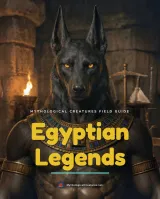
Egyptian Legends: A field guide to the gods and monsters of ancient Egypt
Guardians of the living and devourers of the dead, with the role each played in judgement.
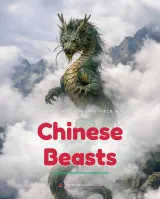
Chinese Beasts: A field guide to the dragons and demon kings of Chinese myth
From river dragons to demon kings, with the legends that shaped five thousand years of storytelling.
the legend in five swipes.
For serious myth projects
Feature your work alongside the legends
From academic works to story-rich games, we highlight projects that respect world mythologies. Talk to us about a measured, long-term placement.
Start a conversationQuick Creature Info
Origin:
Our Mythic Legendary Rating:

Also Sometimes Known As:
Habitat:
Supernatural Powers:
Physical Attributes:
Abilities:
Behavior:
Weaknesses:
Lore:
References
Discover Another Mythical Legend You May Not Have Heard Of?
Uncover the mysteries of ancient folklore and expand your knowledge of legendary beings from cultures around the world.
Dare to Meet the Moroi....
The Mythological Creatures Book Series
Yokai, Greek, Norse, Egyptian & Chinese. Five illustrated field guides to the creatures the old stories either warned or told you about.

Curated by the Mythological Creatures Team
Series editor: Mythological Creatures Directory
Primary desk: Hellenic & Ancient Mediterranean Desk
(rev. November 2025)