
Ly Erg: The Ly Erg is a soldier-dressed fairy from Scottish folklore with a distinctive red, blood-stained right hand.

Ly Erg
Ly Erg - Embodies the perilous and unpredictable nature of faerie encounters in the Scottish Highlands, serving as a grim warning to those who dare engage with the supernatural.
Origins & First Encounters
Ly Erg emerges as a captivating figure within Scottish folklore whose origins are inextricably linked to the remote and rugged Glenmore Forest of the Cairngorms National Park. Its spectral presence, dressed in the semblance of a bygone soldier, reflects both historical echoes and supernatural menace. The narrative originates from a melding of oral traditions and early written attestations, suggesting that this enchanted entity has haunted local imaginations for generations. Early accounts, some of which date back to antiquarian observations in the 19th century, imbue its tale with a mysterious blend of honour and peril. Every mention of the Ly Erg resonates with regional sentiment and a deep respect for the untamed Scottish landscape. Its legend, interwoven with themes of cursed combat and inevitable doom, has served as a potent reminder of the unpredictable interplay between man and the natural world. The lore surrounding the creature captures a unique intersection of martial imagery and otherworldly forewarning. With each retelling, the narrative adapts, reflecting the cultural and historical nuances of the communities that preserve it. As such, the Ly Erg stands as a timeless symbol of the enigmatic and sometimes dangerous boundaries between folklore and reality.
Source Texts & Tale Variants
Early documentation of the Ly Erg emerges from mid-19th-century writings that capture its ominous challenges to unsuspecting passersby. Detailed accounts, enriched by local oral traditions, speak of a spectral soldier whose red right hand and martial demeanour distinguish it from ordinary apparitions. One notable narrative, attributed to the antiquarian Joseph Robertson, recounts the tragic fate of three brothers who faced the creature and met their doom shortly thereafter. While written records remain sparse, the creature’s story has been handed down through generations in the Highlands, each version adding layers of local colour and interpretive detail. Some versions place strong emphasis on the creature’s near-water encounters as significant ritualistic sites. Variations in the accounts reveal differences in the portrayal of its challenge, with some communities focusing on the spectral soldier’s defiant stance and others on the inevitability of death following any confrontation. The rich tapestry of sources, whether in manuscript or as part of oral recitations, highlights the enduring appeal of its narrative. The diverse story variants collectively reinforce the theme of a cursed, inescapable fate that looms over any who dare engage the Ly Erg. Through these multifaceted sources, the legend not only survives but continues to fuel intrigue and speculation about its true origins.
Form & Powers
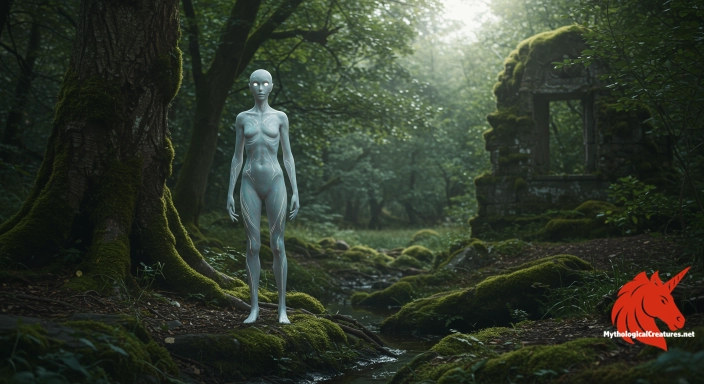
The Ly Erg is described with startling clarity as a spectral figure garbed in the attire of a historical soldier, evoking an era long past. Its uniform, with its carefully rendered details and timeworn appearance, mirrors military precision while simultaneously betraying an eerie otherworldliness. What makes the creature indelibly distinct is its red right hand, invariably portrayed as bloodstained—a stark contrast to the muted tones of its clothing. This singular feature not only serves as a visual hallmark but also symbolises the violent legacy it carries. The delicate interplay between the spectral softness of its features and the harsh, almost ritualistic mark on its limb creates an impression of tragic inevitability. Descriptions vary, with some accounts mentioning an intense, unyielding gaze that speaks to a burden of past transgressions. The uniform itself appears to be an assemblage of time and myth, hinting at a ceremonial role rather than mundane attire. In detailed portrayals, every element—from the fabric’s fraying edges to the nuanced scarlet brilliance of its hand—contributes to a visage that is memorable and foreboding. This careful craftsmanship of imagery ensures that the Ly Erg endures in the collective imagination as both a soldier and a sinister spectre.
Regional Faces
Regional interpretations of the Ly Erg reveal a spectrum of beliefs and adaptations that colour its myth across different locales in Scotland. In the Glenmore Forest, its presence is strongly associated with bodies of water and shadowed glens, where every ripple of water hints at an encounter with the supernatural. Other corners of the Highlands have woven additional layers into its narrative, sometimes portraying it as an avenger of wrongs or as an omen of impending misfortune. The creature’s vivid image is adapted in various local retellings, with subtle deviations in its appearance and the circumstances of its dread-inducing challenge. Some communities accentuate its role as a solitary wanderer marked by a cursed destiny, while others integrate the story into a broader tapestry of haunted sites and ancient mysteries. This regional diversity not only enriches the legend but also underscores the deep connection between Scotland’s varied landscapes and its mythic inhabitants. The process of localising the myth allows for a unique cultural imprint, where every valley and glen contributes its own interpretation of the spectral soldier’s purpose. In each adaptation, the Ly Erg becomes a mirror reflecting the fears, values, and environmental particularities of its host community. Thus, the creature’s myth continues to thrive as a versatile emblem of Scotland's enchanted and perilous wilderness.
Cultural Parallels
When set against the broader canvas of European and Celtic mythologies, the Ly Erg occupies a singular position as a spectral warrior whose characteristics echo yet distinctively differ from similar legendary figures. Its bloodstained red hand immediately invites comparisons with creatures such as the redcap, known throughout the borderlands for their lethal attributes and malevolent nature. Although both beings share the common trait of a crimson feature, the Ly Erg’s military uniform and dignified yet tragic appearance hint at a deeper narrative of honour and retribution. This comparative lens reveals that while redcaps are often depicted as mischievous and violently carefree, the Ly Erg is imbued with a solemn and foretelling presence. In other cultural myths, spectral soldiers serve as messengers of past conflicts and reminders of historical calamities, themes that resonate strongly within the Ly Erg’s story. The iconic motif of blood, prevalent across various mythologies, is here distilled into a potent symbol of cursed destiny and irrevocable consequences. Such parallels not only bridge different cultural traditions but also highlight a shared human fascination with the interplay between martial valor and supernatural punishment. Through these cross-cultural connections, the Ly Erg contributes to a rich conversational space in myth, where symbols and narrative archetypes continue to evolve. This layered comparative analysis reinforces the understanding of the creature as both a uniquely Scottish legend and part of a broader mythic heritage.
Legacy & Modern Evolution
The evolution of the Ly Erg’s legend is a testament to the enduring power of folklore in adapting to new cultural landscapes and historical contexts. What began as a cautionary tale rooted in the rugged wilderness of the Cairngorms has grown into a symbol of the mysterious intersections between history, death, and the supernatural. Over time, the narrative has transformed, absorbing elements of gothic literature and modern horror to appeal to diverse audiences. Contemporary reinterpretations often cast the creature in a dual role, simultaneously as a guardian of ancient secrets and a harbinger of inevitable doom. Modern storytellers and artists have reclaimed the myth, drawing on its visceral imagery to explore themes of legacy, isolation, and the burden of memory. As tourism and cultural heritage initiatives embrace the mystique of Scotland’s enchanted landscapes, the Ly Erg now features in local ghost tours, exhibitions, and creative media. Its depiction has become more nuanced, inviting both admiration for its historical significance and cautionary reflection on the dangers it portends. The evolution of its legend mirrors broader shifts in cultural attitudes toward folklore, where old traditions are continuously reimagined to resonate with modern sensibilities. In this way, the Ly Erg remains an influential figure, bridging the ancient and the contemporary while retaining the power to captivate and instil awe.
Interesting Fact
It is particularly fascinating that the Ly Erg’s challenge guarantees death for its opponents, a detail that has cemented its role as a fearsome and enduring figure in Scottish folklore.
Mythology-aligned partners
Showcase your myth-friendly brand here
Run a store, studio, or platform that lives in the world of myth and folklore? A curated sponsor panel on these pages may fit.
Explore partnership optionsQuick Creature Info
Features:
Our Mythic Legendary Rating:

Habitat:
Supernatural Powers:
Physical Attributes:
Abilities:
Behavior:
Lore:
Related Creatures, Tales or Lore
References
Discover Another Mythical Legend You May Not Have Heard Of?
Uncover the mysteries of ancient folklore and expand your knowledge of legendary beings from cultures around the world.
Dare to Meet the Changeling....
Curated by the Mythological Creatures Team
Series editor: Mythological Creatures Directory
Primary desk: Northern & European Folklore Desk
(rev. November 2025)