
Nian: Nian is a mythological beast from Chinese folklore, notorious for its annual rampages during the Chinese New Year.
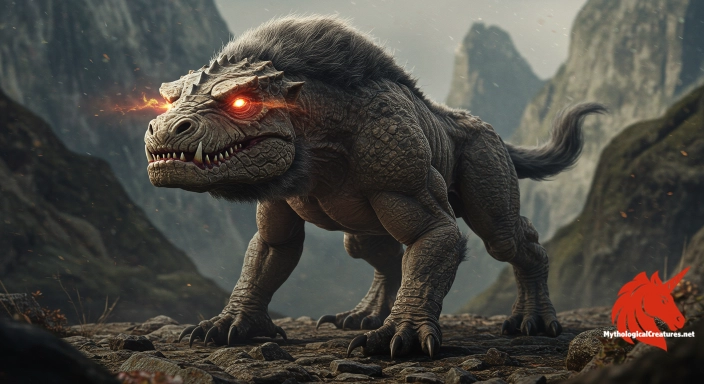
Nian
Nian - The legend of Nian explains why red decorations and loud firecrackers are integral to Chinese New Year celebrations, as these elements are believed to ward off the beast.
the legend in five swipes.
the legend in five swipes.
Where does Nian come from?
Nian stands as a captivating and enigmatic figure within Chinese mythology, its legend deeply entwined with the vibrancy of the Chinese New Year. Originally believed to dwell beneath the sea or amid forbidding mountains, the creature has long ignited both awe and apprehension in the collective imagination. The term ‘Nian’ itself, echoing the notions of both ‘year’ and ‘new year’, symbolises the cyclical rhythm of renewal and the passage of time. Its mythic presence, although shrouded in mystery, appears in the earliest written sources dating from the early 20th century, leaving scholars to debate its precise origins. In some accounts, the beast's emergence coincides with the transition from one year to the next, making it a metaphor for both ending and beginning. Its legend, therefore, encapsulates a complex intermingling of fear, hope, and renewal that resonates with the transformative spirit of festive celebrations. The enduring association of Nian with protective rituals—such as the donning of red garments, the clamor of drumbeats, and the burst of firecrackers—further underscores its cultural significance. Throughout the centuries, despite uncertainties regarding its precise origins, Nian has firmly established itself as a symbol of both menace and metamorphosis in Chinese folklore.
Where can you read about Nian?
The record of Nian in written history is remarkably recent, with the initial accounts emerging in the early decades of the 20th century. This relative paucity of early textual evidence has spurred debates about whether Nian represents an age-old myth transcribed only later or a more modern narrative distilled from regional oral traditions. Local communities have long passed down stories of a formidable beast whose appearance heralds the arrival of the new year, thereby enriching the myth with layers of regional colour and variance. Certain versions of the legend vividly portray Nian as an aggressive creature that descends upon villages in moments of transition, while others imbue it with a symbolic role reminiscent of nature’s cyclical challenges. The diversity of these story variants highlights how different regions have adapted the narrative to mirror their environment and cultural experiences. Over time, the intermingling of oral tradition with evolving festival customs has allowed the legend to persist in both scholarly discussions and popular lore. In many accounts, the creature’s fearsome nature is paralleled by rituals designed explicitly to repel it, underscoring the dynamic nature of the myth. In this way, even limited textual resources have provided fertile ground for a rich tapestry of folklore that continues to evolve.
Nian: Powers, Strengths and Vulnerabilities
Descriptions of Nian's appearance are as varied as the regions that recount its tale, inviting endless artistic reinterpretation. Often envisioned as a colossal and formidable beast, though some traditions settle on a more grounded scale, closer to the height of a tall warhorse, Nian is depicted with a blend of features that evoke both aquatic and terrestrial predators. Some folkloric images cast it with a body clad in rough, scaly skin, a texture reminiscent of ancient dragons intermingled with the raw ferocity of wild beasts. Others render it more earthbound still: a flat-faced lion's head wreathed in a wild mane, set upon the heavy body of a great dog, with sharp pointed ears and rows of long fangs framing its glare. Exaggerated horns and a pair of penetrating, fierce eyes frequently emerge in these depictions, imbuing the creature with an aura of omnipotent menace, even as quieter renderings strip the horns away entirely. Its silhouette, at times ambiguously shaped and imposing in scale, reflects the malleable nature of myth where size and form shift to enhance its legendary status. Contemporary illustrations sometimes introduce vibrant hints of colour that contrast with its traditionally dark and ominous appearance, linking its image to the celebratory aspects of the Chinese New Year. This blending of fear and festivity in its visual portrayal captures a paradox that has long intrigued both artists and storytellers. Even in the absence of a fixed corporeal blueprint, every rendition of Nian, whether towering and horned or compact and lion-faced, invites observers to confront the mystery and symbolism woven into its myth.
Which communities kept the Nian tradition alive?
Regional interpretations of Nian offer a captivating insight into how local customs shape legendary narratives. In coastal areas, some tales situate Nian in the depths of the sea, enriching its myth with a maritime mystique and an association with the unknown powers of water. In contrast, inland communities, especially those near rugged mountain ranges, portray Nian as a creature of the wild, embodying the untamed spirit of nature and the perils of its terrain. Each regional variant adapts the creature’s characteristics to resonate with local environmental challenges and cultural practices. For instance, while some areas emphasise its violent tendencies, others focus on the transformative power of its appearance as a signal for renewal. Rituals to combat the beast—ranging from the strategic use of firecrackers to the wearing of auspicious red apparel—also differ subtly from one locality to another. These varied interpretations not only enhance the myth’s richness, but also reveal how communities historically have used the story of Nian to address and symbolically conquer seasonal hardships. Such regional adaptations ensure that the legend of Nian remains a living, evolving narrative deeply rooted in local identity.
Nian: Echoes in Other Mythologies
Nian shares an intriguing conceptual space with a host of mythological beasts found worldwide that symbolise the transition between seasons and the perpetual combat between light and darkness. Comparable to European legends where fearsome creatures emerge during the winter solstice, Nian too has been portrayed as a harbinger of both doom and renewal. Across Asia, figures such as the Japanese oni resonate with Nian’s dual nature—embodying peril on one hand while stirring a sense of communal empowerment on the other. The motif of a destructive force that is ultimately subdued through ritualistic celebration also finds echoes in various cultural traditions, reinforcing a universal desire to confront and transcend fear. While Western myths might cast a shadow with images of slumbering giants or werewolves, Chinese folklore uniquely transforms the terror embodied by Nian into a catalyst for communal festivity. This cross-cultural dialogue between myths highlights common human experiences, where darkness is met with carefully orchestrated celebrations of light. Such comparative analysis not only deepens our understanding of Nian’s role in its cultural setting, but also underscores the shared narrative threads that bind global mythologies. Ultimately, the story of Nian is a testament to the human spirit’s capacity to convert dread into hope, a theme as old as time itself.
Why is Nian still popular?
Over the decades, the story of Nian has undergone considerable evolution, reflecting shifts in societal values and cultural practices. Initially recorded in the early 20th century, its modern interpretation has been shaped by a blend of academic inquiry and the relentless creativity of popular culture. The creature’s enduring legacy is most vividly expressed during Chinese New Year, where the widespread use of red, the reverberation of firecrackers, and the rhythmic beating of drums serve to symbolically banish its menace. In contemporary media, animated portrayals and cinematic retellings have introduced Nian to a global audience, transforming it from a local creature of folklore into a broader cultural icon. Artistic reinterpretations now frequently merge traditional imagery with modern aesthetics, creating a dynamic visual language that resonates with new generations. Public festivals and cultural exhibitions continue to evoke Nian’s spirit, channeling its myth into themes of renewal, rebirth, and the cyclical nature of time. This modern legacy encapsulates a shift from a narrative of fear to an embrace of transformation and community empowerment. As a result, Nian remains not only a relic of ancient myth, but also a vibrant symbol of continual reinvention in Chinese cultural consciousness.
Interesting Fact
An interesting aspect of the Nian legend is how a terrifying beast has been transformed into a cultural catalyst, inspiring practices that continue to define Chinese New Year celebrations.
Mythological Treasures
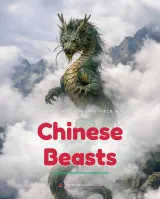
Chinese Beasts: A field guide to the dragons and demon kings of Chinese myth
From river dragons to demon kings, with the legends that shaped five thousand years of storytelling.
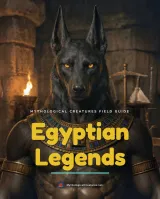
Egyptian Legends: A field guide to the gods and monsters of ancient Egypt
Guardians of the living and devourers of the dead, with the role each played in judgement.
Japanese Yokai: A field guide to the spirits and demons of Japanese folklore
Fifteen spirits, with the signs to watch for and what the old tales say to do if you meet one.
the legend in five swipes.
For publishers and studios
Your next readers are already here
Many of our visitors are looking for books, campaigns, and resources that deepen their journey into myth. Position your title or setting here.
Discuss a placementQuick Creature Info
Features:
Associations:
Our Mythic Legendary Rating:

Also Sometimes Known As:
Habitat:
Supernatural Powers:
Physical Attributes:
Abilities:
Behavior:
Weaknesses:
Lore:
Related Creatures, Tales or Lore
References
Discover Another Mythical Legend You May Not Have Heard Of?
Uncover the mysteries of ancient folklore and expand your knowledge of legendary beings from cultures around the world.
Dare to Meet the Amalthea....
-32da5def-9f3a-45f7-bbb1-bcc72d9fcd48_small.webp "Depiction of Amalthea")
The Mythological Creatures Book Series
Yokai, Greek, Norse, Egyptian & Chinese. Five illustrated field guides to the creatures the old stories either warned or told you about.
Curated by the Mythological Creatures Team
Series editor: Mythological Creatures Directory
Primary desk: Asian & Pacific Myth Cycles Desk
(rev. November 2025)