
Ninurta: Ninurta is an ancient Mesopotamian deity originally associated with agriculture, healing, and later warfare.
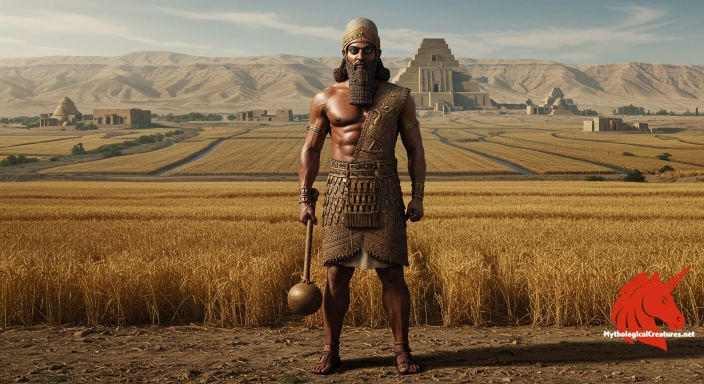
Ninurta
Ninurta - A central deity representing the dual aspects of nurturing agriculture and formidable warfare, reflecting the evolution of Mesopotamian society.
Origins & First Encounters
Ninurta stands as a multifaceted figure in ancient Mesopotamian belief, blending both nurturing and combative attributes in a way that reflects the complexity of early civilisation. He emerged from the fertile grounds of Sumerian tradition, where he was initially revered for his roles in agriculture and healing. His divine pedigree, as the son of the chief god Enlil, elevated him to a status that resonated deeply with communities seeking both sustenance and protection. Early inscriptions associate him with the prosperity of the land and the curing of human ailments, setting the stage for his later evolution. As the geopolitical climate shifted and militarisation gained prominence, Ninurta’s persona expanded to incorporate the qualities of a warrior deity. Worship at the Eshumesha temple in Nippur and later at major centres like Kalhu solidified his position in the pantheon. His enduring image encapsulates the dynamic interrelationship between earth’s bounty and the forces of conflict. This synthesis of roles allowed him to remain a central figure whose attributes adapted as the needs of society changed over centuries. His myth offers a window into a world where divine intervention was integral to both everyday survival and the spectacle of battle. In his very being, Ninurta mirrors the transition of ancient society from agrarian peace to the realities of military might.
Source Texts & Tale Variants
Ancient narratives about Ninurta span a rich variety of texts and oral traditions that have come down to us in fragmented yet evocative form. Epic poems such as Lugal-e detail his heroic confrontation with the demon Asag, where he makes use of his enchanted mace, Sharur, to vanquish supernatural foes. Other literary works, including texts often dubbed the 'Sumerian Georgica', present him as a trusted advisor who imparts crucial agricultural wisdom to farmers. Akkadian myths add layers to his character by recounting his fierce struggle against the Anzû bird, an episode that underscores his role as a divine champion. There are also references to his engagement with a mysterious band of warriors known as the 'Slain Heroes', even if the full narrative of that myth has not survived intact. Royal inscriptions and temple records from Nippur and Lagash further attest to his long-standing veneration and the evolving fabric of his legends. Each variant of these stories offers insights into shifting cultural priorities, whether emphasising the nurturing or the martial dimensions of his persona. The multiplicity of sources underscores a vibrant tradition, where his exploits were celebrated in various regional and temporal contexts. Such a tapestry of narratives not only enriches our understanding of Ninurta but also highlights the adaptive nature of myth in ancient societies. By weaving together agricultural rites and heroic combat, these texts create a composite image that continues to captivate modern audiences.
Form & Powers
Ninurta is often depicted with a commanding physical presence that captures his dual essence as both a tender guardian and a formidable warrior. Artistic portrayals frequently show him brandishing the talking mace Sharur, a powerful symbol of his martial authority and divine mandate. In these depictions, he is adorned with iconographic elements such as a plough, which serves as a reminder of his agricultural origins and the life-sustaining power of the earth. Sculptures and reliefs from assorted Mesopotamian sites commonly present him as robust and resolute, with a physique that conveys both physical strength and spiritual vigour. At times, he is illustrated with eagle-headed or winged features, lending a majestic and otherworldly quality to his image. His attire and regalia are marked by intricate designs that blend motifs of nature with symbols of combat, reflecting his composite character. Detailed carvings reveal a dynamic posture that is in constant dialogue with the forces of creation and destruction. The careful integration of symbols such as the plough and the mace in his imagery highlights the balanced interplay between nurturing and aggression. Overall, the physical representations of Ninurta articulate a synthesis of aesthetics and mythology, where divine power is manifest in every sculpted detail. These visual expressions continue to be celebrated as masterpieces of ancient art, evoking the enduring legacy of his multifarious identity.
Regional Faces
The character of Ninurta manifests differently across Mesopotamia, with regional variations highlighting local priorities and cultural nuances. In the heart of Sumer, he was primarily associated with the rhythms of agriculture and the mysteries of healing, his worship intricately linked to the fertility of the land. Temples in Nippur and Girsu celebrated his nurturing aspects through rituals that focused on the cyclical renewal of nature. Conversely, in the northern regions under Assyrian influence, Ninurta’s image underwent a transformation, emphasising his prowess as a warrior in an era marked by militaristic ambition. The grand temple at Kalhu, commissioned by King Ashurnasirpal II, stands as a testament to the Assyrian reimagining of his identity as a god of war. Local legends and artistic depictions in these areas often stress his combative attributes, reflecting the martial spirit of the ruling elite. Even within these distinct spheres, artistic nuances reveal subtle overlaps, where agricultural symbols coexist with defensive iconography. Inter-regional exchange of ideas allowed for an evolution in his portrayal, making him a versatile deity adaptable to diverse cultural contexts. Ultimately, the regional adaptations of his cult demonstrate how a single divine figure can embody the unique traits and needs of different communities across time and space.
Cultural Parallels
In the broader panorama of ancient mythologies, Ninurta occupies a space that is both unique and resonant with parallels from neighbouring cultures. His simultaneous embodiment of healing, agriculture, and warfare invites comparisons with deities who also straddle the realms of creation and combat. For instance, some traditions draw an intriguing parallel between Ninurta and Nimrod, a figure from later biblical texts renowned as a mighty hunter. This association, though debated, underscores the shared motifs of strength and dominion that recur in ancient narratives. Within Mesopotamia itself, comparisons with gods like Marduk serve to illuminate differing facets of divine kingship and martial acumen. His iconography, often marked by symbols such as the eagle and the plough, echoes similar imagery used by other cultures to represent supreme authority over both nature and warfare. The layered construction of his myth, which accommodates both nurturing and destructive forces, finds echoes in the dualistic portrayals of other divine archetypes in the ancient Near East. Cross-cultural studies reveal that many societies sought deities who mirrored the ambivalence of human experience, reconciling the need for sustenance with the exigencies of conflict. In this light, Ninurta emerges as a quintessential figure who not only defined his own pantheon but also contributed to a shared ancient dialogue on the balance between life and war. His enduring image encapsulates themes that are both regionally specific and universally resonant across ancient traditions.
Legacy & Modern Evolution
The evolution of Ninurta’s myth highlights a timeless journey from a protector of agriculture and healer to a revered warrior deity whose influence transcends the boundaries of ancient lore. His early role in Sumerian society, characterised by benevolence and the nurturing of life, gradually merged with narratives of fierce combat as the dynamics of power shifted in Mesopotamia. Over the centuries, his dual legacy has inspired artists, historians, and modern storytellers who view him as a symbol of both resilience and transformation. The grand stone reliefs and temple inscriptions that bear his image have, at various times, been misinterpreted or reimagined, leading to his occasional identification with figures such as Nimrod or Nisroch in later traditions. These reinterpretations have perpetuated an aura of mystery and grandeur around his persona. In modern scholarship, Ninurta is frequently examined as a case study in how deities adapt to reflect changing social, political, and economic landscapes. Exhibitions in museums and appearances in fantasy literature underscore his sustained impact on contemporary cultural narratives. His legacy continues to serve as a bridge between the ancient and the modern, inviting ongoing exploration into the ways myth influences identity and societal values. The adaptability of his myth not only reflects the evolution of Mesopotamian civilisation but also speaks to the universal themes of power, protection, and renewal that remain relevant today. In essence, Ninurta’s enduring presence reaffirms the significant role that ancient mythology plays in shaping our understanding of cultural heritage and human civilisation.
Interesting Fact
It has been suggested that Ninurta may have inspired the biblical figure Nimrod, underlining his far-reaching influence across cultures.
Mythology commerce, done carefully
Align your store with our global myth audience
If you sell myth-inspired jewellery, prints, decks, or collectibles, we can feature your brand without overwhelming the reading experience.
Partner with usQuick Creature Info
Origin:
Associations:
Our Mythic Legendary Rating:

Also Sometimes Known As:
Habitat:
Supernatural Powers:
Physical Attributes:
Abilities:
Behavior:
Lore:
Related Creatures, Tales or Lore
- AAshur
- NNergal
- MMarduk
References
Discover Another Mythical Legend You May Not Have Heard Of?
Uncover the mysteries of ancient folklore and expand your knowledge of legendary beings from cultures around the world.
Dare to Meet the Mares of Diomedes....
Curated by the Mythological Creatures Team
Series editor: Mythological Creatures Directory
Primary desk: Hellenic & Ancient Mediterranean Desk
(rev. November 2025)