
Pherusa: Pherusa is a dual aspect Greek goddess, revered both as one of the marine Nereids and as one of the Horae.

Pherusa
Pherusa - Her dual identity underscores the interconnectedness of nature's turbulent forces with the structured flow of time in Greek mythology.
the legend in five swipes.
the legend in five swipes.
When did people first speak of Pherusa?
Pherusa stands out as a multifaceted figure in Greek mythology, celebrated both as one of the fifty Nereids and as one of the Horae. Her name, meaning 'the bringer' or 'she who carries,' encapsulates her role as a divine conveyor of natural and cosmic forces. Born of the ancient sea god Nereus and the Oceanid Doris, her essence is deeply interwoven with the dynamic energy of the oceans. As a Nereid, she symbolises the magnificence and capriciousness of sea swells, contributing to the grand tapestry of marine deities. In her capacity as one of the Horae, she also reflects the orderly progression of time and the rhythms of nature. Her stories first echo through early mythological texts, where she is depicted as a subtle yet integral presence among the gods. The dual aspects of her identity invite a unique interpretation of nature and the passage of time. In the cultural context of ancient Greece, Pherusa embodies the synthesis of the natural and the celestial, resonating with both seafaring communities and those attuned to the cycles of life.
The Documented Accounts of Pherusa
Ancient literary sources, albeit fragmentary, mention Pherusa in contexts that highlight her multiplicity of roles. Early references in works discussing the Nereids provide brief glimpses into her maritime character, associating her with the grandeur of ocean swells and the emotional undertones of mythic events. In particular, her appearance alongside her sisters during poignant moments, such as when Thetis attends to Achilles’ grief, underscores her involvement in key mythological narratives. Another tradition ascribes to her the title of one of the Horae, a connection recorded in sources like Hyginus, thereby expanding her domain to include the regulation of natural time. These disparate textual strands indicate a layered set of traditions that gradually enriched her profile within the Greek pantheon. Although detailed personal myths dedicated solely to her are scarce, the available accounts allow us to appreciate the evolving nature of her myth. Later compilations and Hellenistic interpretations further underscore her significance amidst a constellation of minor deities. The resulting body of tradition is complex, suggesting that Pherusa's role was as much about symbolic resonance as it was about defined narrative presence.
Pherusa: Form, Powers and Weaknesses
Descriptions of Pherusa’s physical form are open to imaginative interpretation, as classical texts offer only subtle hints of her appearance. As a daughter of the sea, she is often visualised with an ethereal glow reminiscent of moonlight dancing over restorative waves. Her form is typically rendered as graceful and fluid, capturing the ever-changing nature of the ocean. Flowing hair and fine, diaphanous garments evoke the imagery of sea foam and shifting tides, imbuing her with an aura of both fragility and strength. When depicted as one of the Horae, her presence takes on an air of measured dignity and ordered rhythm, aligning her with the steady march of time. Artists have frequently portrayed her with soft, harmonious features that reflect both the beauty of the marine world and the balance inherent in time’s flow. Variations in artistic depictions sometimes suggest a delicate figure whose size and poses adapt to the aspect of nature she is illustrating. In every representation, however, Pherusa exudes a dual sense of fluidity and precision that encapsulates the melding of natural beauty and cosmic order.
Pherusa Across Different Regions
Pherusa’s myth experienced diverse regional interpretations throughout ancient Greece, with different locales emphasising distinct aspects of her identity. In coastal areas, her role as a member of the Nereids was particularly celebrated, with local communities invoking her as a potent protector of seafarers and a harbinger of the mighty sea swells. Fisherfolk and maritime settlements often held festivals and rituals that honoured her connection to the ocean’s bounty and temperamental moods. Conversely, in inland regions where agricultural cycles and seasonal rhythms held sway, her aspect as one of the Horae resonated more deeply with communal values. Here, her association with the orderly passage of time and natural cycles found expression in rites and seasonal celebrations. Such regional adaptations not only enriched her myth but also allowed for a broader range of religious functions that suited the local culture. In some interpretations, her dual attributes were blended, creating a seamless image of a goddess who governed both the physical and metaphysical realms. These varied regional narratives illustrate how a single divine figure could be embraced differently to mirror the environmental and societal concerns of a community.
Does another culture have a figure like Pherusa?
Pherusa’s composite nature as both a marine and temporal deity invites compelling comparisons with figures from other mythological traditions. Similar to water spirits or nymphs found in myriad cultures, her maritime aspect mirrors the universal reverence for the transformative power of water. At the same time, her role as a keeper of time places her in a thematic family with deities who oversee natural cycles, comparable to figures in Roman and Celtic mythologies. This duality reflects a broader cultural tendency in ancient myth to combine the forces of nature with the regulation of cosmic order. In various traditions, deities that bridge the elements and the passage of time serve as mediators between chaos and order, a role that Pherusa fulfills elegantly. The intermingling of her characteristics has led some to view her as a symbol of balance, much like hybrid entities found in Eastern and Western lore. Her overlapping attributes underline the similarities between Greek interpretations and those of neighbouring cultures, where local deities often assumed multiple, overlapping roles. The comparative study of such figures enriches our understanding of how ancient peoples conceptualised the interplay between the natural world and temporal rhythms.
Where do you see Pherusa today?
Over the centuries, the representation of Pherusa has undergone a notable transformation, mirroring shifts in cultural and artistic sensibilities. Although she appears as a relatively minor figure in the corpus of classical myth, subsequent reinterpretations have cast her in a new light as a symbol of nature’s enduring cycles. Renaissance and Romantic artists, with their penchant for reimagining classical themes, often featured her as an embodiment of both the powerful seas and the relentless flow of time. In modern times, Pherusa has been rediscovered by scholars and creatives alike, who see in her a metaphor for environmental sustainability and the inescapable passage of time. Her dual aspects offer fertile ground for discussions on the integration of natural forces and the principles that underpin cyclical change in the universe. Contemporary artistic portrayals and literary references have further cemented her status as a timeless reminder of nature’s delicate equilibrium and dynamism. Her evolving image invites reflection on how ancient mythology continues to provide insight into modern concerns, bridging historical tradition with current ecological and philosophical inquiries. Ultimately, Pherusa’s enduring legacy is a testament to the power of myth to evolve and inspire across the ages.
Interesting Fact
An intriguing aspect of Pherusa’s mythology is her dual identity, serving both as a nurturer of the sea’s mighty forces and as a custodian of seasonal order.
Mythological Treasures
Greek Myths: A field guide to the monsters of ancient Greece
Every monster here earned its place in legend, and each gets a full page of artwork and the story behind it.
Norse Sagas: A field guide to the beasts of the Viking world
Drawn from the saga accounts themselves, with the powers, weaknesses and doom of each being set out.
Egyptian Legends: A field guide to the gods and monsters of ancient Egypt
Guardians of the living and devourers of the dead, with the role each played in judgement.
the legend in five swipes.
For authors, artists, and makers
Created something from the realm of myth?
If your book, deck, game, or artwork draws from legendary creatures and lore, you can showcase it here in a tasteful, year-round placement.
Share your projectQuick Creature Info
Origin:
Features:
Associations:
Our Mythic Legendary Rating:

Also Sometimes Known As:
Habitat:
Supernatural Powers:
Physical Attributes:
Abilities:
Behavior:
Lore:
Related Creatures, Tales or Lore
References
Discover Another Mythical Legend You May Not Have Heard Of?
Uncover the mysteries of ancient folklore and expand your knowledge of legendary beings from cultures around the world.
Dare to Meet the Ponaturi....
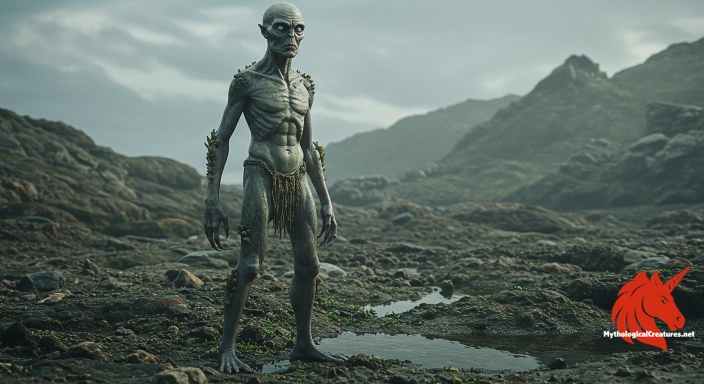
The Mythological Creatures Book Series
Yōkai, Greek, Norse, Egyptian & Chinese. Five illustrated field guides to the creatures the old stories either warned or told you about.


Curated by the Mythological Creatures Team
Series editor: Mythological Creatures Directory
Primary desk: Hellenic & Ancient Mediterranean Desk
(rev. November 2025)