
Skogsrå: The Skogsrå is a seductive forest spirit from Swedish folklore that appears as a beautiful woman with hidden, uncanny features.
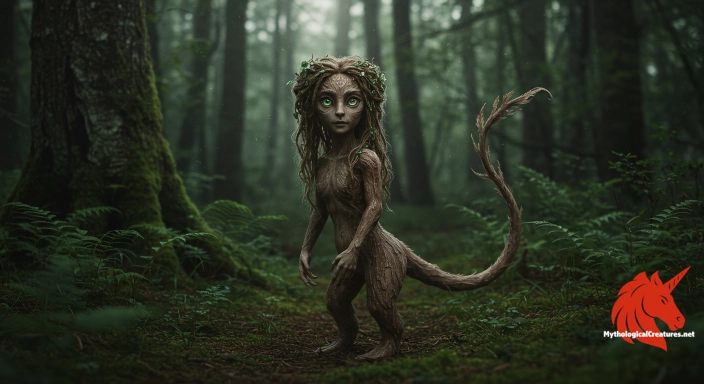
Skogsrå
Skogsrå - Embodies the dangerous allure of nature and the complex relationship between humans and the natural world
Origins & First Encounters
The Skogsrå is a captivating figure rooted in Swedish folklore that blends seduction with enigmatic power. Originally emerging from centuries-old oral traditions, this forest spirit envelops the woodland with an alluring mystery. Her narrative reflects a deep connection to the natural world, symbolising both the nurturing aspects of nature and its perilous, untamed side. The creature is often addressed by varied names, each portraying different facets of her role in the lush, vibrant wilderness. Through the ages, villagers have recounted tales of her irresistible charm and warning presence in the forest.
Much like a guardian of ancient woodlands, the Skogsrå is portrayed as a mysterious custodian whose appearance invites both admiration and caution. Her legend has flourished in the cultural memory, resonating with those who perceive the forest as a realm of living magic. The lore surrounding her offers a profound metaphor for nature’s dual capacity to nurture and to exact retribution. She embodies the eternal interplay between beauty and danger within the natural world, a reminder of the unpredictability inherent in wild places. Over the centuries, her story has served as a constant reminder of the rich, mythopoeic depths that the human spirit associates with the forest.
Source Texts & Tale Variants
Ancient manuscripts and local folklore have long continued to preserve the various tales of the Skogsrå, a figure woven into the fabric of Swedish myth. Her story appears in a range of sources, from old folk ballads to regional story collections in the archivable archives of northern Europe. These narratives, some of which date back to early medieval records, illustrate a shared certainty about the creature’s enchantments and lethal allure. In diverse oral traditions, storytellers have recounted her dual nature, portraying her as a benevolent guardian of wildlife and a vengeful spirit capable of retribution. The multiplicity of her names such as Skogsrå, Skogsfrun, and Huldran point towards regional variants that have emerged over centuries.
Cultural retellings have led to variations of her tale, with certain accounts focusing more on her mystifying role in forest fertility, while others emphasise the causative role she plays in the downfall of wayward hunters. Some narratives describe a scenario where a moment of misjudged infidelity leads the seduced men interwoven with misfortune and death. There are detailed accounts in local folklore that highlight the potent symbolism of her hidden tail and vegetal back. Additionally, later legends from parts of Finland introduce new elements such as silver bullets, expanding the myth into more modern frameworks. This rich tapestry of primary sources ensures that every retelling of her legend augments the mystery and wisdom of ancient sylvan traditions.
Form & Powers
The Skogsrå is enchanting in her physical manifestation, designed to lure the unwary with her enticing beauty. With captivating, deep eyes and an enchanting smile that masks hidden depths, she exudes a charm that belies the danger inherent in her nature. Her visage is delicate and refined, seemingly sculpted to perfection by the hidden arts of the forest’s mystics. Yet once the observer notices more subtleties, the transformation is striking: while her face beams human warmth, her back conceals traits reminiscent of ancient, living bark. The skin on her dorsal side appears weathered like the rough surface of an oak, bearing intricate patterns characteristic of natural decay and rebirth.
As one ventures closer, an elegant, slender tail hints at her otherworldly character, gently swaying as if guiding the winds of the woodland. Her silhouette is modest yet imbued with a spectral grace that aligns her presence with the fleeting beauty of twilight. Even her hair seems interwoven with the forest itself, silky locks that shimmer with the muted glow of moonlit leaves. The interplay of softness and ruggedness in her figure captures the dual essence of nature, where serenity meets untamed wilderness. Each minute detail – from the glimmer of her eyes to the textured mystery of her hidden back – testifies to a form that is both alluring and enigmatically disarming.
Regional Faces
In Swedish folkloric tradition, the Skogsrå maintains a consistent presence as an alluring forest entity, yet subtle regional inflections give her character a varied texture. In the heartland of Sweden, she is often portrayed as a mystifying, benevolent figure whose quiet beauty belies a more dangerous undercurrent. Rural communities interpret her allure as a timeless reminder of nature’s enchanting and unpredictable spirit. The character of the Skogsrå is so interwoven with the natural world that her presence is believed to echo the seasonal shifts of the forest. Local tales sometimes attribute her appearance to specific groves or ancient woodland boundaries, making each encounter uniquely tied to a particular locale.
In contrast, Finnish folklore, particularly in regions like Nyland, imbues her with additional layers of menace; here, the narratives focus on methods to counter her influence, including the use of silver bullets. Variants from border regions also depict her as more overtly enigmatic and volatile, perhaps reflecting the harsher climates and sparser populations of these areas. In some northern retellings, her physical characteristics adjust to incorporate features resonating with the rugged northern wilderness. The integration of modern motifs, such as the suggestion of silver bullets, illustrates the dynamic nature of her myth. This geographical diversity reinforces her status as a multifaceted emblem of the forest, capable of echoing the unique cultural nuances and environmental conditions of each region.
Cultural Parallels
The enigmatic allure of the Skogsrå finds its echoes in a spectrum of mythical forest beings from across Europe. Her blend of beauty, seduction, and latent danger resonates with narratives of similar entities, such as the huldra in Norwegian folklore, who likewise employ beguiling charm to lure unsuspecting men. This forest spirit shares thematic parallels with ancient dryads from Greek mythology, whose intimate connection with trees and the forest environment embodies a shared reverence for nature’s wild power. Comparable figures appear in Central European lore, where woodland creatures are depicted as both gentle guardians and hasty arbiters of misfortune for those who dare violate nature’s boundaries. In many of these traditions, the interplay between nurturing enchantment and unpredictable wrath interweaves the human experience with the natural world.
These cross-cultural comparisons highlight a common motif in myth: the forest, as a living and mysterious character in its own right, often mirrors human emotions and desires. Many such figures embody a duality that reflects the contradictions inherent in nature, much like the Skogsrå, whose kindness may mask a more vengeful spirit. Some traditions also converge on the use of magical symbols, whether it be through protective charms, the significance of silver, or other natural emblems. This interconnected motif underscores an ancient understanding of the wild’s potential to bestow luck or curse those intruding upon it. The Skogsrå thus stands as a representative of a broader tapestry of mythological archetypes, each offering a unique yet universally recognisable glimpse into the deep, animated spirit of the natural world.
Legacy & Modern Evolution
Historically, the Skogsrå emerged as an emblematic figure within Swedish oral traditions, symbolising the caprices of the wilderness and the mysteries of the human soul. Early depictions captured her as both a benevolent guardian and a perilous seductress whose beauty belied a dangerous power. With the passing of centuries, her image has evolved, quietly absorbing local influences and metaphors reflective of changing societal values. Traditional narratives, often woven into folklore, portrayed her warnings against hubris and unbridled ambition, highlighting a steep moral code in the interaction between man and nature. This mythic transformation has since resonated with evolving cultural interpretations and environmental ethics.
Today, modern retellings of the Skogsrå continue to captivate audiences, with her image appearing in contemporary literature, art, and even film. Her dual nature is now frequently seen as a metaphor for the delicate balance between civilisation and the natural world, urging a renewed respect for the wild. Artists and writers often reinterpret her legend to provide commentary on modern issues such as environmental degradation and the disconnection from natural harmonies. The enduring presence of the Skogsrå in modern mythology underscores her status as a living symbol of nature’s enigmatic charm. Her legacy is a powerful reminder of a time when the forest was perceived not merely as a resource, but as a sacred, animate entity.
Interesting Fact
An intriguing aspect of the Skogsrå is that her beguiling beauty conceals a dangerous vulnerability—merely a silver bullet can shatter her spell, highlighting the paradox of nature's charm and its hidden threats.
Partner with Mythological Creatures
Bring your myth-based world into ours
From game settings to narrative worlds, we work with partners who treat myths with care. Share your project for a potential sponsor slot.
Partner with usQuick Creature Info
Origin:
Associations:
Our Mythic Legendary Rating:

Also Sometimes Known As:
Habitat:
Supernatural Powers:
Physical Attributes:
Abilities:
Behavior:
Weaknesses:
Lore:
References
Discover Another Mythical Legend You May Not Have Heard Of?
Uncover the mysteries of ancient folklore and expand your knowledge of legendary beings from cultures around the world.
Dare to Meet the Dhṛtarāṣṭra....

Curated by the Mythological Creatures Team
Series editor: Mythological Creatures Directory
Primary desk: Northern & European Folklore Desk
(rev. November 2025)