
Stheno and Euryale: Stheno and Euryale are the formidable Gorgon sisters of Greek mythology, renowned for their immortal nature and petrifying gaze.
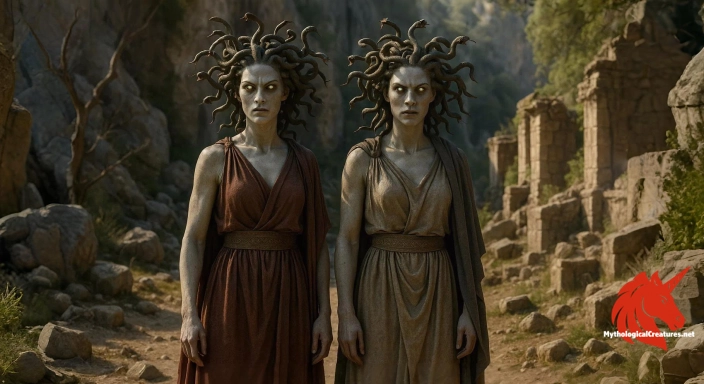
Stheno and Euryale
Stheno and Euryale - Represent the terrifying aspects of ancient mythology and the consequences of defying divine order
the legend in five swipes.
the legend in five swipes.
Where does the story of Stheno and Euryale begin?
Stheno and Euryale stand out as enigmatic figures from ancient Greek mythology, celebrated as two of the three fearsome Gorgons with a formidable legacy. Their names, meaning 'forceful' and 'far-roaming' respectively, evoke qualities of unyielding strength and a boundless, unpredictable nature. Born into a mythic lineage often associated with primordial deities such as Phorcys and Ceto, the sisters occupy a crucial space in early mythic genealogies. While Medusa’s tale often dominates popular accounts, Stheno and Euryale are equally significant for embodying the perilous aspects of divine retribution. Ancient artworks, sculptures, and vase paintings attest to their enduring presence in the cultural imagination of the Greek world. Their origin stories, enshrouded in mystery and awe, speak to themes of transformation and the duality of beauty and terror. The Gorgon mythos, of which they are integral, was employed as both a warning against transgression and as a symbol of nature’s chaotic forces. Early literary sources and oral traditions highlight their monstrous physicality alongside deeper symbolic ties to the natural and supernatural. Their peculiar ability to petrify anyone who meets their gaze only deepens the aura of dread surrounding them. Over time, the narrative of these sisters has evolved into a rich tapestry that continues to resonate with themes of power, vulnerability, and the irreversible consequences of divine wrath.
How many versions of the Stheno and Euryale story are there?
Ancient texts frequently mention the Gorgon sisters, with references found in Hesiod’s Theogony and the Library of Apollodorus, which outline their divine parentage and storied background. Various literary sources, including Ovid’s Metamorphoses, preserve fragments of their legacy and hint at the broader mythic landscape they inhabit. In many early Greek works, Stheno and Euryale appear as part of a collective mythos that underscores the terror and mystery of the Gorgons. Fragmentary poetic works and lost epics suggest that they played minor yet significant roles in the balance between chaos and order. Classical narratives recount episodes such as the relentless pursuit of Perseus after he slew Medusa, where the sisters emerge as figures of vengeful retribution. Vase paintings and sculptural remains serve as valuable visual sources, capturing the distinct iconography of their formidable visages. The use of the Gorgoneion on public and sacred structures further confirms the impact of their image in ancient society. Later Byzantine chronicles and Renaissance interpretations contributed additional layers of meaning, blending early mythic themes with contemporary cultural beliefs. Variants of their stories arose in different regions, each offering unique perspectives on their roles and nature. Collectively, these diverse sources illustrate the enduring allure of the Gorgon myth and the fluid adaptability of mythological narratives over time.
Stheno and Euryale: Physical Form and Supernatural Powers
In artistic depictions and literary descriptions, Stheno is frequently portrayed as possessing a robust, almost muscular form that conveys her relentless strength. Euryale, on the other hand, is illustrated with a more sinuous and dynamic appearance, her figure exuding an unsettling sense of ceaseless motion. Both sisters share the hallmark features of the Gorgons, including wild, writhing locks of serpentine hair that seem to possess a life of their own. Their eyes are often described as emitting a chilling, otherworldly glow, a detail that reinforces the petrifying power inherent in their gaze. The texture of their skin is typically rendered as a complex mixture of smooth flesh and scaled accents, suggesting a fusion of human and reptilian traits. A notably contorted facial structure, complete with fanged mouths and exaggerated features, further emphasises their monstrous nature. Classical artworks sometimes depict them as towering figures, while in other renditions they appear with a proportionate yet formidable presence. Intricate details, such as the glint in their eyes and the sinuous movement of their snake-like hair, serve to heighten the overall sense of horror and fascination. Subtle distinctions in their physical portrayal may hint at individual character traits—Stheno’s embodiment of raw power in contrast to Euryale’s restless, almost ethereal quality. This blend of human and bestial elements, immortalised in ancient sculpture and mosaic, continues to evoke a complex interplay of dread and allure.
How does the Stheno and Euryale legend change from place to place?
The narratives of Stheno and Euryale have been adapted across various regions, each imbuing their myth with distinctive local motifs and cultural nuances. In parts of ancient Crete and other areas of the Aegean, the Gorgon image was repurposed as an apotropaic symbol, intended to ward off malevolent spirits and ill fortune. Roman adaptations often layered additional symbolism onto the sisters, transforming their terrifying visages into protective emblems on shields, coins, and public monuments. In the Eastern Mediterranean, artistic renditions leaned towards more stylised forms, highlighting the fluidity and dynamism of their serpentine features. Hellenistic sources reveal that local sculptors and painters frequently customised their appearance to resonate with regional narratives steeped in both fear and reverence. Despite Medusa’s prominence in popular lore, some local accounts cast Stheno and Euryale in separate lights, emphasising Stheno’s raw aggressiveness and Euryale’s haunting, unyielding gaze. Byzantine iconography and medieval carvings further modified their images, sometimes softening the terror to align with evolving spiritual or protective concepts. The persistence of the Gorgon motif in architectural adornments and amulets across the Mediterranean attests to its widespread cultural significance. Local reinterpretations even occasionally transformed these figures into benevolent guardians rather than mere harbingers of doom. Such regional variations underscore the adaptability of their myth, reflecting a rich interplay between universal mythic themes and distinct cultural expressions.
Do other traditions know Stheno and Euryale by another name?
The mythological essence of Stheno and Euryale finds compelling parallels in other traditions where monstrous female figures evoke both fear and fascination. Comparable in some respects to the basilisk of later European folklore, their petrifying gaze is emblematic of a power that transcends mortal limits. Their portrayal shares striking similarities with that of Medusa, yet also resonates with other figures such as the Slavic depictions of dangerous crones and, in some respects, the fierce guardian deities of Eastern traditions. Across different cultures, there emerges an archetype of a monstrous feminine whose terrifying features serve dual roles—as agents of punishment and as protective wardens. In ancient Near Eastern art, for example, deities with fearsome visages were often employed to repel evil, much like the Gorgons served in Greek contexts. The motif of a petrifying stare reappears in multiple mythic traditions, highlighting a universal human preoccupation with the transformative power of the gaze. This common thread illustrates how societies have historically used the imagery of the cursed or monstrous feminine to express complex ideas about power and danger. Comparative analysis also reveals that the narrative of beautiful yet deadly female monsters suffused in various cultural stories acts as a mirror reflecting societal anxieties about the intersection of beauty, power, and retribution. Although each culture colours its myths with local symbolism, the core elements of terror, allure, and the boundary between the human and the divine remain consistent. Ultimately, the enduring legacy of these narratives confirms the Gorgon archetype as a timeless symbol bridging disparate mythological traditions.
How has the image of Stheno and Euryale evolved?
Over the centuries, the image and myth of Stheno and Euryale have undergone significant reinterpretation, evolving far beyond their origins in ancient Greek lore. Their fearsome visages, once viewed solely as symbols of terror, gradually came to be seen as representations of the complex interplay between beauty and monstrosity. Renaissance artists eagerly revived the classical Gorgon motif, incorporating their images into sculptures, friezes, and architectural details that adorned public spaces. In modern literature and visual media, the Gorgon sisters have been reimagined as icons of female empowerment and ambivalent strength. Contemporary portrayals often delve into the broader implications of their cursed existence, exploring themes of exile, transformation, and the reclaiming of mysteriously potent identities. Esoteric and psychological interpretations have emerged, suggesting that their ability to turn onlookers to stone functions as a metaphor for emotional and social stasis in the face of overwhelming power. Films, graphic novels, and digital media reinterpret their myth with fresh sensitivity, highlighting the nuanced interplay of fear and defiance. Modern academic discourse has also revisited their ancient portrayals, uncovering layered symbolic meanings and challenging traditional readings of their monstrous forms. The legacy of Stheno and Euryale is interwoven with evolving ideas about femininity, vulnerability, and the repercussions of divine retribution. Their enduring appeal, continually transformed by artistic, literary, and cultural frameworks, testifies to the timeless resonance of ancient myth in the modern world.
Interesting Fact
Despite being less famous than Medusa, Stheno and Euryale are immortal and serve to highlight the divergent fates of the Gorgon sisters in Greek mythology.
Mythological Treasures
Greek Myths: A field guide to the monsters of ancient Greece
Every monster here earned its place in legend, and each gets a full page of artwork and the story behind it.
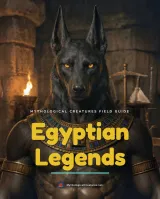
Egyptian Legends: A field guide to the gods and monsters of ancient Egypt
Guardians of the living and devourers of the dead, with the role each played in judgement.
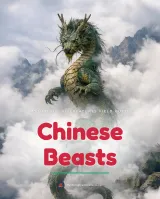
Chinese Beasts: A field guide to the dragons and demon kings of Chinese myth
From river dragons to demon kings, with the legends that shaped five thousand years of storytelling.
the legend in five swipes.
For serious mythcraft
Your project belongs among the legends
If your work deepens how people understand, play with, or teach mythology, a sponsor placement here keeps it in front of the right readers all year.
Submit a sponsorship enquiryQuick Creature Info
Origin:
Features:
Associations:
Our Mythic Legendary Rating:

Also Sometimes Known As:
Habitat:
Supernatural Powers:
Physical Attributes:
Abilities:
Behavior:
Weaknesses:
Lore:
References
Discover Another Mythical Legend You May Not Have Heard Of?
Uncover the mysteries of ancient folklore and expand your knowledge of legendary beings from cultures around the world.
Dare to Meet the Ephyra....
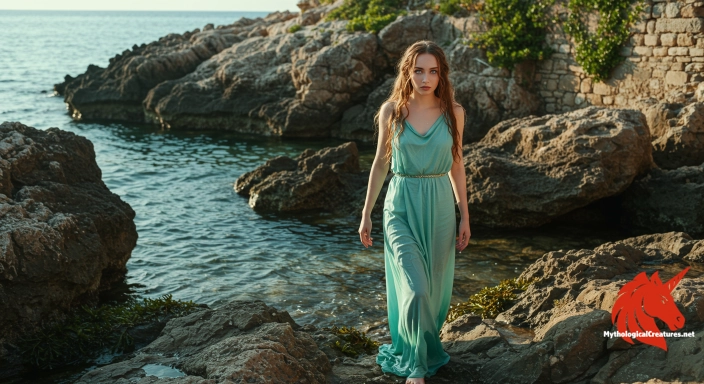
The Mythological Creatures Book Series
Yōkai, Greek, Norse, Egyptian & Chinese. Five illustrated field guides to the creatures the old stories either warned or told you about.
Curated by the Mythological Creatures Team
Series editor: Mythological Creatures Directory
Primary desk: Hellenic & Ancient Mediterranean Desk
(rev. November 2025)