
Vodyanoy: Vodyanoy is a male water spirit from Slavic mythology, known for his unpredictable and malevolent nature.
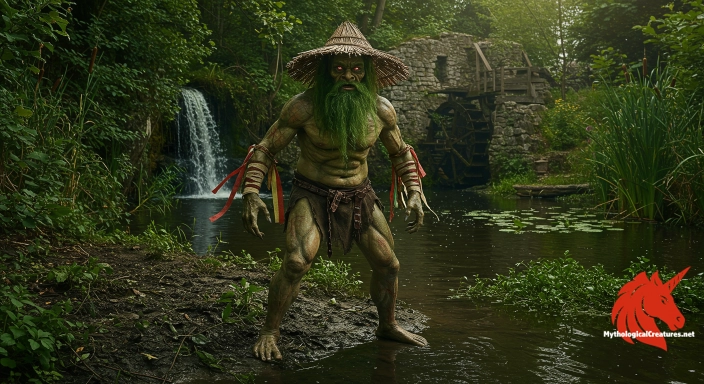
Vodyanoy
Vodyanoy - Represents the dangerous, unpredictable nature of water; serves as a reminder of nature's dual capacity to nurture and destroy
Origins & First Encounters
Vodyanoy is a compelling water spirit originating from the rich tapestry of Slavic mythology, embodying both the nurturing and tumultuous qualities of the aquatic world. His mythic roots are interwoven with ancient practices that revered water as a vital, unpredictable force central to daily life. Emerging from deep-seated folk traditions, his earliest mentions are found within oral narratives and later medieval compilations that celebrated nature’s mysteries. He is known by various names across regions, with Russian tales calling him Vodyanoy, while in Czech, Slovak, and Ukrainian accounts he appears as Vodník or Vodyanyk. His story served not only as an explanation for the unpredictable phenomena of rivers and lakes but also as a cautionary tale for communities reliant on water for both sustenance and livelihood. The dual aspects of his character—both as a benefactor and a potential harbinger of destruction—inspire awe and a healthy respect for the natural environment. Many local traditions remember him as a guardian whose favour could ensure bountiful catches or, conversely, whose wrath might lead to disaster. His presence in folklore reflects a longstanding dialogue between man and nature, where the power of water is both celebrated and feared. The multifaceted narratives surrounding him underscore the cultural significance that water held in ancient Slavic societies. Today, his enduring image continues to captivate and inform modern interpretations of old-world myth and nature’s mystique.
Source Texts & Tale Variants
Ancient manuscripts and preserved oral traditions form the backbone of the stories that detail the exploits of Vodyanoy. Narratives compiled over centuries have varied in tone, with some emphasising his role as a malevolent force while others capture his more enigmatic, even playful, dimensions. Early sources, often transmitted through folk songs and epic tales, vividly recount his interactions with humans near rivers and lakes. Diverse regional collections from Russia, Czechia, Slovakia, and Ukraine each feature distinct versions of his myth, reflecting the local colour and environmental settings. Certain tellings cast him as a relentless spirit who brings down dams and disrupts water mills, actions loaded with symbolic meaning. In some variants, his character is softened into that of a trickster, using subtle deceptions like coloured ribbons to lure unwary passers-by. The evolution of his story across different texts highlights an adaptability that allowed the myth to remain relevant in changing cultural landscapes. Published compilations from the 18th and 19th centuries further enriched the lore, blending ancient traditions with newer moral narratives. Each recorded version has added layers to his character, ensuring that his legend thrives in both scholarly and popular domains. The diverse accounts serve as a testament to how regional voices can collectively shape a myth that transcends its original context.
Form & Powers
Vodyanoy is depicted with a striking physicality that mirrors the essence of water itself, combining elements of both human features and the untamed character of aquatic environments. He is often portrayed as a naked, pot-bellied man whose robust form evokes the deep, mysterious bodies of water he inhabits. Many descriptions highlight his bald head, a detail that symbolises the stripped-back, elemental nature of rivers and lakes. In contrast, other accounts offer an alternative image with vivid green hair and a long, flowing beard that seems to shimmer like underwater vegetation. His attire is rarely conventional, with a hat and a belt woven from reeds and rushes that reinforce his intrinsic connection with the natural world. This assortment of physical traits has given rise to an almost chameleonic reputation, suggesting a spirit with the ability to change its guise at will. Some narratives even mention irregularities such as mottled skin or the appearance of scales, hinting at a creature that straddles the border between human and mythological beast. The inconsistencies in his description are embraced as a reflection of his shape-shifting powers and the diverse interpretations of his legend. Every detail, from his eyes that mirror the cold depths to the subtle hints of otherworldly textures, contributes to a richly layered portrayal. The fluidity in his physical depiction is as much a part of his myth as his actions, ensuring that his image remains both dynamic and enigmatic.
Regional Faces
Across the Slavic world, the character of Vodyanoy is reimagined in ways that resonate with local identities and environmental conditions. In Russian folklore, he is primarily envisioned as a formidable and vengeful water spirit, whose anger is feared for its capacity to disrupt the natural order. In Czech and Slovak traditions, however, the creature—known locally as Vodník—takes on a subtly different role, sometimes portrayed as mischievous and cunning, with a penchant for luring humans close to water bodies using colourful ribbons. Ukrainian accounts, referring to him as Vodyanyk, often embed his myth within a broader narrative of water deities and nature guardianship. Each regional variation seeks to harmonise his inherent danger with unique cultural elements, thereby tailoring the myth to local experiences with water. The adaptation of his name into forms like Hastrman or Wassermann in German sources illustrates the historical cross-cultural dialogue that has influenced his depiction. Local environmental details, such as specific rivers, lakes, or seasonal water surges, are frequently woven into regional stories, grounding the myth in a tangible sense of place. These differing regional portrayals highlight a shared cultural belief in the sacred and capricious nature of water, even as they diverge in narrative details. The multiplicity of regional versions enriches the overall tapestry of his legend, ensuring that his presence adapts with the landscapes and communities that honour his myths. Through these localized adaptations, Vodyanoy remains a living symbol of the interplay between tradition, nature, and human endeavour.
Cultural Parallels
The legend of Vodyanoy resonates alongside a number of water spirits featured in varied mythological traditions, each reflecting humanity’s complex relationship with water. His narrative shares common threads with the Celtic kelpie and the Germanic nix, where water is both a source of life and a conduit for danger. These creatures, like Vodyanoy, often manifest as shape-shifting entities whose forms blur the line between beauty and malevolence. Both in central Europe and beyond, water spirits are celebrated for their ability to explain the unpredictable behaviour of natural waterways. The dual character observed in these legends—a blend of allure and peril—highlights a universal motif of respect and fear towards the forces of nature. Comparative studies reveal that while each culture renders its water spirit with unique attributes, the underlying symbolism of nature’s untamed power remains consistent. The Vodyanoy’s integration of benign and destructive aspects invites a dialogue with other water deities who serve as moral and environmental arbiters. Cross-cultural analyses of these myths emphasise an enduring human impulse to personify natural elements in order to navigate the mysteries and hazards of the environment. In essence, the parallels between these legends underscore a shared tradition of attributing human qualities to the natural world, a practice that continues to inspire contemporary storytelling. Such comparisons illuminate how the myth of Vodyanoy, though distinctly Slavic, partakes in a broader tapestry of water lore that transcends geographic borders.
Legacy & Modern Evolution
Over the centuries, the image of Vodyanoy has evolved in response to shifting cultural landscapes and emerging environmental concerns. He was once feared as an unpredictable deity of water, whose wrath could literally reshape the landscape by dismantling dams and drowning those who disobeyed nature’s unspoken laws. With the rise of literary and artistic reinterpretations, however, he has transformed into a symbol that encapsulates both the beauty and the menace of natural forces. Modern storytellers and artists now delve into his legend to critique contemporary issues such as ecological degradation and the loss of natural balance. In literature and film, his multifaceted persona is explored as an allegory for the uncontrollable and often destructive aspects of industrial progress. This shift from a simple cautionary tale to a more nuanced narrative reflects broader changes in society’s relationship with the environment. As part of the reawakening of interest in traditional folklore, his legacy is frequently celebrated in cultural festivals, museum exhibits, and academic circles. Contemporary adaptations often highlight his dual capacity to nurture and毁灭, casting him as both a relic of past superstitions and a mirror for modern ecological dilemmas. By bridging ancient myth with current ecological discourse, the enduring tale of Vodyanoy continues to inspire discussions on human responsibility towards nature. His legacy remains a powerful reminder that the forces of nature are as timeless as the myths used to describe them.
Interesting Fact
An interesting fact about Vodyanoy is his ability to alter his appearance, reflecting the belief in water spirits as ever-changing embodiments of nature's unpredictable character.
For myth educators and toolmakers
Built a resource for mythology learners?
If you offer courses, teaching tools, or research platforms focused on myth and folklore, consider a discrete placement on our reference pages.
Introduce your resourceQuick Creature Info
Associations:
Our Mythic Legendary Rating:

Also Sometimes Known As:
Habitat:
Supernatural Powers:
Physical Attributes:
Abilities:
Behavior:
Lore:
References
Discover Another Mythical Legend You May Not Have Heard Of?
Uncover the mysteries of ancient folklore and expand your knowledge of legendary beings from cultures around the world.
Dare to Meet the Anathan....
Curated by the Mythological Creatures Team
Series editor: Mythological Creatures Directory
Primary desk: Northern & European Folklore Desk
(rev. November 2025)