
Yasakatome: Yasakatome is a revered Shinto kami enshrined within the Suwa Taisha network as the deity of the Lower Shrine (Shimosha).
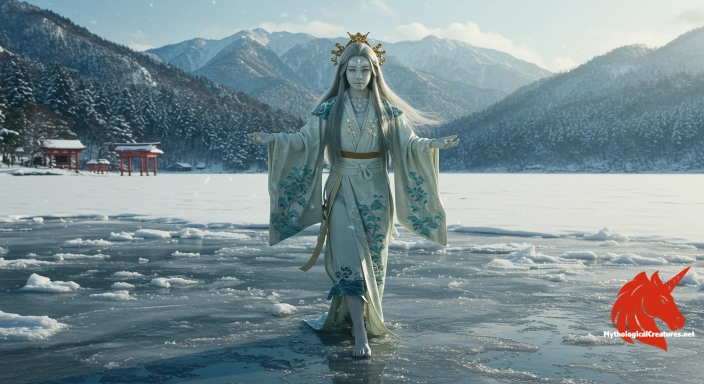
Yasakatome
Yasakatome - Yasakatome is a central figure in the Suwa Taisha network, symbolising divine authority and regional identity in Shinto tradition.
the legend in five swipes.
the legend in five swipes.
What are the origins of Yasakatome?
Yasakatome is a revered kami within the Shinto tradition, intricately linked to the Suwa Taisha network of shrines and celebrated as the divine consort of Takeminakata. Her presence is embedded in a rich tapestry of myth and ritual that spans both imperial record and local tradition. Emerging into historical view in the early 9th century, her first attestation appears in the Shoku Nihon Kōki, marking the beginning of her official recognition. Despite the scarcity of detailed early records, her influence in the Lower Shrine (Shimosha) has been sustained through centuries of worship and local legend. The layers of myth surrounding Yasakatome reveal a blend of courtly rank assignments and folkloric embellishments that continue to intrigue devotees and scholars alike. Her enigmatic origins, often interwoven with themes of water and nature, underscore a divine duality that connects celestial heights with the earthly realm. The recurring motif of her union with Takeminakata reflects both a cosmic balance and the cultural importance of feminine strengths in traditional narratives. Ultimately, Yasakatome embodies a synthesis of imperial endorsement and regional myth, making her an enduring figure in Japan’s spiritual heritage.
Which books and scrolls describe Yasakatome?
The historical and literary record of Yasakatome is as diverse as it is limited, drawing chiefly on a handful of key texts. Her first documented appearance is found in the Shoku Nihon Kōki, where she is honoured with a specific rank by the imperial court, a testament to the formal acknowledgement of her divine stature. Intriguingly, she does not appear in the more well-known compilations such as the Kojiki or the Nihonshoki, which underscores the distinct regional focus of her worship. Multiple story variants contribute to her mysterious aura; some traditions present her as the daughter of Watatsumi, the god of the sea, thus linking her to maritime lineage and seafaring communities. Other narratives, notably from the Edo period, portray her as the offspring of Ame-no-yasakahiko, intertwining her destiny with celestial realms. These conflicting accounts illustrate how her myth has been shaped by differing regional, temporal, and cultural influences. Local oral traditions, shrine records, and lesser-known folktales further complicate her narrative, highlighting the fluidity of myth-making in the Shinto context. Together, these sources form a mosaic of belief that, while sparse in detail, attests to her important role within the spiritual practices of the Suwa region.
Yasakatome: Appearance and Abilities
Although classical texts offer few explicit physical descriptions of Yasakatome, artistic and local shrine depictions provide a window into her envisioned form. Many images portray her as an ethereal woman whose serene expression reflects both grace and an underlying strength. In depictions found on shrine panels and traditional scrolls, her attire is often rendered in flowing robes adorned with subtle motifs of water and natural elements. The elegant embellishments, which sometimes incorporate wave or lotus designs, suggest a deep connection with aqueous and fertile aspects of nature. Some interpretations even hint at serpentine features within the decorative details of her garments, perhaps alluding to alternative readings of her name. These artistic choices create an image that is both delicate and commanding, encapsulating the dual nature of her persona as both nurturing and potent. The interplay of soft curves and refined ornamentation in her iconography conveys a timeless beauty that bridges the mortal and spiritual worlds. Overall, while her visual representation is largely symbolic, it powerfully communicates her role as a guardian of natural elements and a facilitator of cosmic harmony.
Where is the legend of Yasakatome strongest?
Across the varied landscapes of Japan, Yasakatome’s identity has been adapted to reflect local customs and geographical features. In the Suwa region, her role is intimately tied to the natural surroundings, notably exemplified by the lore of Lake Suwa and the phenomenon of frozen water crossings. Local tradition vividly recounts the tale of Takeminakata venturing across the ice to meet Yasakatome, thereby linking her to the rhythms of seasonal change and community ritual. In some local shrines, she is not only seen as a divine consort but also as a guardian spirit whose presence blesses agricultural fertility and regional prosperity. The nuances of her worship vary from one island to another, with certain communities emphasising her water-related aspects while others focus on her nurturing lineage. Regional festivals and folklore have enriched her character with unique attributes, such as associations with serpentine water deities, which may be drawn from dialectal interpretations of her name. These local adaptations underscore a broader cultural strategy in which deities are encouraged to evolve in ways that resonate with specific community experiences. Through this dynamic interplay between central canon and local idiosyncrasy, Yasakatome’s persona emerges as a multifaceted symbol of divine presence throughout Japan.
How does Yasakatome compare to figures in other traditions?
The figure of Yasakatome invites comparisons with a host of mythological consorts and water deities from other cultures, pointing to universal themes in divine narratives. Similar to other female deities who act as mediators between the celestial and terrestrial realms, she fulfils roles that blend nurturing attributes with elemental power. Like certain river goddesses and water spirits found in Chinese, Indian, and Celtic traditions, Yasakatome embodies a connection to water that is both protective and generative. The duality of her character, operating in tandem with a more dominant male deity, mirrors the common mythic motif of complementary divine partnerships seen throughout world mythologies. Her subtle serpentine associations may also evoke images of naga figures in Hindu and Buddhist symbolism, where water and fertility are central themes. In many comparative narratives, the interplay of light and shadow in divine consorts speaks to the broader cultural emphasis on balance and interdependence. This comparative framework not only enriches the understanding of her role within Shinto practice but also situates her within a global context of gods and goddesses who mediate human access to the supernatural. Thus, Yasakatome stands as a culturally specific yet internationally resonant example of how myth adapts to express core human concerns across civilizations.
Where does Yasakatome appear in films and games?
The evolution of Yasakatome’s legacy is a testament to her enduring influence within both historical and modern interpretations of Shinto practice. Initially recognised in the early 9th century with modest official rank, her stature steadily rose alongside her consort Takeminakata, reflecting shifts in religious and political landscapes. Over centuries, her myth has absorbed layers of local folklore and ceremonial refinement, transforming her from a somewhat obscure deity into a symbol of regional identity and natural fertility. In modern times, her image is invoked in cultural festivals and rites that celebrate the harmony between humanity and nature. Contemporary interpretations often highlight her nurturing aspects and her role as a guardian of natural phenomena, aligning her with modern environmental and cultural preservation movements. Artistic representations in literature, visual arts, and even popular media have reimagined Yasakatome in ways that both honour tradition and speak to current societal values. Ritual practices in the Suwa region continue to invoke her presence during critical seasonal events, ensuring that her ancient legacy remains vibrantly alive. In this way, the historical evolution of Yasakatome is not merely a record of changing divine titles but a living narrative that adapts to the spiritual needs of successive generations.
Interesting Fact
An intriguing aspect of Yasakatome is the alternative etymological interpretation of her name, linking the suffix '-tomi' to dialectal words for 'snake', which may hint at a serpentine or water deity origin.
Mythological Treasures
Japanese Yokai: A field guide to the spirits and demons of Japanese folklore
Fifteen spirits, with the signs to watch for and what the old tales say to do if you meet one.
Greek Myths: A field guide to the monsters of ancient Greece
Every monster here earned its place in legend, and each gets a full page of artwork and the story behind it.
Norse Sagas: A field guide to the beasts of the Viking world
Drawn from the saga accounts themselves, with the powers, weaknesses and doom of each being set out.
the legend in five swipes.
For serious mythcraft
Your project belongs among the legends
If your work deepens how people understand, play with, or teach mythology, a sponsor placement here keeps it in front of the right readers all year.
Submit a sponsorship enquiryQuick Creature Info
Associations:
Our Mythic Legendary Rating:

Habitat:
Supernatural Powers:
Behavior:
Lore:
Related Creatures, Tales or Lore
- AAmaterasu
- IIzanami
- KKonohanasakuya-hime
References
Discover Another Mythical Legend You May Not Have Heard Of?
Uncover the mysteries of ancient folklore and expand your knowledge of legendary beings from cultures around the world.
Dare to Meet the Polemos....

The Mythological Creatures Book Series
Yokai, Greek, Norse, Egyptian & Chinese. Five illustrated field guides to the creatures the old stories either warned or told you about.

Curated by the Mythological Creatures Team
Series editor: Mythological Creatures Directory
Primary desk: Asian & Pacific Myth Cycles Desk
(rev. November 2025)