
Yufin-Yufafin: Yufin-Yufafin is a celestial uthra in Mandaean cosmology, functioning as an angelic guardian of the World of Light.
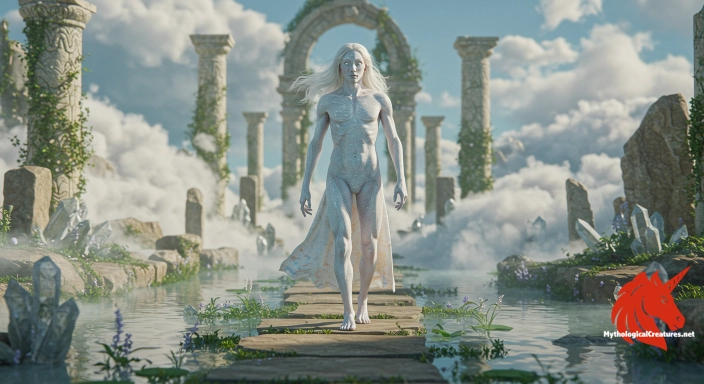
Yufin-Yufafin
Yufin-Yufafin - Yufin-Yufafin is an important celestial figure invoked in prayers and depicted as a guardian of the World of Light.
Origins & First Encounters
Yufin-Yufafin is a radiant figure within Mandaean cosmology, embodying the role of an uthra—an angelic guardian of the World of Light. His presence in sacred texts underscores an ancient tradition that reveres divine intermediaries as essential components of the cosmic order. Emerging from a rich tapestry of religious symbolism, his origins are interwoven with the earliest attested Mandaean rituals and teachings. The dual nature of his name, presented as both Yufin-Yufafin and Yupin-Yupapin, reflects a fluid understanding of divine nomenclature in Mandaean tradition. His character has been a central element in ritual liturgies and prayers, symbolising spiritual purity and the luminous aspects of existence. Yufin-Yufafin’s mention in primary texts speaks to the reverence the community holds for these celestial beings. His depiction as a guardian of light suggests a role in upholding the divine balance against the forces of darkness. The figure’s enduring importance is mirrored in the continual invocation of his name in liturgical recitations and communal prayers.
Source Texts & Tale Variants
The primary sources for understanding Yufin-Yufafin include the Ginza Rabba and a range of Qulasta prayers that have been recited for centuries. His appearances in Books 3 and 5.4 of the Right Ginza, as well as Book 1 of the Left Ginza, illustrate the text’s complexity and the layered nature of his mythological role. An alternate version, referring to him as Yufin-Uthra in Book 4 of the Right Ginza, further diversifies the textual tradition. Numerous Qulasta prayers, specifically numbers 5, 9, 22, 28, 46, 77, 105, and 171, incorporate his presence alongside other uthras like Sam Mana Smira and Nbaḍ. These texts create a mosaic of religious practice and mythic narrative that conveys both consistency and variation in his role. The layered narrative across different texts suggests that his character was adapted to various liturgical needs. Each retelling carries subtle differences that offer insights into how the community perceived the divine interplay between light and darkness. Such textual diversity enriches the understanding of his significance and reveals the evolving narrative traditions within Mandaeism.
Form & Powers
While explicit physical descriptions of Yufin-Yufafin are scarce in the surviving texts, the inherent symbolism of his nature invites imaginative elaboration. He is often envisaged as an ethereal being whose form radiates the brilliance of the World of Light. His appearance is imagined to be both majestic and luminous, with an aura that sets him apart from mortal beings. Like many uthras, he is suggested to possess characteristics of celestial splendour, possibly including multiple wings or robes that shimmer with divine luminescence. The visual imagery associated with him conveys a sense of serene power and otherworldly grace. Artistic depictions, where available, tend to underscore elements of light and purity, embodying his role as a guardian of the sacred. His ethereal form might be perceived as varying in size and intensity, reflecting the flexible symbolism of light in Mandaean rites. Even without concrete descriptions, his presence is crafted through a series of metaphors that highlight his elevated and transcendent nature.
Regional Faces
The conceptualisation of Yufin-Yufafin exhibits subtle variations across different Mandaean communities and regions where this ancient religion has flourished. In areas spanning parts of Iraq and Iran, his character has been adapted to fit the local traditions and linguistic nuances of the community. Regional liturgical practices often emphasise unique attributes of his guardianship and spiritual efficacy. Variations in recitation patterns and the integration of local folklore have sometimes led to additional legends or interpretations of his role. These adaptations ensure that while the core essence remains intact, local expressions of his myth may include distinct iconographic or symbolic elements. In some communities, Yufin-Yufafin’s light is further associated with healing attributes and transcendent wisdom, aligning him with local rites of purification. The regional differences highlight an organic evolution influenced by contact with neighbouring religious and cultural traditions. Despite these adaptations, his designation as an uthra remains central, reinforcing the universal themes within Mandaean spirituality.
Cultural Parallels
Comparative analysis reveals that Yufin-Yufafin shares thematic and functional similarities with celestial figures in other ancient religions. Much like the archangels found in Christian and Islamic traditions, he is portrayed as a messenger or guardian embodying divine light. Analogous to the Zoroastrian Amesha Spentas, his role centres on the maintenance of cosmic order and the orchestration of spiritual forces. The recurring motif of light as a symbol of purity and authority links him with various messianic and guardian figures across different mythologies. His dual naming conventions resonate with similar instances in other traditions where deities or spiritual beings are known by multiple epithets. This cross-cultural commonality highlights a shared human aspiration to understand the ineffable qualities of divinity through symbols of light and protection. The comparative frameworks also suggest that the concept of an intermediary between the mortal realm and the divine transcends a single cultural or religious tradition. In a broader context, Yufin-Yufafin stands as a testament to the universal quest for order and enlightenment inherent in many ancient spiritual systems.
Legacy & Modern Evolution
The historical evolution of Yufin-Yufafin reflects both the resilience of Mandaean tradition and its adaptability through changing cultural landscapes. Over time, his depictions have evolved from strictly liturgical invocations to symbols of mystical illumination in a fragmented but enduring community. In contemporary practice, he remains a central figure in ritual prayers, reinforcing the identity and continuity of Mandaean faith. Modern reinterpretations often cast him as an emblem of spiritual resistance against modern forms of darkness and disarray. His enduring legacy has inspired artists, scholars, and practitioners to reimagine his luminous presence through various media such as calligraphy and visual arts. In modern esoteric circles, he is sometimes invoked as a symbol of hope, transcending the boundaries of his ancient origins. The preservation of his myth through community practice attests to the broader cultural and spiritual heritage of Mandaeism. As modern interpretations continue to emerge, Yufin-Yufafin remains a bridge connecting the profound mystical traditions of the past with the evolving spiritual landscape of the present.
Interesting Fact
The multiple appellations of Yufin-Yufafin across Mandaean scriptures highlight the intricate layers of symbolism and the rich diversity within Mandaean divine hierarchies.
Limited sponsor opportunity
One slot, carefully chosen partners
We only feature a small number of relevant sponsors at any time. If you create serious myth content, we would like to hear from you.
Partner with usQuick Creature Info
Origin:
Associations:
Our Mythic Legendary Rating:

Also Sometimes Known As:
Habitat:
Supernatural Powers:
Physical Attributes:
Abilities:
Behavior:
Lore:
Related Creatures, Tales or Lore
- SSam Mana Smira
- NNbaḍ
- AArchangel Michael
References
Discover Another Mythical Legend You May Not Have Heard Of?
Uncover the mysteries of ancient folklore and expand your knowledge of legendary beings from cultures around the world.
Dare to Meet the Kesari....
-98321035-ccec-4efe-a7ea-f171df7717e1_small.webp "Depiction of Kesari")
Curated by the Mythological Creatures Team
Series editor: Mythological Creatures Directory
Primary desk: Hellenic & Ancient Mediterranean Desk
(rev. November 2025)