
The Mythical Creatures That Crossed Borders
What happens to a monster when it travels between cultures?
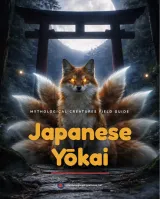
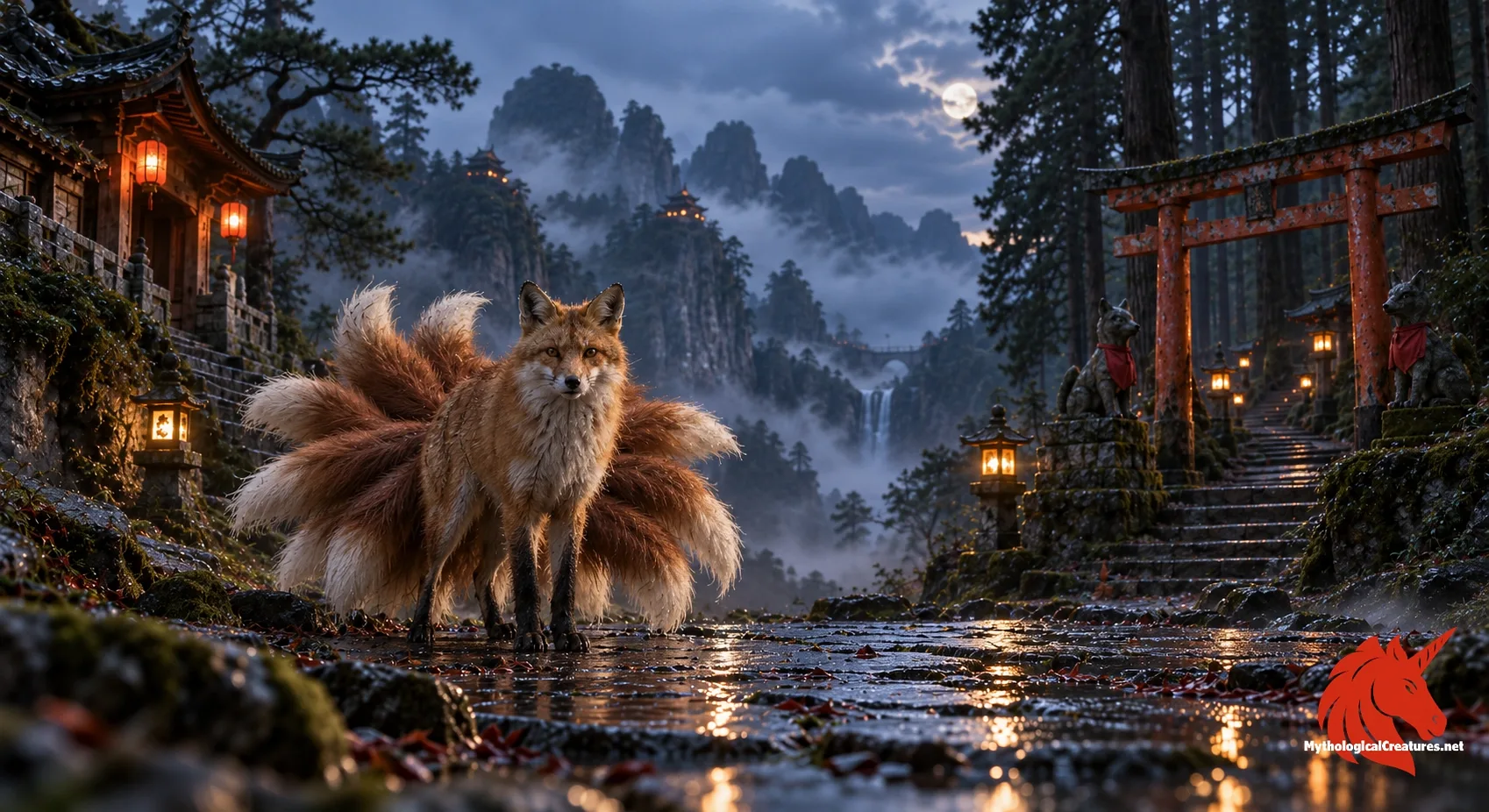
Ask a child to name a Japanese mythical creature and there is a good chance you will get the Kitsune. The nine tailed fox. Shapeshifter, trickster, occasionally a beautiful woman, occasionally something much worse. It turns up in Naruto, in Genshin Impact, in Pokémon, in a hundred anime series. It feels about as Japanese as a creature can get.
The nine tailed fox appears in Chinese texts centuries before the Japanese tradition that would make it famous.
Those early Chinese fox spirit traditions already had the essentials. Shapeshifting. Multiple tails. The recurring image of a fox taking human form, often as a woman, with consequences that can be dangerous. The story travelled east through centuries of cultural and religious exchange, including Buddhist transmission, arrived in Japan, and settled into a slightly different shape. The Japanese version became more ambiguous, sometimes a guardian, sometimes a servant of the rice god Inari. The Chinese tradition was not uniformly sinister either; across different periods and stories, fox spirits could be dangerous, seductive, auspicious or transcendent.
We spent a long time this year cataloguing mythological creatures across five cultures, and this kept happening. We would follow a creature back to its origin and find that the story was older, wider or more entangled with another culture than the label suggested.
Why do different cultures have similar mythical creatures?
The short answer is that they are often not similar creatures at all. They are related traditions, moved, borrowed and changed.
Take the Phoenix. Everybody knows the Phoenix. Bird, fire, rebirth, rises from its own ashes. Most people file it under Greek mythology, and the Greeks certainly wrote about it. But the Greek Phoenix did not develop in isolation. The Egyptian Bennu was an important precursor, a heron like bird associated with the sun, with creation and renewal, and with the flooding of the Nile. It perched on the benben stone at the beginning of the world. Over centuries, Greek and Roman writers reshaped the tradition into the Phoenix familiar to us. Even the famous image of the Phoenix rising from its own ashes belongs to the tradition's later development; it is not part of Herodotus' early account.
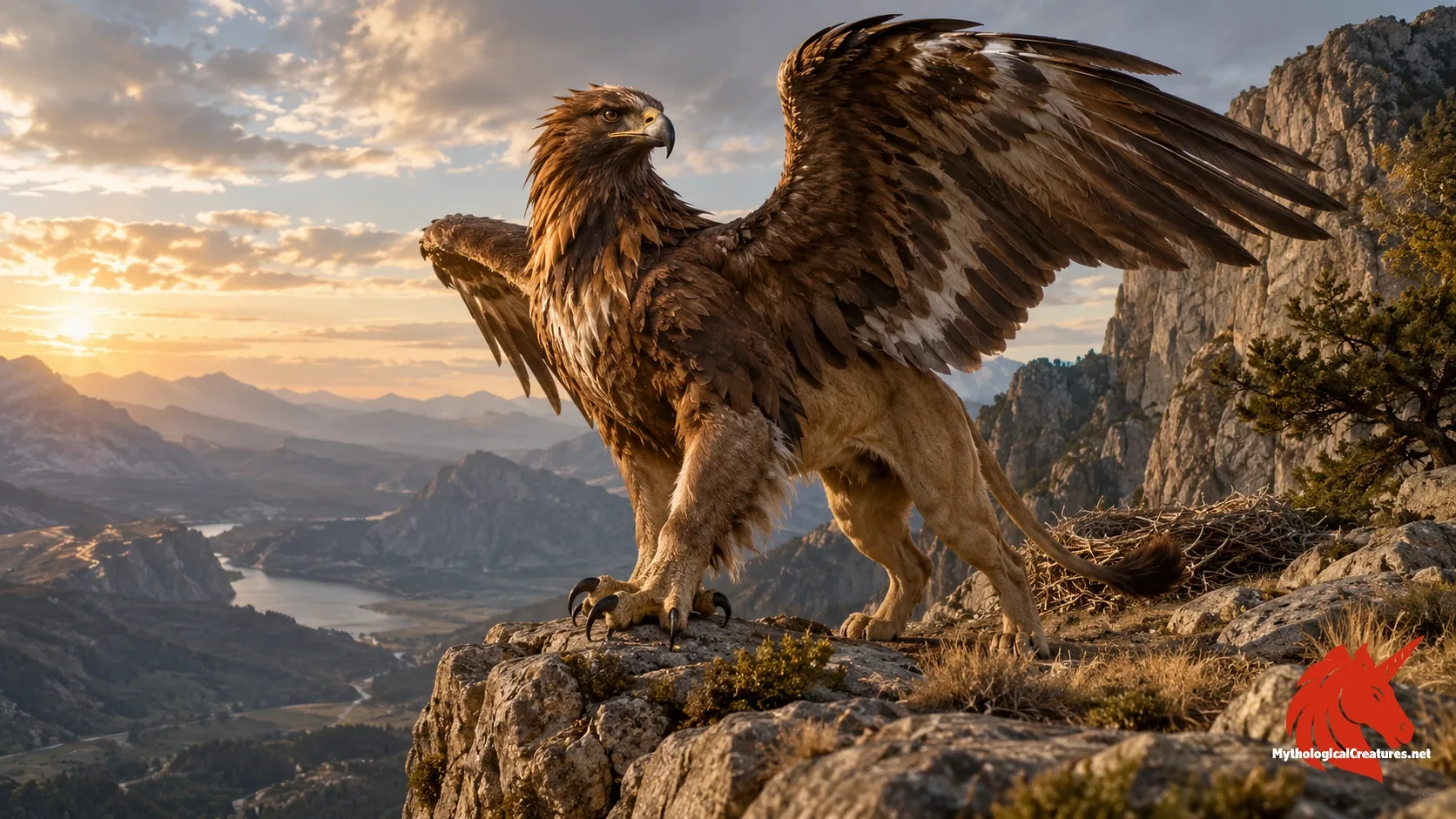
The Griffin is another. Eagle head, lion body, and a fixture of what people think of as Greek myth. The Greeks did write about griffins. They also consistently placed them somewhere else, in Scythia and India, guarding gold in mountains far to the east. Scythian goldwork from the steppe is covered in griffins. The motif is much older in the Near East; Scythian artists later adopted and transformed griffin imagery, just as the Greeks did. Greek writers were also locating griffins at the edges of their known world rather than treating them simply as a native Greek beast.
This matters more than a footnote. When we were assembling the Greek volume of the field guide series we had both the Griffin and the Manticore in the lineup. Both are extremely well known. Both render beautifully. Both were, on inspection, poor fits for a guide that was trying to distinguish cultural origin from later fame. The Manticore enters surviving Greek literature through a Greek physician named Ctesias, who spent time at the Persian court around 400 BC. Its name has Persian roots, but Ctesias describes the creature as living in India. He gave us the earliest surviving description. He did not give us a straightforwardly Greek creature.
So we took both out and replaced them. It cost a fortnight of work. It was the right call, and we think it is the single most useful thing we can tell you about how these books were built, because the temptation to leave them in was substantial. Nobody would have complained. Plenty of mythology books, particularly for younger readers, include both without comment.
But a book that quietly relocates a creature from another tradition to Greece is teaching something false, and the true version is more interesting anyway. Myths move. They get carried by traders, soldiers, pilgrims and storytellers. They change as they go. Sometimes they are adopted directly. Sometimes they merge with local traditions. Sometimes the exact route is impossible to reconstruct. That is not a flaw in the record. That is the record.
What were the monsters actually for?
Here is the thing that surprised us most. Some of the most persistent of these creatures also function as practical advice wearing a costume.
The Kappa is a good example. It is a river dwelling yokai, roughly child sized, with a bowl shaped depression on the top of its head that holds water. If the water spills, it loses its strength. It drags people and livestock into rivers and drowns them.
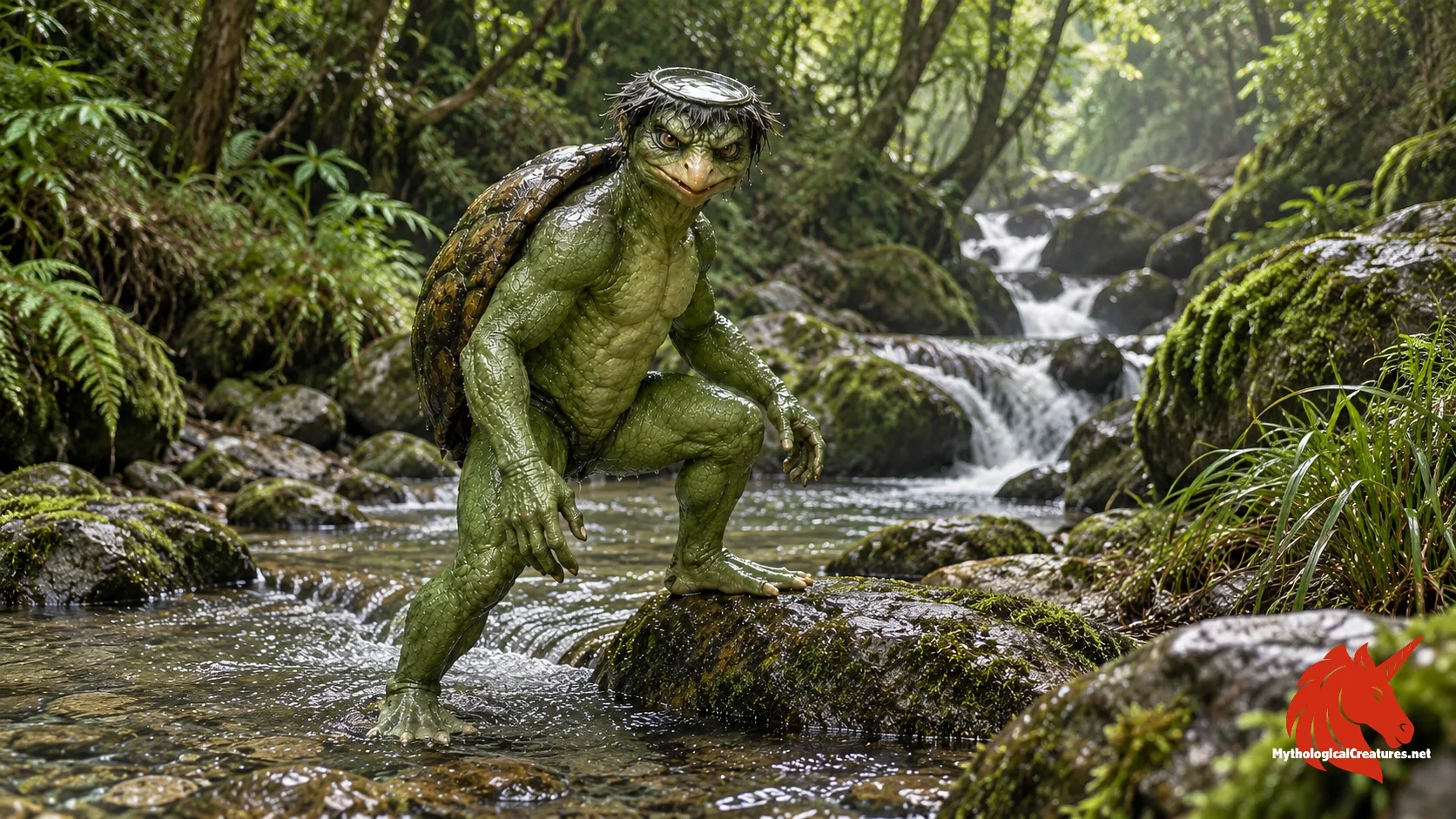
Whatever the creature's deeper religious and folkloric history, one practical function is easy to see. Now consider what a Japanese village needs a child to understand. Rivers are dangerous. Fast water kills. Do not go near the bank alone. You could say that, and children would forget it by lunchtime. Or you could describe a specific creature with specific habits and a specific weakness, and give the child a reason to think carefully every single time they approach water.
The Yuki-onna can be read in a similar way in the mountains. In many stories she appears amid snow and cold, beautiful and calm, and encounters with her can end in freezing or death. To a modern reader, it is difficult not to hear an echo of what extreme cold can do to human judgement.
Chinese New Year offers an even stranger example, because the logic may run in the opposite direction. The familiar modern story says the Nian was a beast that appeared at the turn of the year and attacked villages, until people discovered it was frightened of loud noises, fire and the colour red. But the customs are older than the monster explanation. Firecrackers, red decorations and other New Year practices have their own earlier histories, while the recognisable Nian-beast story appears to have developed later as an origin story explaining traditions already in place. The now-familiar version is surprisingly modern. A festival did not simply grow out of a monster story. A monster story grew around an existing festival.
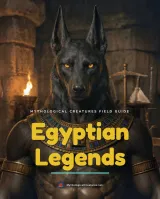
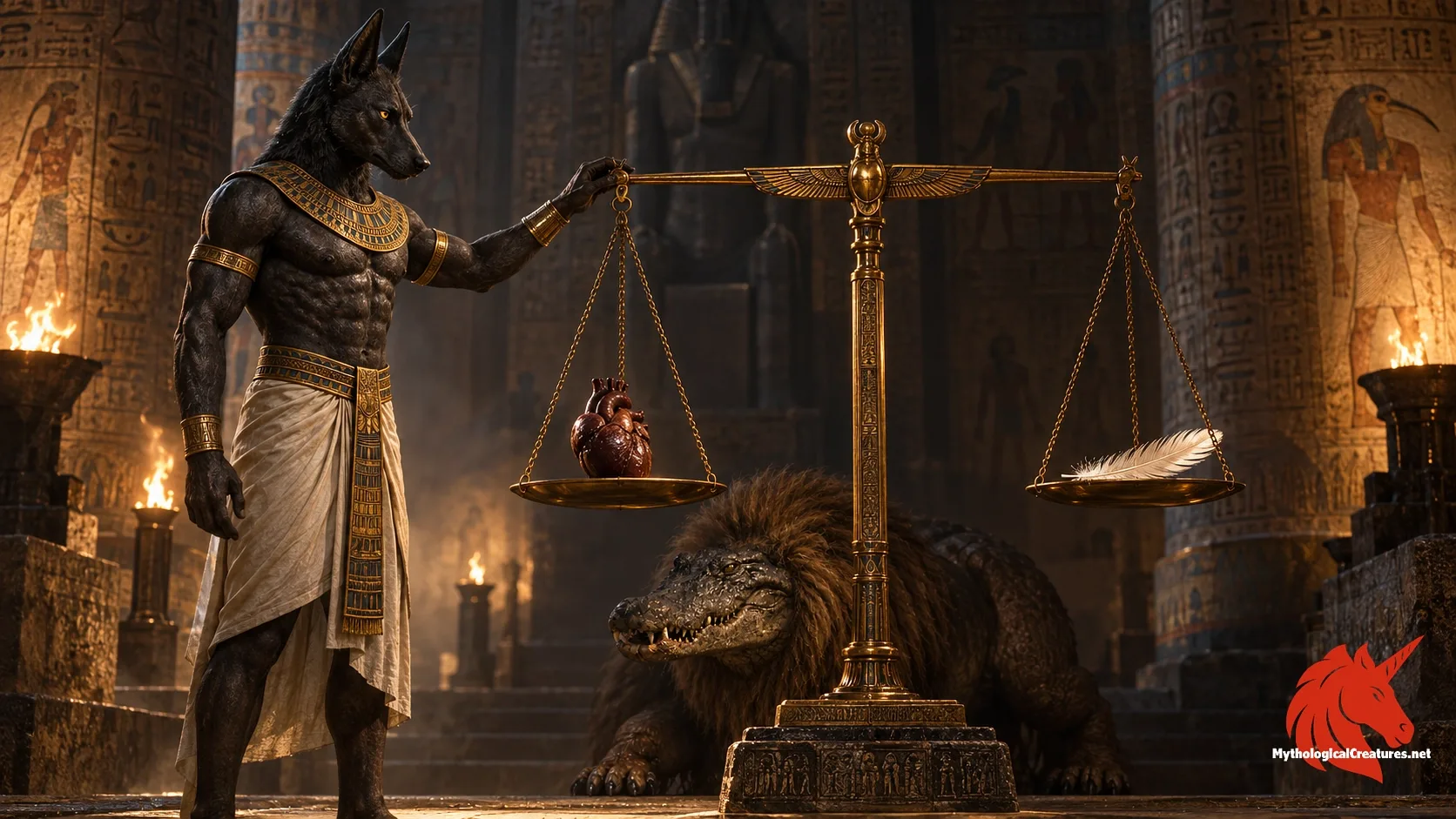
Egyptian mythology encodes something else entirely. The weighing of the heart is one of the most quietly terrifying ideas any culture has produced. Anubis places your heart on one side of a scale and a single feather on the other. If your heart is heavier, because of what you did while you were alive, Ammit is waiting underneath to eat it. There is no appeal. There is no second chance.
That is a moral education system delivered as a monster. More than three thousand years later it still lands, because the image does the work that abstract instruction cannot.
What does Typhon look like?
Nobody knows, and the disagreement is the interesting part.
Typhon is the storm giant who fought Zeus, and in Greek terms he is about as significant as a monster gets. He is father or ancestor to several of the most famous monsters in later genealogies. In one major surviving account, Typhon does something even more extraordinary than making Zeus flee: he overpowers him, cuts the sinews from his hands and feet and leaves the king of the gods helpless until Hermes and Aegipan recover them. In several traditions Typhon eventually ends up buried beneath Mount Etna, whose fire and smoke became part of the mythic explanation for the volcano.
Hesiod, writing around 700 BC, gives him a hundred serpent heads. Apollodorus describes a winged giant whose head brushed the stars, human above the waist, snake coils below, with a hundred dragon heads springing from his hands. Nonnus, writing in the Roman era, adds the heads of leopards, lions, bulls, boars and wolves, plus two hundred arms.
Then there is a piece of pottery. A Chalcidian hydria from around 540 BC shows Typhon as a winged figure, human from the waist up, with two snake tails where his legs should be. One head. Two arms. Nothing like the literary accounts at all.
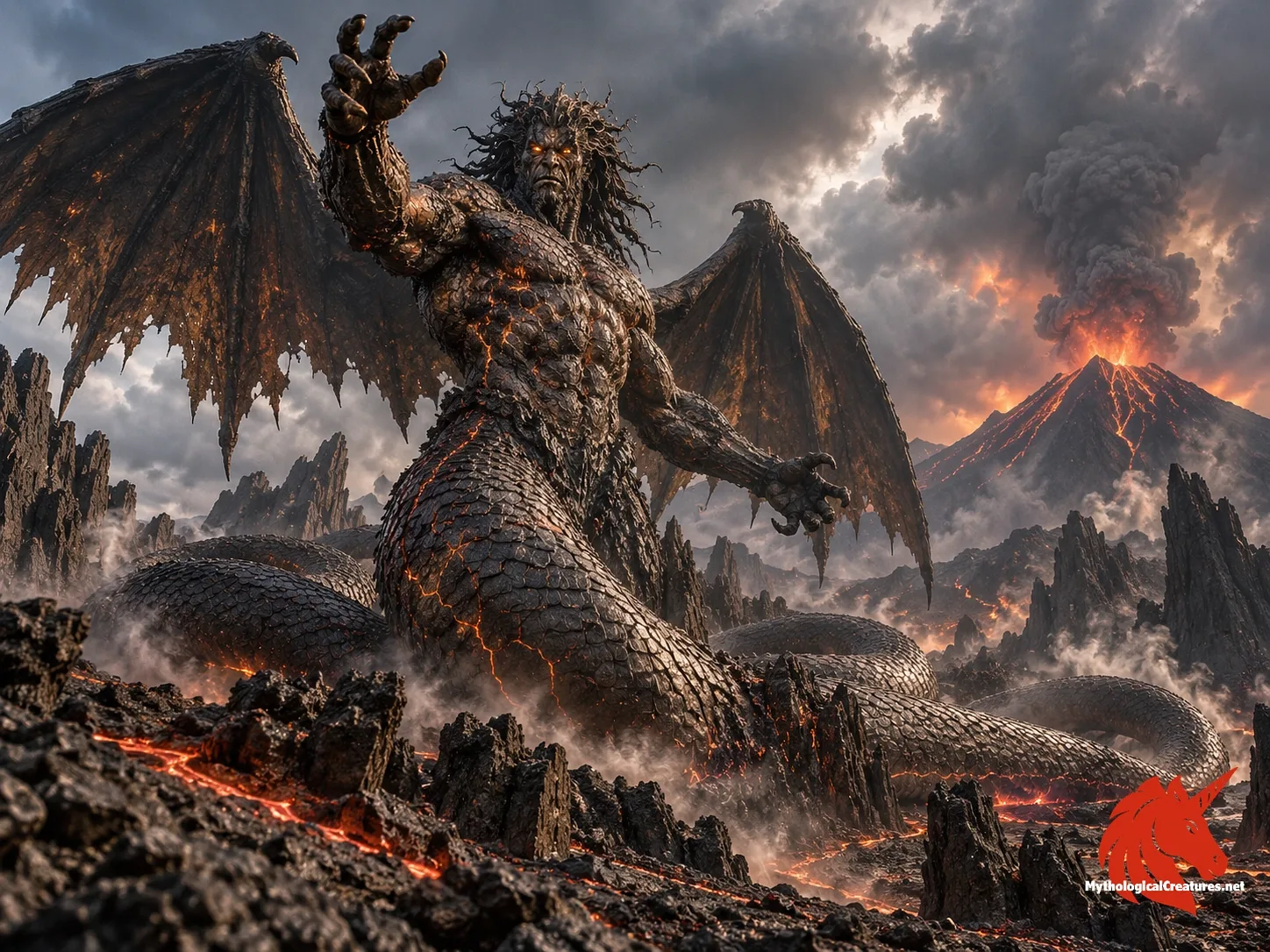
Three writers and one vase painter, none of them agreeing. And that is normal. Every one of these creatures exists as a cloud of contradictory descriptions rather than a fixed image. The Serpopard is carved onto the Narmer Palette from around 3100 BC, two of them with impossibly long intertwined necks, and after five thousand years of scholarship nobody can say with confidence what it was meant to represent. The Set Animal appears throughout Egyptian art with a curved snout, squared ears and a forked tail, and it matches no animal that has ever lived.
How the stories used to be passed on
For most of human history you received these creatures from a person. A grandparent, a neighbour, somebody at a fire. The story changed slightly each time it was told, which is why we have so many versions of everything.
Then it moved to print. In eighteenth century Japan an artist named Toriyama Sekien did something quite modern. He compiled illustrated encyclopedias of yokai, drawing hundreds of creatures, some traditional and some apparently of his own invention or playful elaboration. His books helped standardise and popularise the visual vocabulary of yokai for later generations. His influence on how many of these creatures came to be pictured is difficult to overstate.
In China the Shan Hai Jing had done something similar much earlier, cataloguing creatures across mountains and seas in a text that reads like a geographical survey of the impossible.
And now it has moved again. Today a ten year old is far more likely to meet Fenrir in God of War than in a story from a relative. They will encounter Anubis in a video game, the Kraken in a film, and Sun Wukong in Black Myth: Wukong, a blockbuster game that carried the character to a vast global audience.
We do not think this is decline. It is transmission working exactly as it always has, through whatever medium a generation actually uses. The stories are not dying. They are being retold by animators and game designers instead of grandparents.
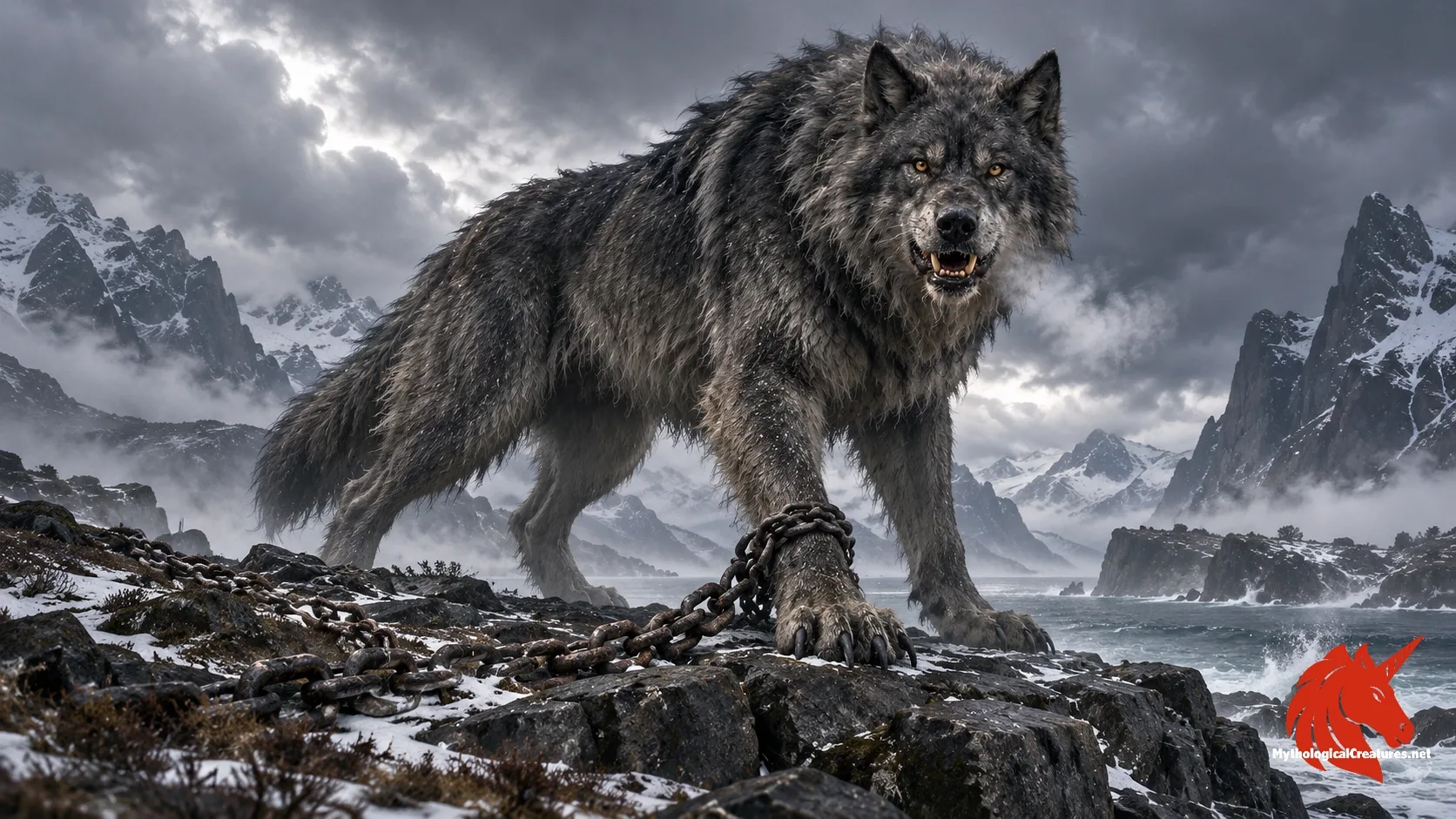
What does get lost is the context. A child who meets Fenrir as a boss fight learns that Fenrir is a big wolf. They do not learn that the gods bound him with a ribbon made of impossible things, that he agreed to be tied only if one of them put a hand in his mouth as a pledge, and that Tyr did it knowing exactly what it would cost him. The creature survives the journey. The story sometimes does not.
Illustrating things nobody has ever seen
Which brings us to a question we had to answer before any of these books existed. What should they look like?
There is no photograph of a Gashadokuro. There is no canonical image of a Wuzhiqi. For a good number of these creatures the entire visual record is a line drawing in an old scroll, a shape scratched onto a piece of pottery, or a written description and nothing else at all.
Illustration has therefore always been interpretation. Sekien interpreted. The Chalcidian vase painter interpreted, and produced something that flatly contradicts Hesiod. Every mythology book on every shelf is somebody's guess, rendered in whatever style and technology was available to them.
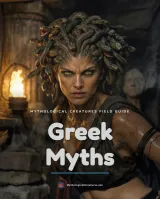
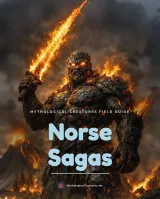
We used AI image generation to make these, and we want to be straightforward about that rather than bury it. The reasoning is simple enough. We wanted to translate old source material into a visual language familiar to readers raised on Genshin Impact, Ne Zha 2 and modern cinematic games and animation. That is not an argument against pen and ink; it is a design choice about the first few seconds of attention. Our aim was to make the first encounter immediate enough that readers, especially younger ones, would stop, look, and then want to know the story behind the image. Give them a photorealistic Anubis standing in a torchlit tomb with a golden collar and scales visible over his shoulder, and they stop and stare.
The technology has limits, but the ones that mattered turned out to be older than the technology. Some creatures are defined by a number rather than a shape. The Hydra's heads regenerate, which is the whole point of the story and something a single still image cannot show at all. Greek vase painters gave it a different head count almost every time they painted it, because there was never a correct one. Sleipnir has eight legs because eight is a supernatural number, not because anyone worked out how the horse would move. The Viking carvers understood that. On the Gotland picture stones, at Tjängvide and Ardre, they made no attempt at anatomy, and the eight legs read perfectly in shallow relief precisely because nobody was pretending to show a real animal. That is the trade every illustrator makes. The more an image insists on being real, the less room it leaves for a creature whose whole meaning is a number.
Typhon was the opposite situation. The hundred headed depiction many versions quote comes from the poets, and the various poets themselves do not agree with each other or with the artists. The oldest surviving picture of him is a Chalcidian vase from around 540 BC, and it shows one head, two arms, wings and a pair of serpent coils. That is not a compromise; it is the earliest visual record we have, made by someone whose culture still believed the story. Choosing it over Hesiod means choosing the artists' tradition over the writers' tradition, and we would have made the same choice with a pencil and a hundred years to spare. The book sets out all three descriptions and tells the reader plainly that the sources disagree, because a reader who learns that ancient people argued about this has learned something more useful than a monster.
The next people to tell these stories
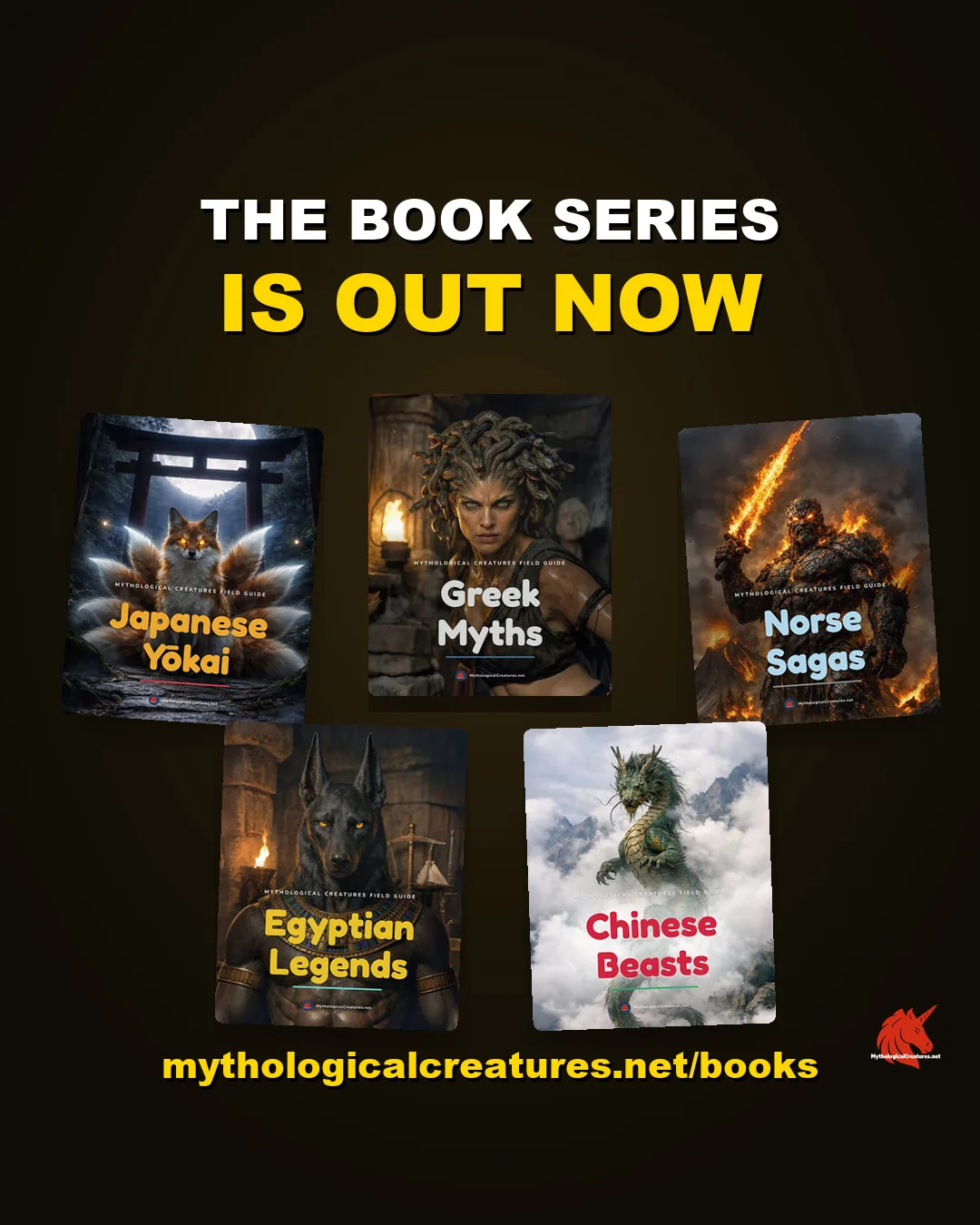
Five books. Seventy five creatures. Japan, Greece, the Norse world, Egypt and China. Fifteen creatures in each, across five themed chapters, each one given six pages of origin, story, cultural context and full page artwork.
We did not set out to write a series about cultural transmission. We set out to make books that a nine year old would pick up voluntarily. But you cannot spend this long inside the material without noticing that the whole thing is a relay. Somebody told somebody, who carried it over a mountain range, who wrote it down, who drew it, who filmed it, who put it in a game.
Readers of all ages, especially the younger brigade, are now the next leg of that relay, whether anybody frames it that way for them or not. Some of them will grow up to make the films and the games and the books that carry the Qilin and the Draugr and the Bennu into whatever comes after this.
That seems worth taking seriously. It also seems worth getting the details right, which is why the Manticore is not in the Greek book.
This article grew out of the research behind the five-volume Mythological Creatures Field Guide series and the searchable database at mythologicalcreatures.net. The database contains several thousand creatures, and it is where much of this work continues.
Let's keep our mythical stories alive.