
Athos: Athos is a mythological giant from Greek lore renowned for his encounter with Poseidon.
-96a214ce-0fd3-41bc-8f2e-0d916032577b_small.webp "Athos - His act of creating Mount Athos has left a lasting impact on religious and cultural landscapes in Greece.")
Athos
Athos - His act of creating Mount Athos has left a lasting impact on religious and cultural landscapes in Greece.
the legend in five swipes.
the legend in five swipes.
Where does the story of Athos begin?
Athos emerges in Greek mythology as a formidable figure whose legendary clash with Poseidon marks him as a giant of exceptional renown. His mythic roots extend into the earliest layers of ancient Greek lore, where his presence is intertwined with the creation of natural wonders. He is best known for his connection with Mount Athos, the very mountain that later became an eminent centre of Eastern Orthodox monasticism. Early accounts, though fragmentary, hint at his existence through local oral traditions and scattered poetic references. His narrative embodies the dual nature of divine defiance and the raw power of the natural world. Throughout the ancient period, Athos symbolised the untameable forces of the earth, serving as a mythic explanation for the rugged terrain of northern Greece. The tale of his struggle with Poseidon encapsulates the eternal conflict between elemental domains, particularly the volatile interaction between sea and land. Many ancient traditions portray him as both a creator and a destroyer, reflecting the ambivalence with which nature is revered. In his enduring myth, Athos stands as a testament to the timeless interplay between human culture, the divine, and the natural environment.
Which texts first mention Athos?
The legend of Athos is woven from a diverse tapestry of ancient texts, regional poems, and local folklore that collectively expand his enigmatic profile. Although primary classical sources offer only brief mentions of his existence, later documents and local inscriptions infuse his story with greater depth. Fragments of archaic verse and regional hymnals have preserved glimpses of his conflict with Poseidon and the consequential shaping of the landscape. Diverse story variants appear in both written and oral traditions, with some narratives stressing his heroic defiance and others lamenting the tragedy of his might. Certain Byzantine compilations have reinterpreted his myth through a spiritual lens, imbuing his legacy with sanctified significance. Inscriptions found in the Chalcidice region sometimes invoke his name as a personification of nature’s enduring force. Over successive generations, different storytellers have adapted his myth, each contributing nuances that blend celestial defiance with earthly transformation. Although the surviving primary sources are limited compared to other mythic characters, the multiplicity of references has secured Athos a persistent role in the broader canon of Greek mythology.
Athos: Physical Form and Supernatural Powers
Artistic depictions of Athos reveal him as a colossal giant whose physicality is as awe-inspiring as the natural features he is credited with creating. His immense frame is typically shown as both rugged and powerful, reflecting the raw energy inherent in the ancient earth. Visual representations often present him with a thick, windswept mane, mirroring the untamed character of the wild landscapes he helped forge. His chiseled facial features and stern countenance evoke a sense of primordial strength and relentless determination. Many ancient artists have portrayed him with muscular arms and robust limbs, emphasising his capacity to challenge even divine forces. In some renditions, his lower body appears to dissolve into rocky terrain, symbolising his seamless integration with the very mountains he is said to have created. Distinctive details, such as his storm-like eyes and rugged skin, further underscore his association with the elemental forces of nature. Variations in artistic tradition suggest that his size and imposing presence could differ, yet all depictions resonate with an image of indomitable power that remains central to his myth.
How does the Athos legend change from place to place?
The myth of Athos exhibits remarkable regional adaptability, morphing subtly as it traverses different local cultures within Greece. In the Chalcidice peninsula, local folklore treats him not merely as a mythic giant, but as an intrinsic force shaping the rugged landscape. Communities in northern Greece have layered his narrative with additional local deities and spirits, thereby enriching his story with regional intricacies. Some village traditions even regard him as a protective presence, a guardian whose once tumultuous might now sanctifies the land. Regional artistic renditions often highlight features that draw on the local environment, emphasising a close bond between the giant and the natural topography. Folk narratives across varying locales hence present Athos as both a legendary combatant against divine forces and a beneficent force that forged enduring natural monuments. In these local adaptations, the myth functions as a bridge between the ancient past and the cultural identity of the area. The convergence of myth and landscape in regional legends reaffirms his lasting significance as a symbol of nature’s persistent influence.
What figures resemble Athos?
The character of Athos has intriguing parallels with giant archetypes from across world mythologies, revealing a shared cultural language in the portrayal of colossal beings. His enormous stature and elemental might echo the formidable figures of Norse mythology, such as the Jotunn, whose raw power also symbolises nature’s untamed aspects. Similarities can be drawn to the biblical Nephilim, where giants serve as liminal figures bridging divine realms and human experience. Additionally, comparisons with Titan figures like Atlas reinforce the idea that these personifications of strength carry both burdens and blessings for the natural world. Throughout various cultures, giant beings like Athos emerge as metaphors for the chaotic forces that precede the creation of order. His myth, encapsulating the tension between divine interference and earthly resistance, finds a resonant echo in legends from distant cultures, underscoring universal themes of creation and destruction. Such cross-cultural comparisons illuminate the way ancient societies used the figure of the giant to articulate the unfathomable force of nature. Ultimately, Athos stands among a pantheon of mythic figures whose colossal forms continue to captivate and inspire, serving as enduring symbols of both natural power and mythical mystery.
How has the image of Athos evolved?
Over the centuries, the myth of Athos has undergone a transformative evolution, growing from a fragmentary ancient tale into a potent emblem of nature and spiritual resilience. His early narrative, marked by defiance against the divine order, eventually became intertwined with the sacred reputation of Mount Athos, a site renowned for its Eastern Orthodox monastic heritage. In Byzantine times, his legend was reimagined with a more profound religious symbolism, aligning the raw power of his myth with the sanctity of the holy mountain. During the Renaissance and Romantic eras, artists and poets were captivated by both the physical beauty of the region and the mythical narrative that Athos embodied, further cementing his aesthetic and cultural appeal. Modern interpretations have expanded his myth to encompass themes of environmental stewardship and the complex interplay between nature and human endeavour. Athos is now regarded not merely as an ancient giant but as a cultural touchstone that reflects the enduring resonance of myth in contemporary spiritual and ecological discourse. His story continues to enchant audiences, inspiring scholarly discussion and creative expression across various media. Through festivals, literature, and art, the legacy of Athos endures as a symbol of the timeless dialogue between the forces of nature and the enduring spirit of cultural memory.
Interesting Fact
It is intriguing that a giant's formidable act of creation has given rise to a site of profound spiritual importance that endures to this day.
Mythological Treasures
Greek Myths: A field guide to the monsters of ancient Greece
Every monster here earned its place in legend, and each gets a full page of artwork and the story behind it.
Egyptian Legends: A field guide to the gods and monsters of ancient Egypt
Guardians of the living and devourers of the dead, with the role each played in judgement.
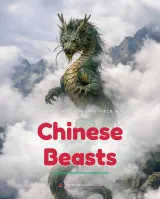
Chinese Beasts: A field guide to the dragons and demon kings of Chinese myth
From river dragons to demon kings, with the legends that shaped five thousand years of storytelling.
the legend in five swipes.
Support the directory
Promote your myth project and fund more research
Sponsor placements help keep this directory growing and free to use while giving your work a focused, relevant audience.
Learn how sponsorship worksQuick Creature Info
Origin:
Features:
Associations:
Our Mythic Legendary Rating:

Habitat:
Supernatural Powers:
Physical Attributes:
Abilities:
Behavior:
Lore:
Related Creatures, Tales or Lore
References
Discover Another Mythical Legend You May Not Have Heard Of?
Uncover the mysteries of ancient folklore and expand your knowledge of legendary beings from cultures around the world.
Dare to Meet the Fiery serpents....
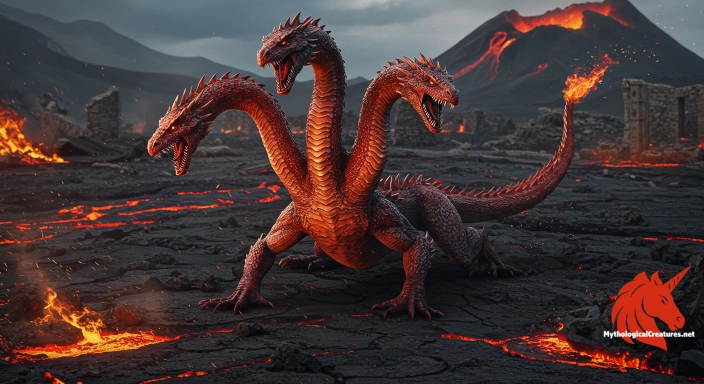
The Mythological Creatures Book Series
Yokai, Greek, Norse, Egyptian & Chinese. Five illustrated field guides to the creatures the old stories either warned or told you about.

Curated by the Mythological Creatures Team
Series editor: Mythological Creatures Directory
Primary desk: Hellenic & Ancient Mediterranean Desk
(rev. November 2025)