
Bestial beast: The Bestial Beast, also known as besta-fera, is a Brazilian centaur-like creature with the body of a horse and a human torso.
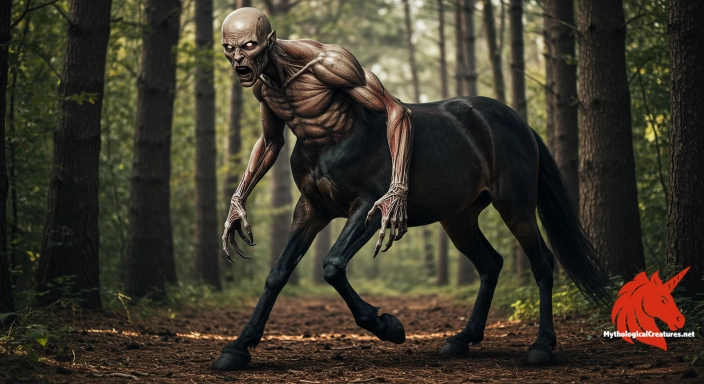
Bestial beast
Bestial beast - Represents a metaphor for uncontrolled anger and the unpredictable nature of supernatural forces, despite posing no lasting harm to humans
the legend in five swipes.
the legend in five swipes.
Bestial beast: Where the Legend Started
The Bestial beast, known in Portuguese as besta-fera or bestafera, occupies a fascinating niche in Brazilian folklore, drawing its origins from early Portuguese myth. It emerged from a melding of European centaur lore and indigenous narrative traditions that sought to explain the mysterious. Early accounts suggest that its presence was first noted during the era of Portuguese colonisation, when myth and legend intertwined in the New World. Stories embellish its existence as an emissary of the Devil, emerging on nights when the full moon reigns supreme. Its myth captures the tension between human civilisation and the untamed forces of nature. The creature is intriguingly depicted as both a fearsome demon and a symbol of wild, uncontrollable anger. While its mythological role hints at a moral or symbolic warning against excesses, it also illustrates the cultural fusion that has shaped many Brazilian legends. As these narratives have been handed down through generations, the Bestial beast continues to evoke both awe and trepidation in those who encounter its lore. Its layered symbolism reflects the duality of human nature, blending the rational with the instinctual. Overall, the creature remains a powerful emblem of transformation and the mysterious boundaries between the human and the supernatural.
The Documented Accounts of the Bestial beast
The tales of the Bestial beast are preserved in a rich variety of primary sources, spanning centuries of oral traditions and early written chronicles. Early Portuguese manuscripts first hinted at a creature with a striking combination of human and animal traits, setting the stage for its later evolution in Brazilian folklore. Oral narratives passed down through village generations have enriched its legend with dramatic details and local variations. Some accounts portray the beast as a nocturnal wanderer conjured from the depths of hell during full-moon nights, while others emphasize its symbolic embodiment of ferocity. The creature is often accompanied by a pack of dogs, a vivid detail that appears across multiple retellings and emphasises its supernatural aura. Various folklore compilations and regional story collections provide alternative versions that sometimes downplay its danger to humans. Detailed descriptions found in these sources allow modern readers to glimpse a creature that exists at the intersection of myth and cultural memory. The layered accounts offer proof of how oral traditions can adapt and expand a myth to suit different societal contexts and fears. Each version of the story enriches our understanding of the beast, providing a multifaceted narrative that spans both time and space.
What did the Bestial beast look like?
The Bestial beast is depicted with a dramatic dualistic anatomy that captivates the imagination. Its lower half mirrors that of a powerful horse, replete with robust, muscular limbs and resounding hooves that echo ominously through quiet village lanes. Atop this formidable equine body emerges a human torso, creating a striking and unsettling blend of animal and human features. The face of the creature, while bearing hints of human recognition, is often rendered with an intensity and wildness that unsettles even the most composed observer. Its eyes, penetrating and fierce, are said to incite temporary madness in anyone who stares too long, adding a psychological dimension to its physical terror. Descriptions frequently mention a weathered, almost spectral quality to its skin and hair, suggesting a being both ancient and otherworldly. Variations in size and form appear in different accounts, with some legends portraying it as a towering figure while others describe it as a more nimble, ghost-like presence. The vivid imagery of its galloping through the night, accompanied by a pack of hounds that it reportedly whips, only heightens its mythical prominence. This striking physical portrayal not only conveys its menacing presence but also symbolises the unpredictable force of nature merged with human characteristics. Artists and storytellers have long found in its form a canvas upon which to project themes of duality and uncontrollable fury.
How do regional versions of the Bestial beast differ?
Regional depictions of the Bestial beast underscore its adaptability to local cultural narratives across Brazil. In certain rural communities, the creature is seen as a harbinger of a deeper natural power, appearing in times of social or environmental upheaval. Some local legends incorporate elements of local superstition and ritual associated with the full moon, thereby reinforcing its nocturnal and mystic qualities. In areas with strong Portuguese influence, traditional European traits merge seamlessly with local lore, producing a version of the beast that is both familiar and uniquely reinterpreted. Variations in its portrayal include differences in its ferocity, the details of its appearance, and the nature of its accompanying animals. For some, the beast is a benign symbol whose shock value lies more in the psychological than the physical realm. Other regions elevate its role as a messianic figure that symbolises retribution or a warning against unchecked anger. These regional adaptations serve as a testament to how folklore evolves through community reinterpretation, allowing the creature to resonate with specific local fears and moral lessons. Each retelling infuses the Bestial beast with new layers of meaning, reflecting the diversity and richness of Brazilian myth.
Bestial beast: Cross-Cultural Comparisons
When compared to similar mythical entities around the world, the Bestial beast shares many attributes with centaur figures and other hybrid creatures in global folklore. Much like the centaurs of Greek tradition, it embodies a juxtaposition of human intellect and wild animal strength that challenges the natural order. Universally, such creatures straddle the line between civilisation and savagery, often representing the struggle between order and chaos. In Latin American narratives, other hybrid beings emerge with culturally adapted traits, yet they all echo the ambivalence seen in the Bestial beast’s legend. This creature also finds thematic parallels with demonic figures in various traditions, where the presence of a human-animal amalgam symbolises the uncontrolled aspects of human emotion and the relentless forces of nature. The accompanying pack of dogs is reminiscent of other mythic hounds that appear in European and Middle Eastern stories, adding a layer of supernatural menace. These cross-cultural similarities highlight the universality of using hybrid creatures as metaphors for internal conflict and societal disruption. In comparative mythology, the Bestial beast offers a unique perspective on how different cultures relate to the idea of transformation and the coexistence of disparate physical forms. Its narrative, while regionally distinct, taps into shared human experiences of fear, awe, and the need to explain the mysterious energies present in the world.
How did the Bestial beast survive into the modern world?
The evolution of the Bestial beast across generations mirrors the dynamic nature of mythology itself. Early portrayals in Portuguese folklore, steeped in the supernatural, have gradually merged with Brazilian cultural narratives, allowing the beast to adopt new symbolic roles. Over time, it has shifted from being a straightforward embodiment of fear to a more complex metaphor for inner anger and the untamed aspects of human nature. Modern reinterpretations, especially in literature and visual arts, embrace this duality, often using the creature as an emblem of repressed emotions or societal anxieties. Contemporary artists and writers have reimagined the beast in various contexts, highlighting both its terrifying aspects and its enigmatic, almost tragic, qualities. Its occasional depiction as a misunderstood figure reflects modern sensibilities around identity and transformation. The beast’s recurring motif of inducing temporary madness upon a fearful encounter has spurred discussions about the psychological impact of myth and the human psyche's vulnerability. Today, the Bestial beast stands as a cultural relic that continues to evolve, serving as a bridge between age-old superstition and modern interpretation. Its enduring presence in folklore, art, and even popular media testifies to the lasting power of myth to capture the complexities of human emotion. As its story is retold and reshaped in new creative forms, the creature remains a potent symbol of the mysterious borderland between the human and the supernatural.
Interesting Fact
An interesting aspect of the Bestial Beast is that while its presence induces temporary madness, its effects are not permanent, suggesting a symbolic rather than lethal power.
Mythological Treasures
Chinese Beasts: A field guide to the dragons and demon kings of Chinese myth
From river dragons to demon kings, with the legends that shaped five thousand years of storytelling.
Japanese Yokai: A field guide to the spirits and demons of Japanese folklore
Fifteen spirits, with the signs to watch for and what the old tales say to do if you meet one.
Greek Myths: A field guide to the monsters of ancient Greece
Every monster here earned its place in legend, and each gets a full page of artwork and the story behind it.
the legend in five swipes.
Partner with Mythological Creatures
Bring your myth-based world into ours
From game settings to narrative worlds, we work with partners who treat myths with care. Share your project for a potential sponsor slot.
Partner with usQuick Creature Info
Origin:
Features:
Our Mythic Legendary Rating:

Also Sometimes Known As:
Habitat:
Supernatural Powers:
Physical Attributes:
Abilities:
Behavior:
Weaknesses:
Lore:
Related Creatures, Tales or Lore
- CCentaur (Greek Mythology)
- CChiron (Greek Mythology)
- SSagittarius Centaur
References
Discover Another Mythical Legend You May Not Have Heard Of?
Uncover the mysteries of ancient folklore and expand your knowledge of legendary beings from cultures around the world.
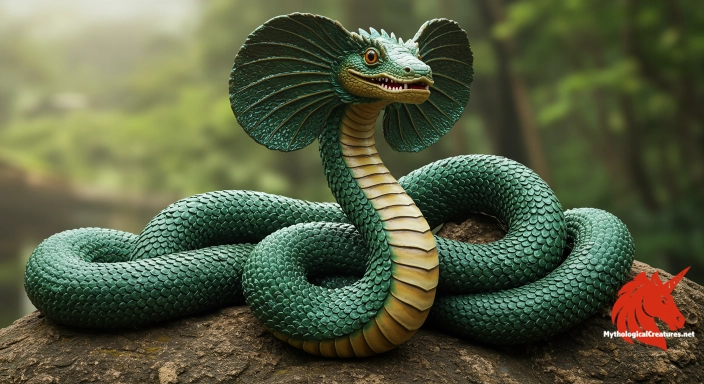
Dare to Meet the Mucilinda....
The Mythological Creatures Book Series
Yokai, Greek, Norse, Egyptian & Chinese. Five illustrated field guides to the creatures the old stories either warned or told you about.



Curated by the Mythological Creatures Team
Series editor: Mythological Creatures Directory
Primary desk: Americas & Indigenous Traditions Desk
(rev. November 2025)