
Britomartis: Britomartis is a Greek goddess of mountains and hunting, primarily worshipped on the island of Crete.
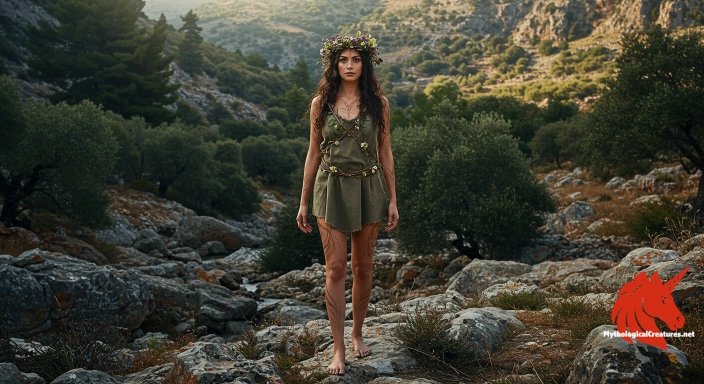
Britomartis
Britomartis - Britomartis played a vital role in ancient Cretan worship and influenced later literary and artistic traditions.
the legend in five swipes.
the legend in five swipes.
Britomartis Origins: The Earliest Accounts
Britomartis emerges as a vibrant figure in ancient Greek myth, revered as a goddess of mountains and the hunt. She is chiefly associated with the island of Crete, where her presence signified the untamed spirit of rugged landscapes. The origins of her cult are both mysterious and ancient, rooted in local traditions that celebrated nature’s raw power. Early attestations hint at a deity who embodied both the formidable wilderness and the delicate balance between civilization and the untamed world. Her character, at times identified with a mountain nymph or oread, highlights the close ties between the divine and the natural environment. Over time, her myth was enriched by a complex layering of attributes, making her more than a simple personification of nature. The evolution of her persona was further influenced by cultural exchanges that merged her identity with that of other powerful deities. This syncretism allowed her to absorb elements from various traditions, enhancing her role as a guardian of the wild. Her enduring legacy as both a huntress and an embodiment of natural majesty continues to capture the imagination. The multifaceted nature of Britomartis stands as a testament to the rich and adaptive spirit of ancient religious traditions.
Britomartis: The Written Sources
The earliest references to Britomartis are interwoven with the oral and cultic traditions of Crete, where she was celebrated as a goddess of the mountains and the hunt. Ancient texts and fragmentary inscriptions hint at her divine attributes while placing her within the realm of local nymphs and nature deities. Variants of her story often reveal her as an oread, which underscores the intimate connection between her cult and the rugged terrain of her homeland. At times, she is also identified with Dictynna, a name that adds further complexity to her mythic persona. This multiplicity of appellations reflects the diverse interpretations that ancient communities imposed on her identity. Over successive generations, narrative variants began to merge her character with that of the more widely known Artemis. The literary tradition was further enriched during the Renaissance, when Edmund Spenser reimagined her as a chivalric figure in The Faerie Queene. The evolution of her myth across different works and geographical areas illustrates how her story was adapted to fit shifting cultural and religious paradigms. Even when primary sources provide only sparse details, the surviving accounts offer glimpses into a deity revered for her mysterious aura and potent connection to the natural world. This layered textual tradition ensures that Britomartis remains an enigmatic and influential figure in mythological studies.
Britomartis: Form, Powers and Weaknesses
Visual depictions of Britomartis portray her as a figure of ethereal beauty juxtaposed with an undeniable strength. She is often illustrated as a lithe huntress, clothed in garments that echo the simplicity of her Cretan landscape. Her appearance is characterised by an arresting blend of grace and determination, elements that mirror her association with the wild. Common iconographic features include a bow and arrows, emphasizing her role as a huntress and protector of nature. Artists often adorn her with natural ornaments such as wreaths or garlands, symbolising her deep ties to the floral and arboreal realms. Her flowing hair is typically rendered with a sense of freedom that evokes the untamed spirit of the mountains. In some portrayals, subtle lunar motifs are interwoven into her imagery, reflecting her occasional conflation with Artemis. Variations in her depiction—ranging from delicate and ethereal to robust and martial—highlight the diversity of regional artistic traditions. Her penetrating eyes and poised stance further contribute to an enduring iconography that captures both vulnerability and might. Such detailed representations continue to inspire a rich visual tradition, bridging the gap between myth and the natural world.
Britomartis Across Different Regions
Britomartis’s cult was most strongly anchored in Crete, yet her myth found resonance across various regions of the ancient Greek world. In Crete, she was venerated as the embodiment of wild nature, revered for her role as both huntress and mountain guardian. Neighbouring locales, such as Aegina, adapted her identity by merging her attributes with those of a local deity known as Aphaea. These regional interpretations served to localise her influence, emphasising distinctive aspects such as her affinity with rugged terrains or her protective role over wild creatures. Some versions accentuate her as a mountain nymph, deepening her connections with the elemental forces of nature. Meanwhile, other regional narratives align her more closely with panhellenic deities like Artemis, thereby expanding her worship beyond her original Cretan confines. Festivals, rites, and artistic traditions in different parts of the Aegean exhibit subtle variations that reflect local cultural priorities. These adaptations allowed communities to express both a shared religious identity and unique regional flavour. The synthesis of varied traditions into her myth underscores the dynamic interplay between local customs and broader mythological themes. Through these diverse regional lenses, Britomartis continues to represent a bridge between nature and the divine across the ancient world.
Britomartis: Shared Themes in World Myth
Britomartis occupies a fascinating niche among deities who bridge the human and natural realms, inviting comparison with figures such as Artemis. Both share attributes of the hunt, with similar iconography that includes bows, arrows, and the serene yet vigilant beauty of the wilderness. While Artemis is widely recognised as the huntress of the Greek pantheon, Britomartis retains a distinctive local flavour born from the unique geography of Crete. Her alternative name, Dictynna, further sets her apart by evoking a more specialised cultic tradition that emphasises mountain mystique. Similar deities in Roman mythology and even in certain Celtic traditions echo her associations with wilderness and protection. Literary reinterpretations, such as those by Edmund Spenser, have also linked her to chivalric virtues, thereby extending her symbolic reach beyond ancient religious contexts. Such cultural parallels underscore a recurring motif in mythology: the fusion of nature’s raw power with the qualities of vigilance and grace. This comparative analysis highlights how distinct cultures adopt and adapt similar archetypes to express shared human values. The interplay between Britomartis and her parallels reinforces a broader narrative of deities emerging from the natural world, each embodying unique regional and spiritual dimensions. In doing so, her myth exemplifies the universal allure of divine figures who exist at the crossroads of culture, nature, and artistry.
How did Britomartis survive into the modern world?
Over the centuries, the myth of Britomartis has evolved significantly, reflecting the shifting contours of cultural and artistic expression. Initially revered in Crete as a primordial goddess of mountains and the hunt, her identity was gradually infused with attributes from neighbouring deities, most notably Artemis. This transformation allowed her myth to broaden its appeal, absorbing elements of both the natural and the martial. During the Renaissance, literary figures such as Edmund Spenser reimagined her as a chivalric symbol, infusing her story with aspects of martial valor and poetic elegance. Such literary and artistic reinterpretations extended her influence well beyond the confines of Greek mythology, shaping her as a figure emblematic of both natural splendour and brave, noble defences. Modern portrayals continue to celebrate her as a symbol of feminine empowerment and the enduring allure of ancient mythologies. Her story now resonates with contemporary audiences who seek connections between past traditions and modern narratives of identity and resilience. The evolution of her iconography—ranging from classical statuary to modern artistic renditions—demonstrates the timeless capacity of myth to adapt and inspire. Today, Britomartis stands as a powerful emblem of nature’s enduring mystery and the relentless human quest to understand and celebrate the environment. Her legacy, a rich tapestry woven from diverse cultural threads, remains a vibrant and evolving testament to the power of myth.
Interesting Fact
Britomartis is notable not only for her divine role in Greek mythology but also for her lasting cultural impact, as her identity was adapted into British literature as a symbol of strength and chivalry.
Mythological Treasures
Greek Myths: A field guide to the monsters of ancient Greece
Every monster here earned its place in legend, and each gets a full page of artwork and the story behind it.
Norse Sagas: A field guide to the beasts of the Viking world
Drawn from the saga accounts themselves, with the powers, weaknesses and doom of each being set out.
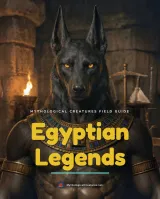
Egyptian Legends: A field guide to the gods and monsters of ancient Egypt
Guardians of the living and devourers of the dead, with the role each played in judgement.
the legend in five swipes.
Curated sponsor space
One subtle banner. Thousands of myth lovers.
We offer a small number of curated sponsor spots for relevant books, courses, games, and art. No clutter, just well-matched partners.
Partner with usQuick Creature Info
Origin:
Associations:
Our Mythic Legendary Rating:

Also Sometimes Known As:
Habitat:
Supernatural Powers:
Physical Attributes:
Abilities:
Behavior:
Lore:
Related Creatures, Tales or Lore
- AArtemis
- AAphaea
- DDiana
References
Discover Another Mythical Legend You May Not Have Heard Of?
Uncover the mysteries of ancient folklore and expand your knowledge of legendary beings from cultures around the world.
Dare to Meet the Aeternae....
The Mythological Creatures Book Series
Yōkai, Greek, Norse, Egyptian & Chinese. Five illustrated field guides to the creatures the old stories either warned or told you about.


Curated by the Mythological Creatures Team
Series editor: Mythological Creatures Directory
Primary desk: Hellenic & Ancient Mediterranean Desk
(rev. November 2025)