
Bugul Noz: Bugul Noz is a nocturnal fairy and bogeyman from Breton folklore, known as the 'Night Shepherd' or 'child of the night.
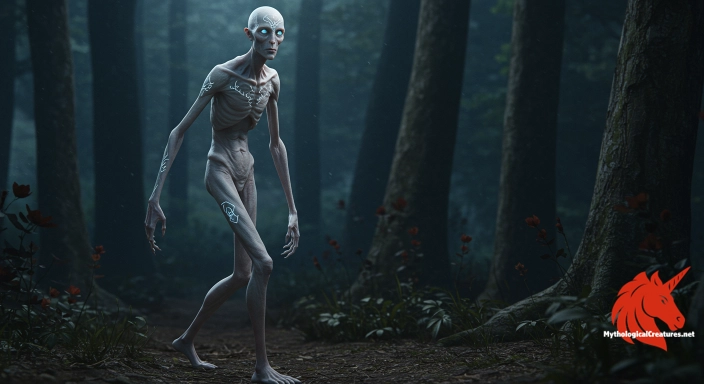
Bugul Noz
Bugul Noz - Represents the mystique and danger of the night in Breton cultural tradition, serving as a cautionary tale especially for children.
the legend in five swipes.
the legend in five swipes.
Bugul Noz: Origins and First Sightings
In the heart of Breton folklore, the Bugul Noz radiates an eerie yet captivating aura as a nocturnal fairy and bogeyman-like figure. Its origins are entwined with ancient Celtic traditions that imbued the night with mysticism and subtle power. The creature, first attested in the rural lore of Morbihan, embodies both warning and wonder as it emerges when twilight deepens. Local narratives paint it as a liminal presence that bridges the shadowy realms of everyday life and the supernatural. Often, it is seen as a keeper of secrets in the darkness, overseeing the balance between light and night. Village elders have long whispered that its appearance signified both protection for the vulnerable and a caution against straying from propriety. Every retelling contributes to its mystique, highlighting the interplay of benevolence and mischief that defines its identity. Ultimately, the enduring tales of the Bugul Noz serve as a poignant reminder of the beauty and terror hidden within the nocturnal hours.
Bugul Noz: How the Tale Was Told and Retold
Oral traditions preserved within Breton communities form the bedrock of the Bugul Noz’s story, with generations passing down these accounts through evocative storytelling. Early folklorists of the 19th century collected a wealth of versions that paint it variously as a gentle guide and a dark, foreboding spirit. Manuscripts and local anthologies reveal that the creature was often incorporated into moral tales and ritualistic narratives during night-time festivities. Multiple accounts exist, some depicting it as a protector of wandering souls, while others warn of its unpredictable nature. Diverse textual sources have contributed to an evolving composite image, reflecting the rich cultural tapestry of Morbihan. Regional compilations sometimes align the Bugul Noz with seasonal rites, emphasising its connection with communal celebrations and ancestral heritage. Despite variations in emphasis, the recurring themes across these texts highlight its role as a liminal force of the night. The layered documentation underscores both the fluidity of its myth and the persistent allure it holds over Breton cultural memory.
What was the Bugul Noz believed to be capable of?
Descriptions of the Bugul Noz offer a striking blend of ethereal beauty and eerie unpredictability, painting it as a figure that is as alluring as it is enigmatic. It is commonly envisioned as a lean, shadow-like entity cloaked in garments reminiscent of the thick mist that blankets the Breton landscape at twilight. Glowing, ever-shifting eyes often add an otherworldly sparkle to its ambiguous visage, making it seem capable of both welcome and warning. Some accounts note that its features are fluid, with a face that seems to change subtly depending on the angle from which it is viewed. A shepherd’s crook or similar staff is sometimes depicted in its grasp, reinforcing its moniker as the Night Shepherd. Other tales describe a cascade of unkempt, dark hair that flows like a spectral river, enhancing its surreal appearance. Its stature is variable, at times appearing diminutive and almost childlike, while in other moments, it looms large against the canvas of the night. Every described detail—the translucent skin, the shifting silhouette, and the delicate interplay of light and shadow—emphasises the ephemeral nature of this nocturnal being.
The Geography of the Bugul Noz Legend
Within the heart of Morbihan, the Bugul Noz maintains a distinct presence, its story deeply embedded in the local nightly rituals and communal lore. Regional variations frequently adapt its character, reflecting the specific cultural nuances of different Breton communities. In some parishes, the creature is portrayed as a benevolent guardian who guides lost travellers through the dark, while in others, it assumes a more ominous role as a warning figure. Distinct local geographies—be they coastal shrouds of mist or dense, shadowed forests—have influenced the way its tales are told and retold. Artists and storytellers often tweak its attributes to mirror the surrounding landscape, making its legend a dynamic part of regional identity. Seasonal festivals and community gatherings contribute further by infusing the Bugul Noz with elements unique to local celebrations. Such adaptations guarantee that, despite a shared core identity, each version carries its own subtle, culturally specific markers. These regional reinterpretations are a testament to the enduring, adaptable nature of its mythos within the Breton legacy.
Which myths echo the story of the Bugul Noz?
The myth of the Bugul Noz resonates with other nocturnal beings found throughout European folklore, setting it into a broader context of night-bound entities. It shares intriguing similarities with the archetypal bogeyman figures of other Celtic regions, where dual roles of guide and enforcer often intertwine. Like many of its counterparts in Irish and Scottish lore, this creature embodies an ambiguous charm that is both protective and foreboding. The shifting nature of its depiction recalls that of shapeshifting fairies and spectral guardians known across various cultures. In Slavic and Mediterranean traditions, one encounters figures that similarly navigate the liminal space between the known and the mysterious. Yet, the Bugul Noz distinguishes itself through its uniquely Breton nuances, particularly its connections to local night-time rites and communal values. These common mythological threads underline a universal human fascination with the mysteries of the dark hours. Comparative study thus not only bridges disparate cultural narratives but also highlights the distinctive essence of the Bugul Noz within this pan-European mythological mosaic.
The Lasting Influence of the Bugul Noz
The evolution of the Bugul Noz from a whispered rural legend to a celebrated facet of Breton heritage mirrors the changing landscapes of collective memory. Initially cast in a forbidding light, it was once a spectral warning intended to enforce social norms during the shadowed hours. Over time, however, its image has softened and diversified, crossing over into modern artistic and literary expressions that refresh its ancient mystique. Contemporary reinterpretations in festivals, visual art, and theatre have repositioned the creature as both an enigma and a cultural icon. These modern portrayals often emphasise its dual nature, celebrating the interplay of beauty and terror that continues to captivate audiences. The creature has become a canvas upon which themes of identity, transformation, and the embrace of the unknown are vividly explored. Today, the Bugul Noz is not only a figure of supernatural intrigue but also a symbol of Breton resilience and creative spirit. Its enduring legacy, reimagined through time, continues to inspire and mesmerise those drawn to the mysteries of the night.
Interesting Fact
An intriguing aspect of the Bugul Noz is how its dual nature as both a fairy and a bogeyman challenges the traditional dichotomy of benevolent and malevolent supernatural beings in folklore.
Mythological Treasures
Greek Myths: A field guide to the monsters of ancient Greece
Every monster here earned its place in legend, and each gets a full page of artwork and the story behind it.
Norse Sagas: A field guide to the beasts of the Viking world
Drawn from the saga accounts themselves, with the powers, weaknesses and doom of each being set out.
Egyptian Legends: A field guide to the gods and monsters of ancient Egypt
Guardians of the living and devourers of the dead, with the role each played in judgement.
the legend in five swipes.
Sponsor this space
Tasteful, fixed-fee placements for myth projects
No bidding wars or flashing banners. We offer simple placements for a small set of creators and brands aligned with our readers.
Request further detailsQuick Creature Info
Associations:
Our Mythic Legendary Rating:

Also Sometimes Known As:
Habitat:
Supernatural Powers:
Physical Attributes:
Abilities:
Behavior:
Weaknesses:
Lore:
References
Discover Another Mythical Legend You May Not Have Heard Of?
Uncover the mysteries of ancient folklore and expand your knowledge of legendary beings from cultures around the world.
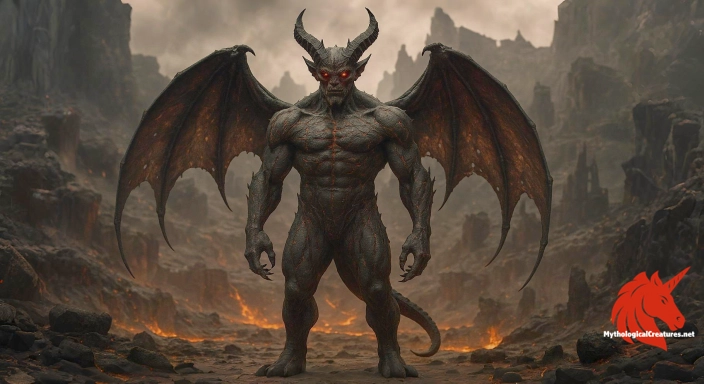
Dare to Meet the Archdemon....
The Mythological Creatures Book Series
Yokai, Greek, Norse, Egyptian & Chinese. Five illustrated field guides to the creatures the old stories either warned or told you about.
Curated by the Mythological Creatures Team
Series editor: Mythological Creatures Directory
Primary desk: Northern & European Folklore Desk
(rev. November 2025)