
Ennugi: Ennugi is a Mesopotamian god associated with agriculture, irrigation, and the underworld.

Ennugi
Ennugi - Ennugi played a crucial role in managing agricultural fertility through irrigation as well as overseeing aspects of the underworld; his attribution as the creator of grubs underscores his connection to the cycles of decay and renewal.
the legend in five swipes.
the legend in five swipes.
The Beginnings of Ennugi
Ennugi emerges from the intricate tapestry of Mesopotamian mythology as a deity whose dual responsibilities echo both the fertile vibrancy of agriculture and the somber depths of the underworld. He encompasses a unique synthesis of life-affirming irrigation practices and the inevitable processes of decay, capturing the paradoxes inherent in the natural world. His origins can be traced to early periods of urban civilisation in Mesopotamia, where water management and crop cultivation were vital to survival. Ennugi is notably recorded as a member of Enlil’s court, a status that solidified his role within the divine hierarchy. His early attestations appear in god lists and ritual incantations that reveal his involvement in the agricultural rites of the time. The city of Nippur, in particular, is associated with his worship and is believed to have housed his temple, Erabriri. His presence in these texts conveys a cultural respect for the forces that sustain life yet also govern its inevitable decline. The convergence of agricultural abundance with underworld imagery in his character provides a profound reflection on the cyclic nature of existence.
Which versions of the Ennugi story survive?
Navigating the rich corpus of ancient Mesopotamian texts, Ennugi is referenced through a variety of mythic narratives and ritual incantations that highlight his multifaceted roles. He appears in the Atra-Hasis narrative, where his influence subtly interlinks with the themes of creation and the regulation of natural order. The Epic of Gilgamesh also presents a glimpse of his character, thereby integrating him into the broader tapestry of epic tradition and divine lore. Various god lists position him alongside other significant deities such as Ninimma and Kusu, further underscoring his esteemed standing among the divine. Incantations even attribute to him the role of creator of grubs, an element that intriguingly connects the microscopic aspects of nature with larger cosmological cycles. Ritual texts and fragmentary records amplify his importance in both agricultural fertility and the chthonic domains. These differing accounts illustrate how his myth evolved across time and regions, with each version adding layers to his mythological identity. The diversity of these sources enriches our understanding of how ancient communities perceived and interacted with the divine forces that influenced both their harvests and their fate.
Ennugi: Powers, Strengths and Vulnerabilities
The visual and symbolic depiction of Ennugi remains elusive, as few detailed representations have survived from antiquity. Artistic reconstructions suggest that he may have been portrayed with implements or symbols associated with irrigation and agriculture, such as water jars or stylised forms of canal structures. Some interpretations hint at the possibility of horned regalia, a common attribute that signified divine authority in Mesopotamian art. Although direct depictions are rare, scholars infer from his textual portrayals that his iconography likely balanced elements of vitality with an inherent connection to the underworld. Such representations would have embodied the dualistic nature of his character, mirroring both the nurturing aspects of nourishment and the inexorable forces of decay. Variations in reliefs and seals hint at a figure that, despite lacking consistent physical descriptions, was revered as an embodiment of natural cycles. The occasional appearance of water motifs and earth symbols in connection with his figure underlines a deeper allegory of growth, depletion, and rebirth. Subtle, yet potent, the physical attributes attributed to Ennugi invite modern interpretation while remaining intimately tied to ancient symbolic language. These artistic cues, though fragmentary, offer valuable insights into how early Mesopotamians visualised the interplay between life and the underworld.
Ennugi: Local Variations in the Story
Across the varied landscapes of ancient Mesopotamia, the interpretation of Ennugi’s character adapted to local cultural and environmental contexts. In the urban centre of Nippur, his worship was deeply entwined with agricultural prosperity and water management, reflecting the essential role of irrigation in that region. Contrastingly, in other locales where the emphasis shifted towards chthonic traditions, his dominion over the underworld took on heightened importance. Localised altars and temple practices often integrated his attributes with those of other earth and water deities, revealing a syncretic approach to divinity that honoured both creation and dissolution. These regional adaptations allowed communities to invoke Ennugi’s power in addressing specific local challenges, such as crop failure or seasonal floods. His dual role was therefore modified to serve the pragmatic needs of varying ecological zones, whether by enhancing fertility or by managing the mysteries of life’s impermanence. The distinctive rituals and iconographic symbols found in different city-states highlight the flexibility of his mythos. Over time, the regional diversity in celebrations and offerings further enriched his complex identity, making him a truly multifaceted figure in Mesopotamian religiosity. Such variability underscores how local traditions and environmental pressures sculpted the divine narrative of Ennugi.
Ennugi: Echoes in Other Mythologies
When comparing Ennugi to other deities across ancient cultures, striking similarities emerge that highlight universal themes of fertility, death, and regeneration. His role as both nurturer and overseer of the underworld resonates with figures like Osiris in Egyptian mythology, who similarly embodies revival through death. In parallel, traits akin to the Greek goddess Demeter underscore the broader significance of agricultural cycles and the delicate balance between growth and decay. This synthesis of life and underworld elements invites comparison with chthonic deities from neighbouring traditions, suggesting a common symbolic framework in ancient Near Eastern belief systems. The integration of mundane agricultural practices with cosmic order through divine intervention is a recurring theme, and Ennugi’s character serves as a compelling testament to this blend. His placement in the divine hierarchy, particularly as a subordinate within Enlil’s court, mirrors the way lesser-known deities were interwoven into the broader tapestry of myth. Such parallels also extend to the agricultural rites and seasonal festivals observed across these cultures. The blending of practical concerns with spiritual significance in his myth lays the groundwork for enduring cross-cultural connections. Ultimately, Ennugi’s attributes emerge as part of a larger dialogue about the forces governing nature and the mysteries that underlie the human experience.
How is Ennugi remembered today?
The legacy of Ennugi, though less prominent than that of some major deities, has undergone significant reinterpretation throughout the course of history. In the ancient period, his dual command over agricultural fertility and the underworld was both a source of practical solace and profound metaphysical reflection. As civilisation progressed and cultural paradigms shifted, his myth was recontextualised to align with evolving understandings of nature and societal order. Later literary traditions, including epic narratives, kept his memory alive by integrating subtle threads of his character into the broader mythological canon. Modern scholarship has revived interest in Ennugi as a symbol of the intersection between human endeavour and the elemental forces governing the earth. Archaeologists and historians now explore his iconography and textual references to gain insights into ancient water management practices and agricultural rites. Contemporary artistic and cultural expressions occasionally draw on his image to evoke the timeless cycle of growth and decay. His enduring presence in academic research and creative reinterpretations exemplifies how a relatively obscure deity can encapsulate enduring truths about the human relationship with nature. This sustained relevance highlights a modern legacy that honours both the practical and mystical dimensions embedded in the ancient belief systems.
Interesting Fact
An intriguing aspect of Ennugi is that an incantation uniquely credits him with the creation of grubs, linking him to a broader cycle of decay and renewal that was essential for agricultural fertility in Mesopotamian society.
Mythological Treasures
Chinese Beasts: A field guide to the dragons and demon kings of Chinese myth
From river dragons to demon kings, with the legends that shaped five thousand years of storytelling.
Japanese Yōkai: A field guide to the spirits and demons of Japanese folklore
Fifteen spirits, with the signs to watch for and what the old tales say to do if you meet one.
Greek Myths: A field guide to the monsters of ancient Greece
Every monster here earned its place in legend, and each gets a full page of artwork and the story behind it.
the legend in five swipes.
Partner with Mythological Creatures
Bring your myth-based world into ours
From game settings to narrative worlds, we work with partners who treat myths with care. Share your project for a potential sponsor slot.
Partner with usQuick Creature Info
Origin:
Associations:
Our Mythic Legendary Rating:

Habitat:
Supernatural Powers:
Abilities:
Lore:
Related Creatures, Tales or Lore
- TTammuz
- NNergal
- NNinurta
References
Discover Another Mythical Legend You May Not Have Heard Of?
Uncover the mysteries of ancient folklore and expand your knowledge of legendary beings from cultures around the world.
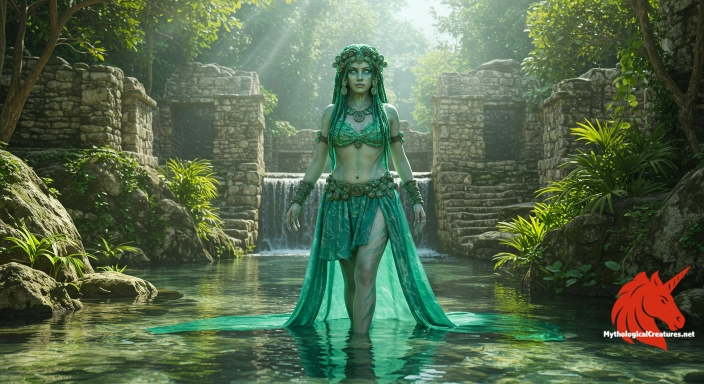
Dare to Meet the Chalchiuhtlicue....
The Mythological Creatures Book Series
Yōkai, Greek, Norse, Egyptian & Chinese. Five illustrated field guides to the creatures the old stories either warned or told you about.
Curated by the Mythological Creatures Team
Series editor: Mythological Creatures Directory
Primary desk: Hellenic & Ancient Mediterranean Desk
(rev. November 2025)