
Eurynomos: Eurynomos is a netherworld daimon in Greek mythology, renowned for consuming the flesh of corpses and leaving only bones.

Eurynomos
Eurynomos - Represents the natural and inevitable process of decay in the afterlife
the legend in five swipes.
the legend in five swipes.
How did Eurynomos enter folklore?
Eurynomos emerges as a striking, though enigmatic, figure within the labyrinthine tapestry of Greek mythology, embodying the inexorable decay of the mortal coil. Originating from the shadowy realms of the Underworld, he is revered as the daimon of rotting corpses, a personification of decomposition. His first attestation is found in the evocative description of a painting by the celebrated artist Polygnotos as recorded by Pausanias at Delphoi. This singular mention evokes a potent symbol of death’s inevitable reclaiming of the flesh, offering a glimpse into ancient Greek perceptions of mortality. Beyond the boundaries of mere physical decay, Eurynomos connotes a spiritual transformation that bridges the gap between life and the relentless cycle of decay. Although his literary presence is minimal, his myth serves as a counterpoint to the more heroic or sorrowful deities of the Greek underworld. The cultural context in which he appears reflects a sophisticated, albeit grim, exploration of death and the natural processes that follow it. His elusive nature and sparse evidence have only deepened the fascination of later scholars and artists, rendering him an enduring, if obscure, symbol of the inevitable end. His existence, fleetingly captured in ancient art, continues to intrigue those who study the interplay between body, death, and the hereafter.
How many versions of the Eurynomos story are there?
The primary body of evidence for Eurynomos is derived from a detailed account by Pausanias, who honours the masterful work of Polygnotos in his description of a depiction of Hades. This solitary reference stands in marked contrast to the extensive corpus of Greek myth, where many other daemons and deities are celebrated in literary sources. While major texts like Homer’s Odyssey and other epic narratives neglect any mention of such a figure, the isolated reference has kindled scholarly debate about the origins of his myth. Some have speculated that his inclusion in the artwork might have been an inventive flourish by Polygnotos, designed to symbolise the unyielding decay inherent in death. Variants of his tale, though almost entirely lost to time, have left traces in the fragmented memories of local lore and art. The paucity of surviving texts means that much of our understanding comes from the interpretation of visual rather than literary culture. Additionally, some later commentaries and fragmentary scholia have attempted to integrate him into the broader context of the underworld’s hierarchy. The paucity of literary references has encouraged modern mythographers to reconstruct his narrative by juxtaposing these limited sources with the broader Greek artistic tradition. This singular source, therefore, remains not only the principal evidence of his myth but also a catalyst for ongoing debate regarding artistic invention versus traditional lore.
What was Eurynomos believed to be capable of?
The depiction of Eurynomos is richly detailed, conjuring an image that is as unsettling as it is precise. He is portrayed as possessing a hue that oscillates between blue and black, reminiscent of the colour of meat flies that congregate around decaying flesh. His facial features are marked by a ferocious display of bared teeth, suggesting a macabre glee in the process of decay. Seated in a deliberate pose, his stance exudes both an eerie calmness and a predatory readiness. The artist has imbued him with an almost spectral quality, blurring the lines between corporeal form and ghostly presence. Intricate details, such as the presence of a vulture’s skin stretched beneath his figure, symbolically underscore his association with death and scavenging. The combination of his colour palette and his distinctive attributes creates a vividly sinister image that evokes both revulsion and fascination. His physical form is crafted to evoke the raw, unadorned reality of decomposition, reflecting the brutal truth of nature’s cyclical renewal. Variations in size and form may be imagined in the lost variants of his myth, yet the core elements of decay remain unaltered. Every brush stroke and artistic flourish contributes to a portrayal that is as emblematic as it is visceral.
How does the Eurynomos legend change from place to place?
While the origins of Eurynomos lie within the classical heartlands of Greece, his image has subtly permeated varied regional artistic interpretations. His depiction, primarily tied to the Delphic context through Polygnotos’ work, has been reimagined in local cultic sites and regional folklore beyond the confines of central Greece. In some regional variants, his attributes were adapted to emphasise the inevitability of decay in both human and natural forms, a theme resonant with local agricultural cycles. Communities in different regions have sometimes identified localized daemons of decay with characteristics reminiscent of Eurynomos, thereby blurring the lines between distinct mythological figures. Localised adaptations have occasionally merged his persona with other chthonic figures, reflecting a syncretism that highlights the universality of death. Some regions imbued him with additional layers of symbolism, portraying him as a guardian of burial rites or as an omen of a prosperous crop cycle following the death of erstwhile seasons. Though his literary presence remains precarious, his visual representation in regional art and funerary monuments attests to a broader cultural resonance. This cross-regional diffusion underscores the shared human fascination with mortality and decay, even as the particulars of his myth varied from one community to another. Regional iconographies thus serve to enrich his character, offering a patchwork of interpretations that complement the central myth found in Delphi.
Which myths echo the story of Eurynomos?
Eurynomos stands as a compelling counterpart to several other mythological figures whose domains concern death and decay across various cultures. His grotesque attributes can be juxtaposed with the Keres of Greek myth, who similarly embody the darker aspects of death and the violent cessation of life. In Roman tradition, echoes of his persona emerge in references to revenants and the lemures, entities that haunt the living as remnants of decay. Like the spectral figures in other cultural narratives, his role underscores the universal fascination with the process of decomposition and the transformation that follows death. His depiction, with an emphasis on the sensory experience of decay through vivid colour and texture, provides a stark contrast to more noble or heroic representations of the afterlife. Comparative analysis reveals that while many cultures offer elaborate pantheons of death-related deities, Eurynomos is unique in his intimate association with the physical process of flesh rotting. His character invites parallels with modern depictions of decay in horror genres and artistic explorations of mortality. These cultural and artistic parallels reveal a shared human preoccupation with the inevitable decline of the body. In this context, Eurynomos becomes not just a marker of Greek myth but also a symbol that resonates with diverse cultural portrayals of the macabre nature of death.
Why does Eurynomos still matter?
The historical evolution of Eurynomos’s image reflects a gradual shift in cultural attitudes towards decay and the afterlife from the ancient to the modern world. Once a peripheral yet potent figure confined to a singular painted narrative, his portrayal has undergone a subtle reimagining as evocative art and literature began to probe the darker aspects of existence. In the centuries following his brief mention, his iconography was interwoven into the fabric of chthonic symbolism, influencing both artistic motifs and literary themes in later periods. Modern interpretations often cast him as a metaphor for the inexorable passage of time and the decay inherent in all mortal life. Contemporary horror literature and visual art have occasionally resurrected his image, repurposing his lurid attributes as symbols of corruption and the inevitable decline of physical form. The transformation of his myth can be seen as reflecting broader cultural shifts, where the once-taboo themes of decay and death become central to explorations of human fragility. Modern scholars and artists alike draw on his sparse, yet vivid, portrayal to comment on the intersection of beauty and morbidity. His enduring legacy, though modest in ancient texts, has come to signify a powerful, if unsettling, aspect of the human condition. In a world where the supernatural is frequently revisited, Eurynomos remains a testament to the continuing fascination with life’s delicate balance between creation and decay.
Interesting Fact
Eurynomos is unique among Greek mythological figures for personifying decay, acting as a natural recycler in the Underworld, despite his largely obscure literary presence.
Mythological Treasures
Greek Myths: A field guide to the monsters of ancient Greece
Every monster here earned its place in legend, and each gets a full page of artwork and the story behind it.
Egyptian Legends: A field guide to the gods and monsters of ancient Egypt
Guardians of the living and devourers of the dead, with the role each played in judgement.
Chinese Beasts: A field guide to the dragons and demon kings of Chinese myth
From river dragons to demon kings, with the legends that shaped five thousand years of storytelling.
the legend in five swipes.
Advertising opportunity
Showcase your mythology project
We offer limited sponsor placements for books, courses, games, and creators aligned with our audience.
View partnership optionsQuick Creature Info
Origin:
Features:
Associations:
Our Mythic Legendary Rating:

Also Sometimes Known As:
Habitat:
Supernatural Powers:
Physical Attributes:
Abilities:
Behavior:
Weaknesses:
Lore:
References
Discover Another Mythical Legend You May Not Have Heard Of?
Uncover the mysteries of ancient folklore and expand your knowledge of legendary beings from cultures around the world.
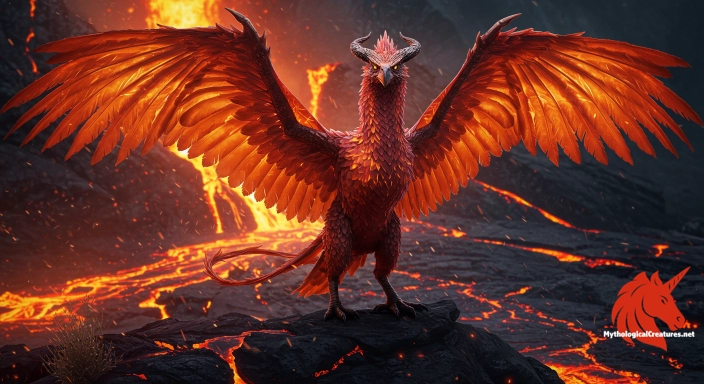
Dare to Meet the Phenex....
The Mythological Creatures Book Series
Yokai, Greek, Norse, Egyptian & Chinese. Five illustrated field guides to the creatures the old stories either warned or told you about.
Curated by the Mythological Creatures Team
Series editor: Mythological Creatures Directory
Primary desk: Hellenic & Ancient Mediterranean Desk
(rev. November 2025)