
Shdum: Shdum is a demonic entity in Mandaean cosmology, residing in the World of Darkness.
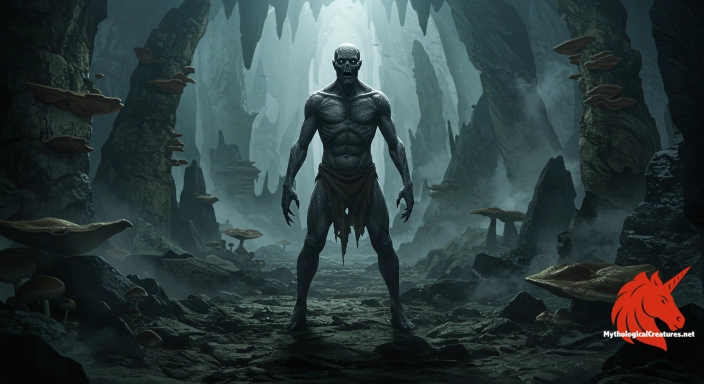
Shdum
Shdum - Shdum is a central demonic figure representing the forces of darkness and chaos in the underworld.
Origins & First Encounters
Shdum stands as one of the most formidable and enigmatic figures in Mandaean cosmology, presiding over the World of Darkness with an authority that is both ancient and deeply symbolic. He is known as the King of Darkness, a title that underscores his connection to the forces opposing the World of Light. His origins appear intertwined with the primordial forces that govern the cosmic struggle between light and shadow. Emerging from texts such as the Right Ginza, Shdum’s narrative is intricately linked with the descent of Hibil Ziwa into the underworld, marking a pivotal moment of confrontation with the dark. His portrayal as the Grandson of Darkness adds a hereditary dimension to his fearsome reputation, suggesting deep ancestral ties within the demonic realm. The cultural milieu that gave rise to his myth emphasises the eternal duality of existence, where every luminous entity casts a profound shadow. Shdum’s figure, though steeped in ancient lore, resonates with a timeless exploration of the nature of evil and the challenges inherent in the cosmic balance. His mythical presence continues to fascinate, symbolising that innate conflict between despair and hope, a theme as enduring as it is universal.
Source Texts & Tale Variants
The primary attestations of Shdum originate from revered Mandaean texts that form the backbone of its mythological canon. His encounter with Hibil Ziwa during the latter’s descent into the World of Darkness is recounted in detail in Chapter 1 of Book 5 of the Right Ginza. This narrative not only depicts his dark majesty but also serves to illustrate the perils that await beyond the realm of light. Variants of his name, such as Ashdum and Šdum-Daiwa, appear in different texts, including The Thousand and Twelve Questions, highlighting both linguistic diversity and interpretative richness. These ancient documents, while fragmentary at times, provide multiple layers of his character—ranging from a tyrannical sovereign to an almost familial inheritor of dismal power. The subtle differences in these sources encourage varied interpretations, where each account offers a unique perspective on his dominion over darkness. Beyond literal encounters, his presence in these texts is laden with metaphorical significance, embodying the eternal struggle against the forces of chaos. Such texts have served as the foundation for later mythological exegesis, ensuring that Shdum’s legacy continues to be a subject of scholarly and religious reflection.
Form & Powers
Artistic and literary depictions of Shdum have frequently sought to visualise the intangible essence of darkness that he embodies. His form is often portrayed as an imposing silhouette, cloaked in an ever-shifting mantle of shadow that blurs the boundaries between the corporeal and the spectral. Although explicit details are scant in early manuscripts, imaginative reconstructions suggest that his eyes might glow with an eerie, otherworldly light, reflecting a sinister inner fire. His countenance is believed to carry an expression of brooding intensity, where the lines between human features and abstract darkness seamlessly merge. Some interpretations evoke visions of a towering presence marked by elongated, almost skeletal features that transcend typical human anatomy. Common iconography portrays him draped in flowing robes that seem to be woven from the very fabric of night, occasionally accentuated by hints of spectral ornamentation such as a crown fashioned from twisted metal or shadowy tendrils. His physicality is rarely fixed, often depicted as mutable—growing in magnitude or altering form in response to the luminous forces he opposes. This elusive, almost phantasmal nature effectively encapsulates his role as the harbinger of profound cosmic imbalance, where form meets the formless.
Regional Faces
While Shdum is inherently rooted in Mandaean tradition, diverse regional interpretations have enriched his myth with a variety of local nuances. In the landscapes of southern Mesopotamia and adjacent regions, he is sometimes seen as more than just an agent of malevolence, instead embodying a necessary force that maintains the balance between light and darkness. Local folklore has adapted his myth to reflect regional concerns about the mysteries of the underworld, often imbuing him with characteristics that resonate with local ritualistic and cosmological ideas. Some communities have highlighted his dual role as both a destructive and a transformative presence, indicating that the shadow he casts is integral to the cyclical nature of existence. Influences from neighbouring cultures, including aspects of Babylonian and Persian mythologies, have further coloured his portrayal, leading to depictions that emphasise either his grotesque demonic features or an enigmatic wisdom born from darkness. These adaptations ensure that while the core aspects of his character remain recognisable, the details vary to meet the cultural and spiritual needs of each community. In certain narrative traditions, Shdum is even seen as a guardian of sacred mysteries, a paradoxical figure who commands respect despite his association with obscurity. Such regional adaptations reveal a rich tapestry of myth where the local ethos and historical context shape the evolving image of this ancient demon.
Cultural Parallels
In the broader spectrum of global mythology, Shdum’s attributes find resonant echoes in various cultural figures who preside over the realms of darkness and the underworld. His depiction as a sovereign of the nocturnal world parallels the roles played by figures such as Samael from Jewish mysticism and Abaddon in later apocalyptic literature. In many traditions, these dark entities serve as allegories for the latent and disruptive forces that challenge the established order of light. Similar to the descent narratives found in Greek mythology where deities traverse the underworld, Shdum’s narrative embodies the perennial confrontation between the realms of life and death. Such comparisons have also been drawn with the shadowy trickster figures in ancient Near Eastern lore, where the embodiment of darkness is not merely an antagonist but a catalyst for necessary transformation. These cross-cultural parallels emphasise an underlying human fascination with the duality of existence, where darkness serves to define and intensify the concept of light. Despite arising from distinct historical and cultural milieus, these mythological figures share a common role in symbolising the eternal struggle against chaotic forces. As a result, Shdum can be appreciated not only as a Mandaean demon but also as part of a universal narrative tradition that explores the boundaries between oppositional cosmic forces.
Legacy & Modern Evolution
The legacy of Shdum has evolved considerably over the centuries, transcending the confines of ancient Mandaean texts to inspire modern mythological and philosophical narratives. Early depictions in the Right Ginza and related writings painted him as a monolithic figure of terror, yet contemporary interpretations have embraced a more nuanced view of his symbolism. Over time, artists and modern mystics have reimagined him as a representation of the inner shadows that challenge the human spirit, reflecting a broader understanding of darkness as both destructive and transformative. This evolution in depiction mirrors the shifting cultural attitudes towards the nature of evil and the complexity of the human condition. In modern occult and esoteric circles, Shdum is sometimes invoked as a metaphor for the confrontation with one’s own inner darkness, an essential part of the path toward enlightenment. His myth has been reinterpreted in various literatures, where elements of psychological introspection and existential symbolism have enriched his character. Academic discussions and cultural studies have continued to explore the dualities embodied by Shdum, demonstrating how ancient myth can be recontextualised to address modern spiritual dilemmas. The enduring allure of his image is a testament to the timeless human need to understand and integrate the darker aspects of existence, ensuring that Shdum’s legacy remains both relevant and deeply evocative in the contemporary imagination.
Interesting Fact
An intriguing aspect of Shdum’s myth is his dual title as both King and Grandson of Darkness, reflecting the intricate family dynamics and hierarchical structures in the realm of demonic beings within Mandaean tradition.
Sponsor this space
Tasteful, fixed-fee placements for myth projects
No bidding wars or flashing banners. We offer simple placements for a small set of creators and brands aligned with our readers.
Request further detailsQuick Creature Info
Origin:
Associations:
Our Mythic Legendary Rating:

Also Sometimes Known As:
Habitat:
Supernatural Powers:
Physical Attributes:
Abilities:
Behavior:
Lore:
References
Discover Another Mythical Legend You May Not Have Heard Of?
Uncover the mysteries of ancient folklore and expand your knowledge of legendary beings from cultures around the world.
Dare to Meet the Wurdulac....
Curated by the Mythological Creatures Team
Series editor: Mythological Creatures Directory
Primary desk: Hellenic & Ancient Mediterranean Desk
(rev. November 2025)