
Sigbin: The Sigbin is a blood-sucking creature of Philippine folklore that stalks its victims at night by emerging from its lair and moving in a peculiar backwards motion.
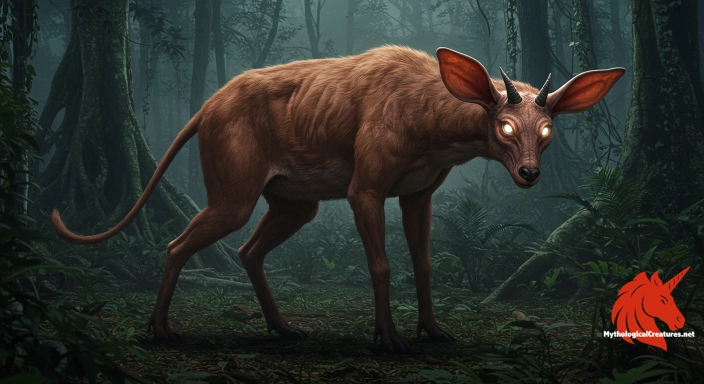
Sigbin
Sigbin - The Sigbin is a key figure in rural Philippine folklore, symbolising nocturnal terror and cultural superstition, often associated with the darker aspects of myth and ritual.
Origins & First Encounters
Sigbin is a mysterious creature that occupies the shadowy margins of Philippine mythology. Its legend is intertwined with ancient local traditions that have been passed down through countless generations in rural communities, particularly in the Visayas and Mindanao regions. This enigmatic being is said to emerge under the cloak of night, exhibiting a peculiar habit of drawing sustenance by siphoning blood from the shadows of its victims. The creature’s origins merge pre-colonial folklore with layers of later cultural interpretations, creating a narrative that is both complex and captivating. Stories portray it as having an uncanny ability to become invisible, further deepening the aura of intrigue that surrounds it. The Sigbin is often described not only by its distinctive behavioural traits but also by its curious physical features, which include a backward gait and a head that remains low between its hind legs. Some traditions even suggest that certain families, known as Sigbinan, have the power to command this creature, adding a mystical hierarchy to its lore. The symbolism of the Sigbin reaches a poignant note during Holy Week, when it is said to seek out children, using their hearts to create amulets. Its multifaceted narrative, blending fear, fascination, and control, reflects the dynamic interplay between tradition and the unexplained in Philippine culture.
Source Texts & Tale Variants
Early accounts of the Sigbin have been preserved in the rich tapestry of oral tradition and local folklore of the Philippines. Over time, multiple story variants have emerged, each echoing the creature’s notorious reputation while incorporating slight regional nuances. These narratives have been shared through local storytelling, folk songs, and even inscriptions in modest colonial records. While there is no singular ancient text that dominates its legend, various accounts recorded by community elders and folklore enthusiasts provide recurring details such as its backwards gait and stealthy invisibility. In numerous tales, the Sigbin is interwoven with the lore of the Aswang and other supernatural beings, thereby establishing a continuum within Filipino mythological discourse. Some versions highlight its appearance during sacred times, most notably Holy Week, when its predilections for targeting the vulnerable are accentuated. The wealth of folklore surrounding the Sigbin includes not only scary anecdotes but also intriguing explanations for its unusual habits. The flexible and evolving nature of these primary sources underscores the ever-changing yet persistent role of the Sigbin within local cultural narratives.
Form & Powers
The physical portrayal of the Sigbin is as enigmatic as the creature’s very nature, combining traits of familiar animals with supernatural anomalies. It is commonly depicted as resembling a hornless goat, yet with a twist: its head is tucked low between its hind legs, resulting in a distinctive backward gait that defies natural movement. Its ears are remarkably large and are said to be so flexible that they can be clapped together in a manner reminiscent of human hands. Adding to its bizarre anatomy is a long, flexible tail, often described as being capable of delivering a swift, whip-like strike. Many accounts also allude to a red-brownish hue in its fur, although variations in its colouration are noted from one region to another. A repulsive, nauseating odour frequently accompanies its presence, marking it as an ominous sign in the night. The creature’s eyes, in some renditions, are reported to capture and reflect the ambient light, lending it an eerie, almost otherworldly gaze. These rich and varied physical descriptions have contributed to a lasting image of the Sigbin as both a creature of wonder and a harbinger of dread.
Regional Faces
The legend of the Sigbin adapts uniquely to the cultural landscapes of different regions within the Philippines, reflecting a wide range of local traditions and beliefs. In the Visayas and Mindanao, the Sigbin is frequently cast in the role of a mysterious nocturnal predator, with its appearance and behaviours tailored to fit local superstitions. In some rural areas, the creature is portrayed as a malevolent presence during Holy Week—a time when its sinister activities, such as targeting children for their hearts, are specifically emphasised. Elsewhere, local lore presents the Sigbin as a creature that can be tamed and owned by affluent families, a narrative that imbues it with an added layer of mystique and authority. Some communities even adapt the description further, likening the Sigbin to a dog or another familiar animal, which reinforces relatability while still preserving its supernatural attributes. These regional variations extend to details like the creature’s colour, habitual paths, and even the rhythm of its movements. Rituals, taboos, and local customs often arise from the way each community interprets the Sigbin’s influence on their lives. In this manner, the Sigbin remains a fluid figure in folk culture—one that is tailored by the unique beliefs and circumstances of each region it touches.
Cultural Parallels
The Sigbin stands as a fascinating point of comparison with other mythological entities found around the globe, weaving common themes of nocturnal menace and supernatural deceit. It shares with many of these creatures an association with blood and an affinity for night, yet its method of extracting blood via the shadows distinguishes its lore in a unique way. Comparatively, the creature’s ability to vanish from sight and move in reverse parallels traits seen in other spectral figures, from certain Asian trickster spirits to Latin American legends of elusive, blood-drinking beings. These cross-cultural echoes highlight a shared human impulse to personify both the fear of the dark and the unknown. Unlike more archetypal vampires that directly feed on blood, the Sigbin’s method of extraction — targeting the very essence of life found in shadows — presents a novel interpretation of the predator-prey dynamic in myth. Its presence is also juxtaposed against other feared entities in Filipino folklore, like the Aswang and Manananggal, with each creature contributing its unique flavour to the mosaic of local supernatural lore. Such comparative analysis underscores both the uniqueness of the Sigbin and its role in a broader, interconnected web of mythological symbolism. In doing so, the enduring narrative of the Sigbin invites us to explore not only regional variances but also universal themes of mystery, transformation, and the human fear of what lurks in the darkness.
Legacy & Modern Evolution
The evolving myth of the Sigbin reveals a long and intricate journey—from the oral traditions of ancient communities to its reimagining in modern popular culture. Historically, it functioned as a cautionary symbol within local lore, and has since been transformed into an emblem of the mysterious and the unexplainable. Contemporary depictions of the Sigbin emerge across diverse media including film, literature, comics, and digital folklore, each reinterpretation adding fresh layers to its enigmatic character. Modern storytellers tend to highlight its peculiar physical traits and supernatural abilities, thereby preserving the creature’s original allure while recontextualising it for new audiences. The continuing fascination with the Sigbin also reflects broader cultural dialogues about the persistence of ancient myth in today’s rapidly evolving societies. Its narrative has come to embody the tension between rational modernity and the enduring power of folklore. Academic and artistic explorations often invoke the Sigbin as a symbol of hidden forces and the unpredictable interplay between tradition and innovation. Through these modern reinterpretations, the Sigbin remains a potent cultural icon—simultaneously a relic of a bygone era and a dynamic, living facet of contemporary myth-making.
Interesting Fact
An intriguing aspect of the Sigbin legend is its association with Holy Week and the use of children's hearts in amulets, reflecting a deep intertwining of folklore with ritualistic practices in Philippine culture.
Limited sponsor opportunity
One slot, carefully chosen partners
We only feature a small number of relevant sponsors at any time. If you create serious myth content, we would like to hear from you.
Partner with usQuick Creature Info
Origin:
Our Mythic Legendary Rating:

Also Sometimes Known As:
Habitat:
Supernatural Powers:
Physical Attributes:
Abilities:
Behavior:
Weaknesses:
Lore:
Related Creatures, Tales or Lore
References
Discover Another Mythical Legend You May Not Have Heard Of?
Uncover the mysteries of ancient folklore and expand your knowledge of legendary beings from cultures around the world.
Dare to Meet the Adze....
-e3247ff5-63da-4335-a840-b790972d2a46_small.webp "Depiction of Adze")
Curated by the Mythological Creatures Team
Series editor: Mythological Creatures Directory
Primary desk: Asian & Pacific Myth Cycles Desk
(rev. November 2025)