
Toyol: Toyol is an undead infant spirit from Indonesian and Malay folklore, summoned by shamans to aid in financial gain.
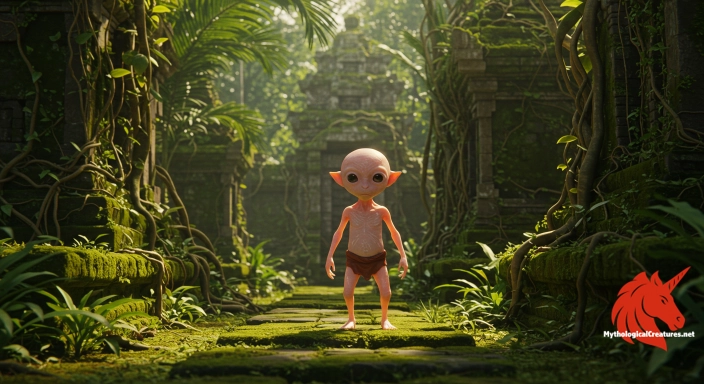
Toyol
Toyol - Toyol plays a dual role in folklore, bestowing good luck on its master while bringing misfortune to others, reflecting the ambivalence of supernatural intervention in human affairs.
Origins & First Encounters
The toyol is a fascinating and enigmatic figure rooted in the deep cultural traditions of Indonesian and Malay folklore. It is traditionally depicted as an undead infant, imbued with supernatural qualities and often associated with black magic. Its origins can be traced back to ancient shamanistic practices, where spiritual practitioners sought to harness the toyol’s mysterious powers for financial gain and other worldly benefits. Over time, the creature evolved in the popular imagination to become a symbol of both luck and misfortune, depending on the circumstances of its invocation. The early attestations of the toyol intertwine with local beliefs about the restless spirits of the dead, particularly the untimely or unfulfilled infant. Ethnographic accounts describe it as a tool utilized by dukun, pawang, or bomoh, who employ arcane rituals to command its loyalty. The cultural context surrounding the toyol speaks to a broader supernatural worldview, where the boundary between life and death is porous. Practices involving such spirits were often secretive, cloaked in the mystique of forbidden knowledge and dark arts. This dual nature—bringing fortune to its master while casting ill omens to those who encounter it—has sustained its legendary status through the ages.
Source Texts & Tale Variants
Folklore texts, oral traditions, and early colonial records form the cornerstone of our understanding of the toyol. Ancient manuscripts from the region, though sparse, offer tantalising glimpses into how shamans documented the creature’s powers and rituals. Multiple story variants have emerged over time as tales were transmitted from generation to generation, each adding layers of intrigue and complexity. In some accounts, the toyol is described as a benign spirit that bestows luck upon its master, while in others it is a malevolent force that wreaks havoc on unsuspecting victims. Folklore compendiums and mythological narratives compiled by local scribes have highlighted its role in financial mischief and supernatural retribution. The diversity of these narratives points to regional differences in ritual practices and the cultural significance of the creature. Modern retellings in literary and audiovisual media have further diversified the story, embedding the toyol deeply into contemporary myth. These sources, both written and oral, continue to influence and inspire modern interpretations, reinforcing the toyol’s enduring appeal. Even when details vary, the core themes of magic, power, and the lure of forbidden knowledge remain constant across the variants.
Form & Powers
The physical appearance of the toyol is shrouded in mystery and varies widely according to different accounts. Often, it is imagined as resembling a small infant, with a pallid complexion that hints at its undead nature. Some descriptions convey an almost spectral quality, with eyes that glow unnaturally and an expression that suggests both mischief and sorrow. Its diminutive size and delicate form belie the potent magic it is believed to wield. In many portrayals, the toyol's features are exaggerated to evoke a sense of uncanny otherness, such as disproportionately large eyes or a small, almost elfin, body frame. Certain accounts even note peculiar physical traits like dishevelled hair or a haunting smile, emphasising its role as an anomaly straddling the worlds of the living and the dead. The toyol’s overall appearance is often deliberately ambiguous, designed to inspire both awe and fear in those who witness it. This variability in description reflects its status as a creature of the imagination, shaped by the cultural and artistic sensibilities of its storytellers. The interplay between its innocent form and malevolent function only deepens the mystery surrounding its physical form.
Regional Faces
Across the archipelagos of Southeast Asia, the toyol takes on diverse regional attributes that mirror the local customs and belief systems. In parts of Indonesia, it is often viewed as the restless spirit of an unburied or ill-fated infant, a notion that underscores local rites surrounding death and the afterlife. In contrast, Malay traditions sometimes portray it as a deliberately conjured spirit, summoned by a practitioner of black magic for its cunning and agility. Different regional narratives have adapted the toyol to local contexts, infusing it with characteristics drawn from native superstitions and moral teachings. For example, in some rural communities the toyol is as much a household guardian as it is a tool for mischief, reflecting a dual attitude of both reverence and wariness. Urban folklore sometimes reimagines the creature as an urban legend, adapting its portrayal to modern fears and societal changes. Local dialects and terminologies also colour its depiction, with variations in name and form that align with regional linguistic traditions. These variations not only affect its physical depiction but also influence its perceived role in the cosmic order, blending indigenous spirituality with folklore. The regional adaptations of the toyol thus serve as a fascinating study of how mythology evolves in response to differing cultural milieus.
Cultural Parallels
The toyol shares remarkable similarities with other supernatural entities present in regional and global mythologies. Its role as a minor familiar or spirit employed for practical, albeit nefarious, purposes is echoed in creatures like the Babi ngepet of Indonesian lore. Comparable figures can also be found across Southeast Asia, such as the Hantu Raya in Malay legends, demonstrating a shared cultural motif of harnessing otherworldly forces for personal gain. In a broader context, the toyol bears a resemblance to Western depictions of gremlins or pixies that meddle in human affairs, albeit with a distinctively Southeast Asian twist. The juxtaposition of innocence with malevolence is a recurring theme in many myths, positioning the toyol alongside beings that embody the unpredictable nature of the supernatural. Its spectral, infantile form contrasts sharply with the more robust or monstrous figures found elsewhere, yet the underlying concept of a manipulated spirit reveals a common cross-cultural concern with the forces that lie beyond human control. Such comparative analysis highlights how different societies use myth to negotiate complex relationships with the unseen world. By drawing parallels between the toyol and similar entities worldwide, we gain insight into the universal need to explain misfortune and success through the agency of mystical intermediaries.
Legacy & Modern Evolution
Over the centuries, the depiction of the toyol has undergone significant transformation, mirroring shifts in cultural attitudes and societal values. Historical narratives present it as a potent symbol of both cursed fortune and the consequences of meddling with the natural order. In modern contexts, the toyol has transcended its original status as a mere folkloric figure to become a recurring motif in literature, film, and even contemporary art. Its enduring legacy is evident in popular media, where it is sometimes portrayed as a misunderstood spirit caught between worlds. Modern reinterpretations have also imbued the toyol with a sense of tragic irony, emphasising themes of innocence lost and the corruptive potential of power. This evolution from a tool of magic used by shadowy figures to a cultural icon of moral and spiritual ambiguity reflects broader changes in how societies engage with myth. Contemporary storytellers continue to adapt its narrative, often exploring the tension between superstition and modern rationality. The toyol now serves as a bridge between traditional folklore and the modern imagination, sustaining its place as a symbol subject to reinterpretation and reinvention across generations.
Interesting Fact
An intriguing aspect of the toyol is that it is both a symbol of luck and a harbinger of curses, embodying the paradoxical nature of supernatural intervention in human affairs.
For myth educators and toolmakers
Built a resource for mythology learners?
If you offer courses, teaching tools, or research platforms focused on myth and folklore, consider a discrete placement on our reference pages.
Introduce your resourceQuick Creature Info
Origin:
Features:
Our Mythic Legendary Rating:

Also Sometimes Known As:
Habitat:
Supernatural Powers:
Physical Attributes:
Abilities:
Behavior:
Weaknesses:
Lore:
Related Creatures, Tales or Lore
References
Discover Another Mythical Legend You May Not Have Heard Of?
Uncover the mysteries of ancient folklore and expand your knowledge of legendary beings from cultures around the world.
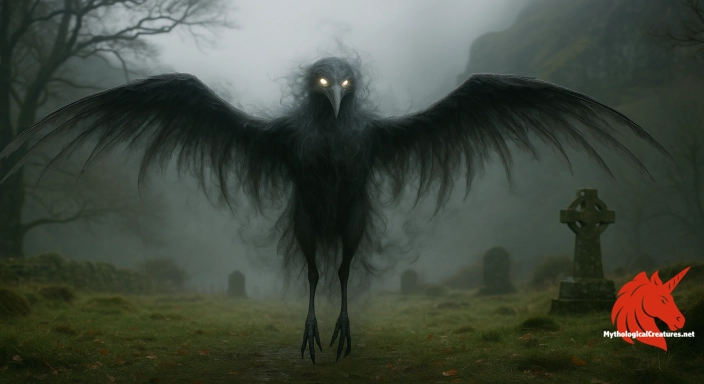
Dare to Meet the Sluagh....
Curated by the Mythological Creatures Team
Series editor: Mythological Creatures Directory
Primary desk: Asian & Pacific Myth Cycles Desk
(rev. November 2025)